

















Japan’s PM Takaichi Calls Snap Election, Pledges a Growth-Oriented Economic Policy
The BGA Japan team, led by Managing Director Kiyoaki Aburaki, wrote an update to clients on Japan’s upcoming election.
Context
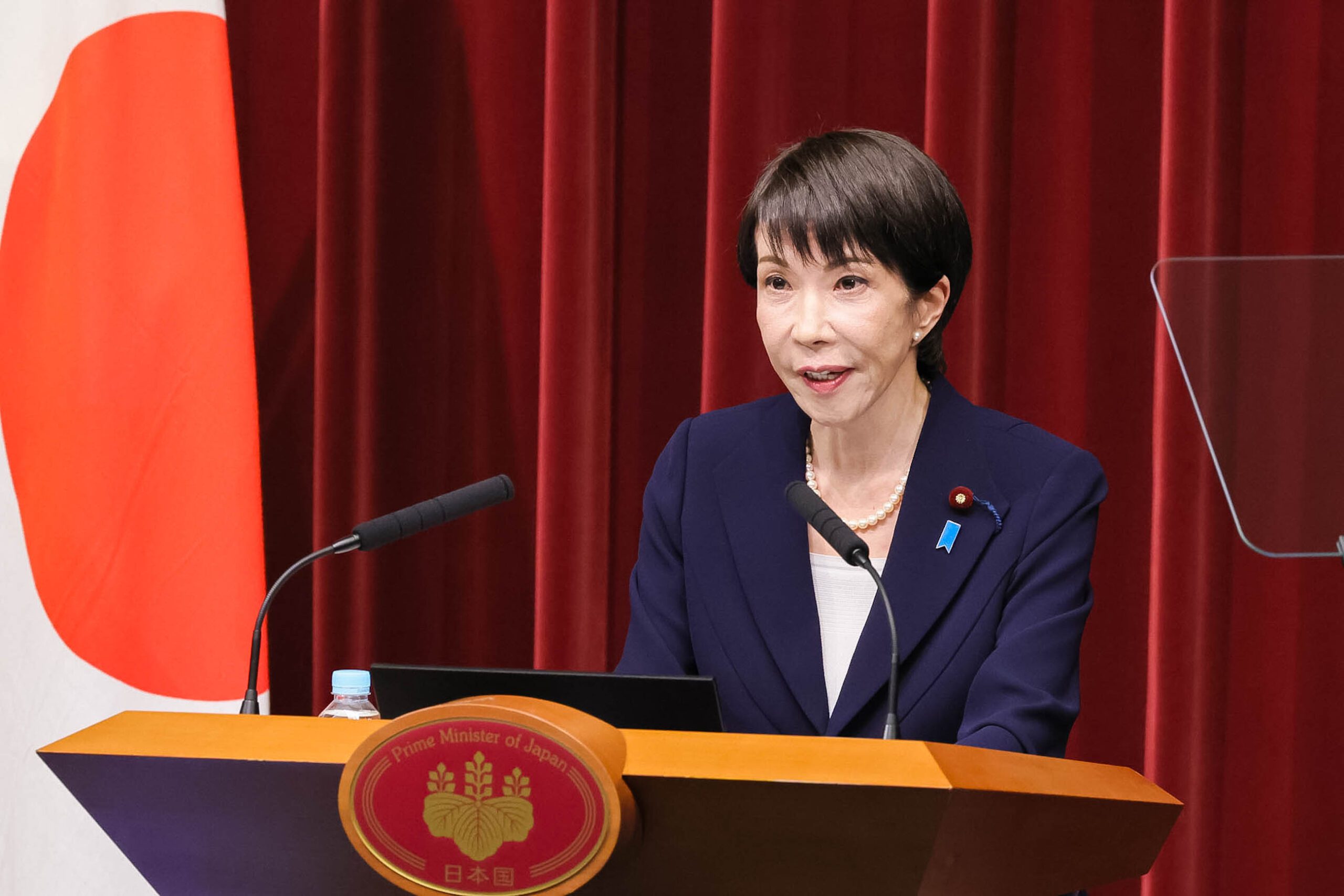
- Prime Minister Sanae Takaichi held a press conference January 19 and announced that she intends to dissolve the House of Representatives at the outset of the ordinary Diet session January 23, and to hold a general election February 8.
- Explaining her decision, Takaichi said that it is necessary to seek the confidence of the public through an election with respect to both the new Cabinet formed under her leadership and the coalition government between the Liberal Democratic Party (LDP) and the Japan Innovation Party (Ishin). She said she also wishes to confirm public support for major policy shifts, including a time-limited exemption from the consumption tax on food items.
- Takaichi acknowledged that the dissolution and general election could delay the enactment of the fiscal year 2026 budget until April or later but noted that measures to support people’s livelihoods are already being implemented through steps such as the early execution of the fiscal year 2025 supplementary budget. She also suggested that the government may compile a provisional budget if necessary and emphasized that securing public confidence through an election would accelerate the pace of policy implementation. Takaichi added that the ruling coalition of the LDP and the Ishin will set securing a majority in the House of Representatives as the benchmark for victory and declared her resolve to stake her future as prime minister on achieving that outcome.
Significance
- Analysts had long expected that the house would be dissolved at some point in 2026. The prevailing assumption, however, was that it would occur in the spring, after the enactment of the budget. Against that backdrop, a dissolution at the beginning of the ordinary Diet session, followed by an election in February, came as an unexpected development for many political actors.
- As speculation over a surprise dissolution intensified over the past week, Japan’s largest opposition party, the Constitutional Democratic Party of Japan (CDP), was forced into a rapid response. CDP leader Yoshihiko Noda began consultations with Tetsuo Saito, leader of Komeito, which had exited its coalition with the LDP in October. The two leaders agreed to establish a new political party — the Centrist Reform Coalition (CRC) — in preparation for the election. On January 19, the new party unveiled its basic policy platform. This move marked a significant shift for the CDP, as it revised several long-standing positions, including its advocacy for a zero-nuclear-power society and its characterization of the peace and security legislation as unconstitutional.
- The trajectory of the upcoming election campaign will be shaped primarily by three factors. The first is the extent to which the newly formed CRC can secure broad public support. In past elections, there have been instances in which new parties established shortly before a general election succeeded in winning seats and exerted significant influence on the post-election political landscape. Such outcomes, however, typically occurred either when a new party functioned as a unifying platform for opposition forces, or when it emerged from a split within the ruling LDP. In the current case, the merger between the CDP and Komeito has already drawn criticism, even within the opposition, for being driven largely by electoral considerations. Moreover, there are, at present, no indications of defections or realignment from within the LDP toward the new party.
- The second factor is the extent to which Komeito’s organized vote — previously mobilized in support of LDP candidates in single-member districts — will shift toward candidates of the new party. This factor is closely linked to the first, because the willingness of Komeito’s support base to transfer its backing will depend on how convincingly the new party resonates with the broader electorate.
- The third, and most critical, factor is whether the Takaichi Cabinet can sustain its currently high approval ratings throughout the election campaign. Since its formation in October, the Takaichi administration has maintained strong public support, with recent opinion polls showing approval ratings exceeding 70 percent. Historically, no prime minister has entered a general election with approval levels of this magnitude. At her press conference, Takaichi expressed her determination to break decisively with ambiguous politics, articulate clear policy positions and seek a direct mandate from the public. If this “Takaichi style” of leadership is consistently maintained, the current momentum in public support may well continue. If the LDP remains unified and advances cohesively toward policy implementation, the prospect of a long-term administration becomes increasingly likely.
Implications
- The Takaichi Cabinet is distinctive not only for its exceptionally high approval ratings but also for the unusually low level of public disapproval, compared with previous administrations at the time of House dissolution. While the LDP’s own support remains moderate at 37 percent, it has risen from 24 percent in July, suggesting a clear upward trajectory.
- With the LDP’s pledge to temporarily exempt food items from the consumption tax, the tax has effectively ceased to function as a central electoral issue. In the 2025 House of Councilors election, the LDP rejected opposition calls for consumption tax cuts and instead proposed cash handouts as an inflation countermeasure — an approach the opposition criticized as fiscal “handouts,” a message that resonated with many voters. This time, however, by incorporating a consumption tax reduction into its platform, the LDP has neutralized one of the opposition’s most effective lines of attack, including that of the CRC.
- Takaichi has articulated a clear determination to pursue growth-oriented economic policy while maintaining fiscal discipline. She has said unequivocally that “the core of policy lies in responsible, proactive fiscal policy,” and pledged to bring an end to what she characterizes as excessive austerity and chronic underinvestment in future growth. At the same time, she emphasized that a truly strong economy is one in which tax revenues increase without raising tax rates. In this context, she highlighted that the fiscal year 2026 budget achieves a primary balance surplus for the first time in 28 years, signaling continued attention to fiscal sustainability alongside growth.
- On Japan-China relations, Takaichi has also underscored the importance of maintaining dialogue while responding calmly and pragmatically from the standpoint of Japan’s national interests.
We will continue to keep you updated on developments in Japan. If you have any comments or questions, please contact BGA Japan Managing Director Kiyoaki Aburaki at kaburaki@bowergroupasia.com.
Best regards,
BGA Japan Team

×