




















ASEAN Digital Ministers Meeting 2026: Where Regional Ambition Meets National Priorities
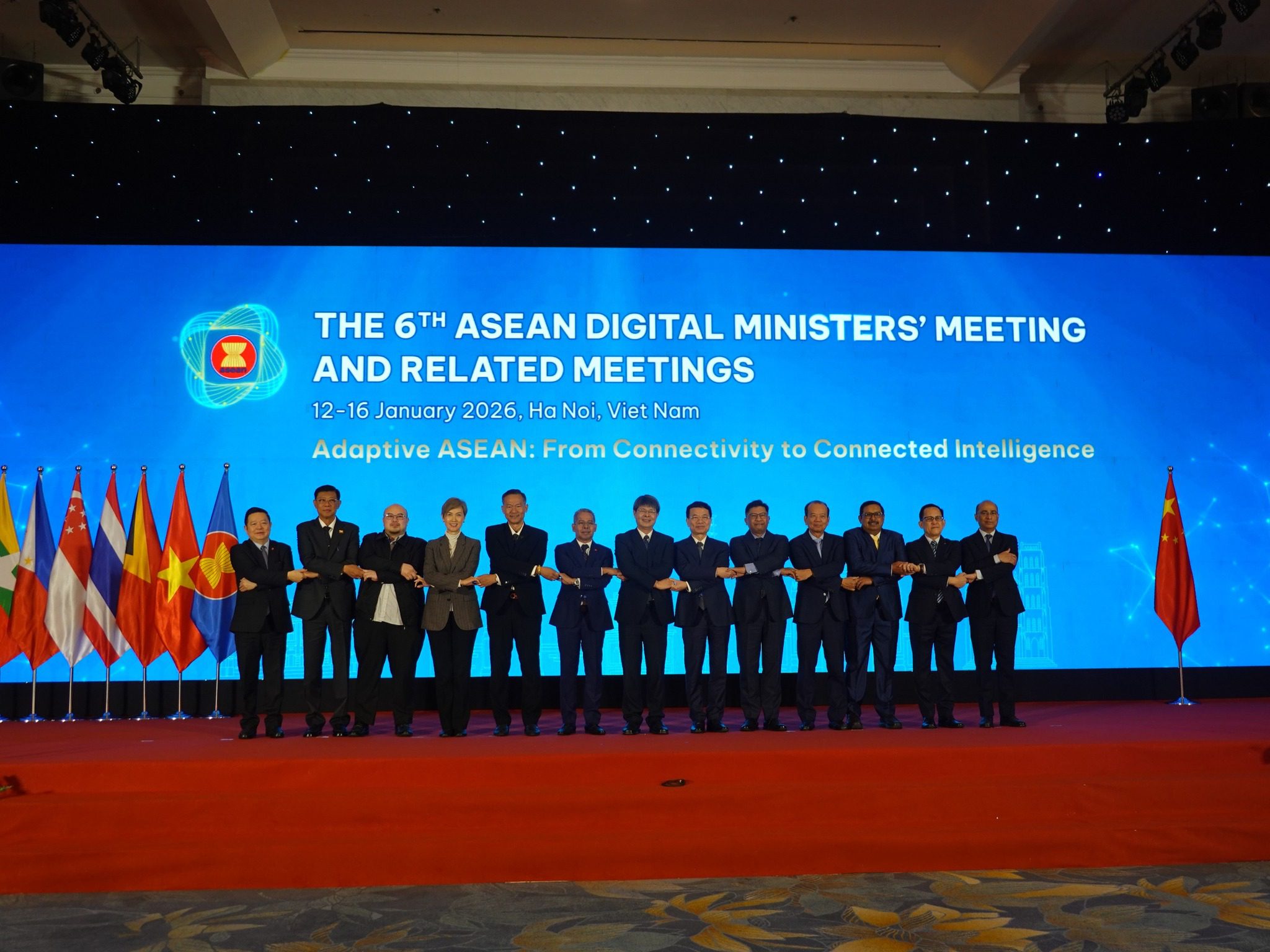
BGA Technology Director Heidi Mah and Associate Harris Amjad wrote an update on the sixth ASEAN Digital Ministers Meeting (ADGMIN).
Context
- The Association of Southeast Asian Nations (ASEAN) concluded its sixth ADGMIN and related meetings — held from January 15-16 in Hanoi, Vietnam — with the adoption of the ASEAN Digital Masterplan 2030 (ADM 2030) and the Ha Noi Digital Declaration “Adaptive ASEAN: From Connectivity to Connected Intelligence.” Together, these reaffirm ASEAN’s political commitment to deepen regional digital cooperation and position digital development as a core driver of competitiveness, resilience and inclusion over the next five years.
Significance
- At a strategic level, ADM 2030 should be read as a signaling framework, marking ASEAN’s transition from the post-COVID digital recovery phase that defined ADM 2025 toward a more forward-looking competitiveness and resilience agenda. While it articulates shared ambitions around narrowing development gaps, strengthening regional value chains and enhancing ASEAN’s global digital standing, how these objectives translate into concrete actions will ultimately depend on national priorities and institutional capacity. Early signals from sideline discussions indicate that member states are already emphasizing different focus areas, with Singapore leaning into cybersecurity and digital infrastructure resilience, Thailand prioritizing cybercrime and online scams and the Philippines highlighting micro, small and medium enterprise (MSME) digitalization as part of its ASEAN chairmanship agenda. For companies, this suggests that ASEAN-level alignment will continue to serve as political signaling, while market access, regulatory clarity and commercial traction will remain shaped primarily by national-level decisions rather than regional harmonization.
Implications
- The clearest area of regional convergence continues to be digital connectivity, infrastructure resilience, online safety and platform governance, where ASEAN is moving from principle-setting to implementation support. At the sixth ADGMIN, ministers endorsed the enhanced ASEAN Guidelines for Strengthening Resilience and Repair of Submarine Cables, which recommended measures that ASEAN member states can adopt to streamline permitting processes, establish single government points of contact and improve coordination between agencies and cable operators to reduce repair timelines. Together, these enhancements reflect sustained attention to physical digital infrastructure as a strategic asset rather than a technical afterthought. The ministers’ welcoming of the ASEAN Guide on Anti-Scam Policies and Best Practices, alongside the Guidelines for Digital Platform Regulation, further underscores that governments are prioritizing trust and consumer protection as foundational conditions for digital growth. For companies, these areas represent the most immediate and bankable opportunities for engagement.
- Infrastructure operators, cloud providers cybersecurity firms and platform providers should expect more structured government engagement, clearer expectations and growing demand for technical input, particularly in mid-cap ASEAN markets that lack domestic expertise but face rising political pressure to act on scams, outages and platform accountability.
- Artificial intelligence (AI) remains central to ASEAN’s digital narrative, but the operational readiness gap persists. Building on decisions taken at the 47th ASEAN Leaders’ Summit in 2025, Malaysia announced that the digital ministers endorsed the Declaration on the Establishment of the ASEAN AI Safety Network, with the secretariat to be hosted in Kuala Lumpur. However, details on scope, projects and industry engagement remain unclear, even among member states. This suggests that while the foundation for regional AI cooperation is now in place, further work will be needed to translate these ambitions into clearer mechanisms, sustained resourcing and tangible outcomes over time.
- Nevertheless, discussions at ADGMIN and in sideline meetings highlighted growing regional momentum around enterprise AI adoption and AI security, where governments appear increasingly aligned on the need to move beyond principles toward practical deployment. There is broad recognition that responsible AI frameworks, while necessary, are no longer sufficient on their own and that the next phase of ASEAN’s digital agenda will need to focus on enabling real-world use cases to empower AI adoption across government, industry and MSMEs.
- Singapore has been explicit in its intent in moving toward making enterprise AI adoption a cross-cutting priority, moving beyond governance to infrastructure readiness, data access and sector-specific deployment.
- Thailand similarly highlighted AI security as an emerging policy focus, with plans to develop domestic standards in consultation with industry and with an emphasis on harmonization with international frameworks. Its broader AI agenda is framed around three pillars: expanding access to AI tools, strengthening workforce ability and encouraging augmentation of work and daily life through AI-enabled systems.
- The Philippines, as ASEAN chair this year, will also host an ASEAN AI Summit in Cebu in September, with a focus on MSME AI adoption.
- Taken together, these discussions suggest a region that is increasingly aligned on the direction for AI, even if approaches and timelines differ. For companies, this creates near-term opportunity to engage governments on enterprise deployment, AI security, workforce enablement and sectoral pilots, particularly in markets where political interest is high but domestic capacity remains uneven.
- Emerging technologies such as quantum computing featured in discussions but remain a long-term consideration rather than a near-term policy focus. Singapore is the most advanced in ecosystem readiness but remains cautious about pushing a regional quantum agenda prematurely, while countries like Thailand are signaling ambition through 2030 timelines. Across ASEAN, governments remain focused on nearer-term priorities such as AI governance, cybersecurity and online safety, which continue to consume political and regulatory bandwidth.
- Progress on the ASEAN Digital Economy Framework Agreement (DEFA) was acknowledged in sideline meetings, with ASEAN Secretariat officials conveying longer-term ambition to increase intra-ASEAN trade from its current level of approximately 21 percent to around 35 percent. This objective sits alongside efforts such as the upgraded ASEAN Trade in Goods Agreement, which aims to move ASEAN closer to a single production base by lowering tariffs and addressing non-tariff barriers. Realizing these ambitions will require coordinated action across member states, with flexibility for more-ready economies to advance first. It will also require alignment with upgraded free trade agreements with key partners including China, Australia, New Zealand and Korea as part of a broader strategy of consolidation and diversification.
- In this context, DEFA’s ability to deliver meaningful digital trade provisions will be an important enabler, given the growing role of data flows, digital payments and platform interoperability in intraregional commerce and trade. Ultimately, DEFA’s practical value will depend on how consistently and effectively it is implemented across all member states. Against this backdrop, companies may wish to engage early in implementation discussions, particularly where technical input, pilot projects or capacity building can support and facilitate AMS’ adoption of cross-border data flows, digital identity, e-payments and regulatory interoperability.
If you have any questions or would like more in-depth insights on the sixth ADGMIN, which BGA attended, please reach out to BGA Technology Director Heidi Mah or Associate Harris Amjad.
Best regards,
BGA Technology Team

×