















Vietnam’s Communist Party Announces New Leadership and Sets Priorities for Next Five Years
The BGA Vietnam Team, led by Managing Director Nguyen Viet Ha, wrote an update on the conclusion of Vietnam’s 14th national congress and the announcement of new leadership and priorities.
Context
- The Communist Party of Vietnam (CPV) concluded its 14th national congress in Hanoi January 23, shortening the event by 1.5 days from the original schedule. About 1,600 delegates representing more than 5.6 million members attended and elected 19 Politburo members, 13 Secretariat members and 200 Central Committee members for the 2026-2031 political term. Ten of 19 Politburo members were reelected, indicating both stability and fresh energy in the leadership. Among the 200 elected members of the Central Committee, the majority (66.5 percent) are government officials from both local and central levels. Notably, 87 individuals, 43.5 percent of the committee, are newly appointed, reflecting a certain degree of transition at both local and central levels.
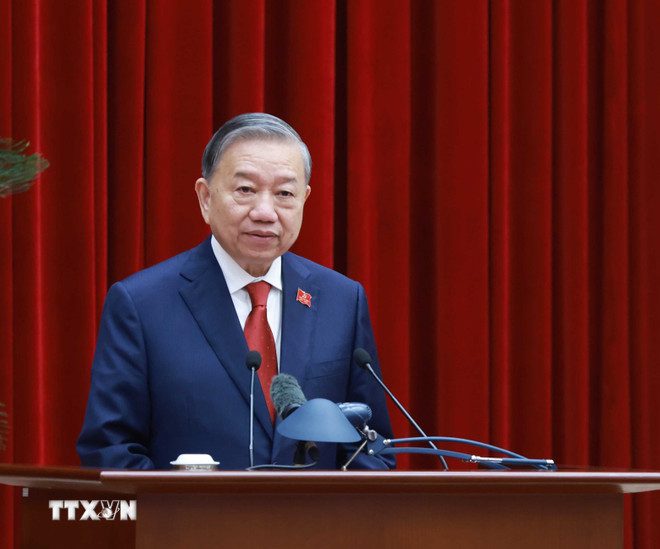
- At the highest levels of leadership, To Lam, 68, was reelected as party general secretary, while Luong Cuong and Pham Minh Chinh were not reelected president and prime minister, respectively, signaling changes in these roles. Reports indicate that Lam is expected to serve concurrently as general secretary and state president. Le Minh Hung, 56, is set to become the youngest prime minister in Vietnam’s history. The reelection of Tran Thanh Man suggests he will continue to preside over the National Assembly in the coming term.
- Along with Prime Minister Chinh, seven deputy prime ministers and four ministers will retire, signaling the prospect of an imminent Cabinet reshuffle. The appointments for president, chairman of the National Assembly, prime minister and other Cabinet members are subject to ratification by the incoming National Assembly during its inaugural session, scheduled to begin April 6. Until then, the current Cabinet members remain in power.
Significance
- Lam’s reelection as party general secretary, along with his likely election to both the general secretary and state president roles, signals a significant transformation of Vietnam’s traditional “four pillar” political framework by concentrating authority at the top. This development will enable Lam to implement reforms more effectively, simplify international representation and create greater opportunities for business engagement. Nonetheless, it also raises questions about how these changes might influence collective leadership and accountability within the party, as well as the possible rise of a faction closely connected to his central power.
- The new Politburo includes a balanced mix of conservatives and technocrats, with most of the nine new members under 60 and experienced in management or educated abroad. Some notable figures include the following:
- Tran Luu Quang, 59, is the party secretary of Ho Chi Minh City.
- Le Hoai Trung, 65, minister of foreign affairs, is U.S.-educated and has extensive diplomatic experience.
- Nguyen Thanh Nghi, 50, heads the Central Economic Committee and is U.S.-educated. He previously served as construction minister.
- Tran Duc Thang, 53, minister of agriculture and environment, has a record of fighting corruption from his time at the Central Inspection Committee.
- Of the current 27 Cabinet members, 14 have been reelected, suggesting they are likely to remain in their positions. The members are as follows:
- Deputy Prime Minister Pham Thi Thanh Tra.
- Deputy Prime Minister Ho Quoc Dung.
- Minister of Defense Phan Van Giang.
- Minister of Public Security Luong Tam Quang.
- Minister of Foreign Affairs Le Hoai Trung, who is expected to be promoted to deputy prime minister.
- Minister of Agriculture and Environment Tran Duc Thang is also likely to become a deputy prime minister.
- Minister of Justice Nguyen Hai Ninh, another potential candidate, is expected to be named a deputy prime minister.
- Minister of Finance Nguyen Van Thang is being considered for a deputy prime minister position.
- Minister of Internal Affairs Do Thanh Binh.
- Acting Minister of Industry and Trade Le Manh Hung.
- Minister of Public Health Dao Hong Lan.
- Minister of Education and Training Nguyen Kim Son.
- Governor of State Bank Nguyen Thi Hong.
- Minister of Construction Tran Hong Minh.
Implications
- Alongside the new prime minister and up to four new deputy prime ministers, five additional Cabinet members will take on the following roles: minister/chief of government office; minister of science and technology; minister of culture, sports and tourism; minister of ethnic and religious affairs; and government inspector.
- Lam’s closing remarks at the congress repeatedly used terms such as “breakthroughs,” “renovation,” “strategic autonomy” and “rapid and sustainable growth,” underscoring his ambition to usher in a new era and leave an unparalleled legacy for Vietnam. He outlined several major strategies to help the country reach its development goals, including the following:
- Prioritizing socioeconomic progress alongside protecting the environment.
- Positioning culture and human resources as the foundation for future advancements.
- Enhancing defense and security and deepening international integration and foreign relations.
- Promoting breakthroughs in science, technology, innovation and digital transformation as the key drivers of development.
We will continue to keep you updated on developments in Vietnam. If you have any comments or questions, please contact BGA Vietnam Managing Director Nguyen Viet Ha at vietha@bowergroupasia.com
Best regards,
BGA Vietnam Team

×