

















US‑Japan Summit Unlocks New Business Opportunities
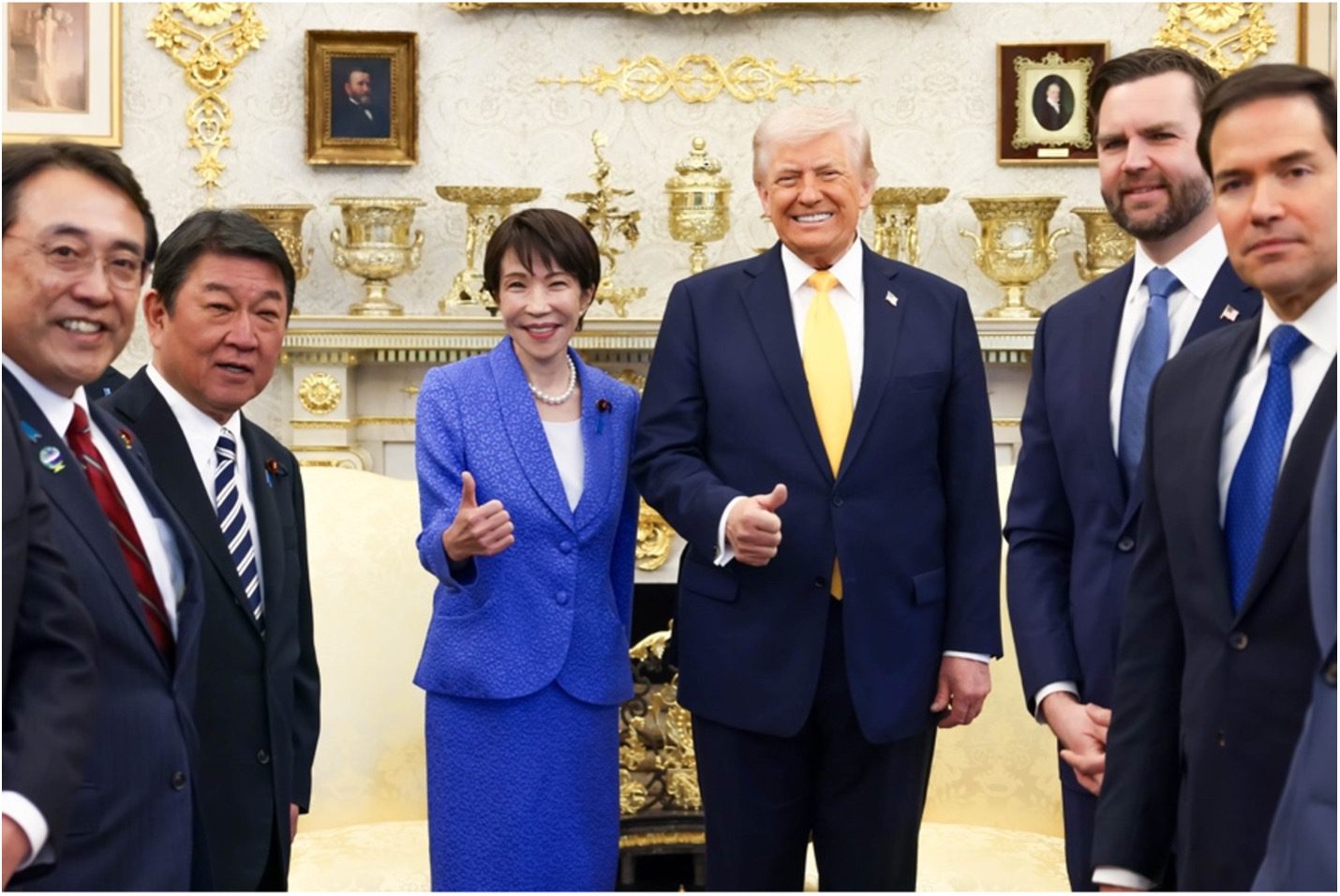
BGA Japan Managing Director Kiyoaki Aburaki wrote a client update on the summit between Japanese Prime Minister Sanae Takaichi and U.S. President Donald Trump in Washington, D.C.
Context
- Japanese Prime Minister Takaichi and U.S. President Trump held a summit March 19 in Washington, D.C., following an invitation extended by Trump in January. Initially, Japan had expected the meeting to focus on strengthening cooperation in economic security and broader economic relations. However, the context shifted significantly after U.S. and Israel military operations against Iran in late February, which prompted Iran to block the Strait of Hormuz. In the lead-up to the summit, Trump expressed dissatisfaction with what he viewed as insufficient contributions from allies, including Japan, particularly regarding naval deployments. The central question became how Japan would respond to U.S. expectations in addressing the Iran situation.
- At the outset of their 90-minute meeting, Takaichi underscored the increasingly severe global security environment and expressed Japan’s intention to support U.S. efforts. Trump responded by indicating that he did not seek excessive contributions, while nonetheless signaling expectations of a more proactive role by Japan. Japan faces legal constraints on overseas naval deployments, including requirements such as a ceasefire in the fighting. Takaichi later told reporters that these constraints had been conveyed in detail to Trump. Given these limitations on direct security contributions, delivering tangible outcomes through economic cooperation and economic security initiatives with the United States has become increasingly critical for Japan.
Significance
- The significance of the summit lies in advancing a broad and concrete U.S.-Japan cooperation beyond the immediate Middle East crisis. The key outcomes were as follows:
- Expansion of U.S. agricultural exports to Japan. While not reflected in Japan’s official readout, this was prominently featured in the White House fact sheet. Although specific products were not identified, corn-based bioethanol is a likely candidate.
- Continued implementation of Japan’s $550 billion investment commitment in the United States. In addition to the initial tranche of three projects totaling $36 billion, a second tranche of candidate projects was identified, including small modular reactor power plants (up to $40 billion) and natural gas-generation facilities (up to $33 billion). Cooperation on increasing oil production in Alaska was also discussed.
- ·Strengthened cooperation in critical minerals. This includes investments in rare-earth and copper projects in the United States as well as a memorandum on deep-sea mineral development. The two sides also agreed to establish a working group to explore cooperation on rare-earth resources near Japan’s Minami-Torishima Island.
- Enhanced cooperation in advanced technologies, including artificial intelligence (AI), sovereign cloud and defense production.
Implications
- The summit represents a significant political outcome for Takaichi. While her electoral mandate is strong following the Liberal Democratic Party’s decisive victory in February, she does not lead a faction within the party, leaving some structural vulnerabilities. Her key advantage lies in the personal trust she has inherited with Trump from former Prime Minister Shinzo Abe. This relationship, first confirmed last October, was reaffirmed and visibly demonstrated through this summit. Had the meeting been limited to contentious issues such as naval deployments in the Strait of Hormuz, it could have posed political risks for the prime minister. Instead, the ability to demonstrate progress across a broad economic security agenda constitutes a clear political gain
- Japan’s investment commitment and cooperation in critical minerals with the United States is advancing steadily. Approximately $109 billion -around 20 percent of the total $550 billion pledged – has now reached a stage of concrete implementation. This progress is driven by the selection of projects that are difficult to execute domestically, such as nuclear-related initiatives, and by a financing structure in which funds are primarily provided as loans to U.S.-based special purpose vehicles. Through these vehicles, investments are executed within the United States, effectively channeling Japanese capital into domestic U.S. projects. Alaskan oil development may also fall within this framework. Momentum for U.S.-Japan cooperation in critical minerals is at an unprecedented level. In particular, new cooperation has been agreed regarding the Minami-Torishima area, where Japan successfully conducted a test extraction of rare-earth-rich mud from depths of approximately 6,000 meters in February.
We will continue to keep you updated on developments in Japan as they occur. If you have any comments or questions, please contact BGA Japan Managing Director Kiyoaki Aburaki at kaburaki@bowergroupasia.com.
Best regards,
BGA Japan Team

×