
















US and Japan Organize Indo-Pacific Forum To Alleviate Energy Crisis
BGA Director for Energy, Climate and Resources Chayamon Srisongkram and BGA Head of Research Murray Hiebert wrote a client update on the inaugural Indo-Pacific Energy Security Ministerial and Business Forum.
Context
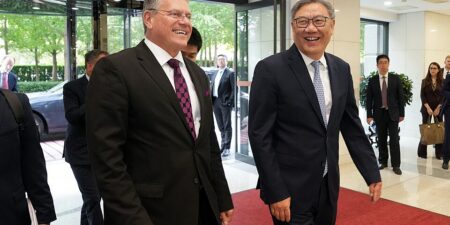
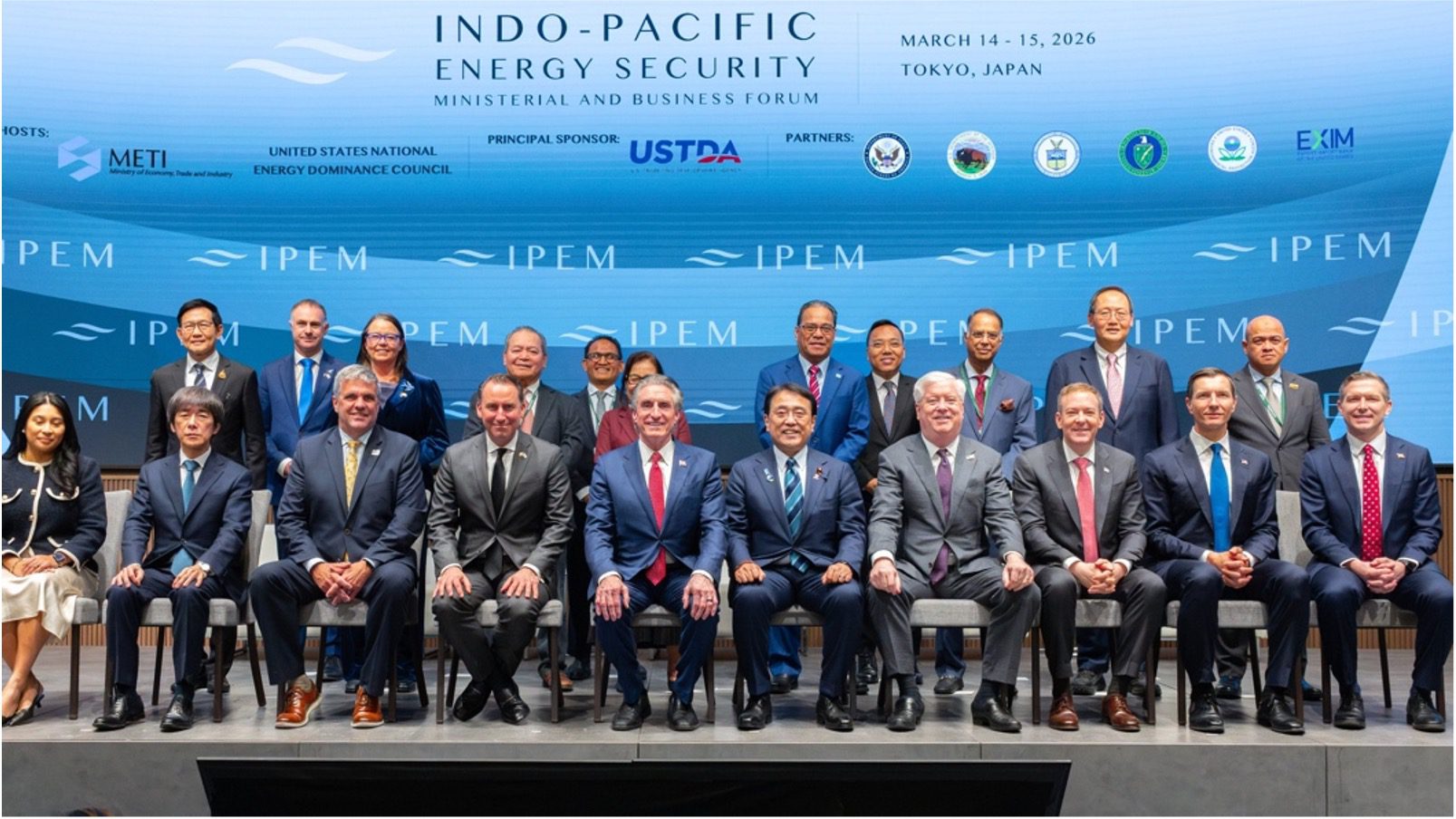
- Three weeks after the United States and Israel launched a war on Iran, prompting global oil and gas prices to soar, U.S. allies agreed to investments totaling $57 billion across 22 deals with U.S. companies at a forum in Tokyo. The inaugural Indo-Pacific Energy Security Ministerial and Business Forum was organized March 14 and 15 and co-organized by the U.S. Trade Development Agency (USTDA) and Japan’s Ministry of Economy, Trade and Industry. A key U.S. goal for this forum was to establish a mechanism for alliance building. Washington signaled it planned to use energy exports, particularly liquefied natural gas (LNG), as a geopolitical tool to enhance partnerships with allies in the Indo-Pacific. The U.S. State Department said the initiative was a “whole-of-government approach to strengthen energy security, expand U.S. energy exports and counter the coercive influences of China and Russia.” The Iran war’s disruption in Qatar and the Strait of Hormuz sharpened the urgency of the forum. The shutdown of LNG operations in Qatar drove up gas prices in the Indo-Pacific and increased pressure for the region to diversify its energy source
- The forum produced a formal joint ministerial statement focused on three priorities:·
- Ensure reliable energy for growth and security.
- Protect supply chains and maritime routes.
- Enable trade and investment.
Significance
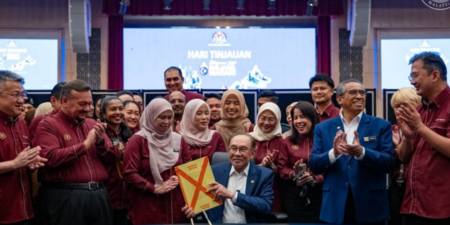
- A key takeaway beyond Washington’s push for U.S. exports was that the forum showed how major Indo-Pacific governments are recalibrating their own energy security strategies. Japan positioned itself as a regional convener focused on supply diversification and stable long-term supply arrangements. Australia cast itself as a reliable fallback supplier committed to stable LNG deliveries. Korea tied energy security more closely to critical minerals and industrial supply chains, while Vietnam used the summit to deepen practical bilateral partnerships across LNG, grids, renewables and future nuclear cooperation. More broadly, several Southeast Asian markets appeared to use the forum to turn immediate energy insecurity into longer-term industrial, financing and supply chain partnerships. Indonesia, for example, deepened links with Japan on critical minerals and nuclear-related cooperation, while Singapore renewed emphasis on the ASEAN Power Grid as a resilience tool.
- USTDA renewed its partnership with the Japan Bank for International Cooperation (JBIC) to fund infrastructure development in the region’s emerging markets. The partnership will fund early-stage feasibility studies, pilot projects and project preparation to make infrastructure projects more bankable. JBIC will then provide the large, long-term financing to build the projects. The bank has expanded its role in recent years in response to China’s growing influence. In addition, the renewed USTDA-JBIC partnership plays a role in a much larger investment fund: the $550 billion Japan strategic investment pledged as part of Japan’s trade agreement with the United States will rely heavily on JBIC. USTDA agreed to unlock LNG export opportunities for U.S. suppliers at an event slated for March 20 in Washington, D.C., with the launch of a new Global Gas Initiative. As USTDA expands its partnerships with U.S. gas companies to boost LNG exports, it will help develop gas infrastructure in key LNG importing countries. The infrastructure will include LNG terminals, pipelines, storage facilities and distribution networks. The biggest bottlenecks are not U.S. production capacity but the lack of infrastructure in receiving countries.
Implications
- For Asian governments, this forum means more diversification of suppliers and fuel types rather than dependence on any single energy source while supporting greater investment across the full energy supply chain and more transparent long-term contracts to reduce volatility. The forum also promoted more financing support from institutions including the World Bank and Asian Development Bank and expanded cooperation on nuclear energy, including small modular reactors and other advanced technologies.
- The Iran war’s disruption in Qatar and the Strait of Hormuz sharpened the urgency of the forum. The shutdown of LNG operations in Qatar drove up gas prices in the Indo-Pacific and increased pressure for the region to diversify its energy sources. With 30 percent of LNG and 20 percent of oil in the Indo-Pacific coming through the strait, the flare-up of regional tensions has increased the importance of the meeting. Furthermore, this energy forum was intended to become an annual mechanism to consolidate energy cooperation between Indo-Pacific countries and the United States. Whether this will be a recurring event will depend on the follow-through of deals signed by both sellers and buyers.
If you have any questions or comments, please reach out to BGA Director for Energy, Climate and Resources Chayamon Srisongkram or BGA Head of Research Murray Hiebert.
Best regards,
BGA Energy, Climate and Resources Team

×