















Myanmar’s Insurgency Industry and Military Consolidation
BGA Senior Adviser Dr. Thitinan Pongsudhirak prepared an update on Myanmar’s political landscape and implications for clients.
Context
- Myanmar is entering a new phase more than five years after its February 2021 military coup. The civil war is far from over and resistance forces will continue to contest the military-backed government across much of the country. But the central question is changing. It is now less about whether the resistance can keep fighting and more about whether it has the political capacity and intention to win, take power and govern.
- Myanmar’s resistance coalition has demonstrated considerable prowess and staying power. People’s Defense Forces (PDFs), ethnic armed organizations (EAOs), the National Unity Government (NUG) and other opposition groups have denied the military uncontested control over large parts of the country. However, “insurgency industrial complex” is the deeper problem which developed around deep-seated resistance going back to the 1990s when diaspora communities mobilized resources and grassroots funding, dissidents sustained political agitation, criticism and international advocacy and donors supported organizations, programs and campaigns that demonstrated defiant opposition to military rule.
Significance
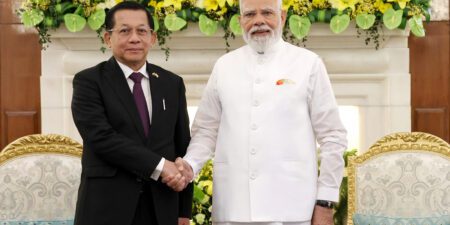
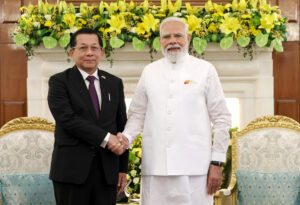
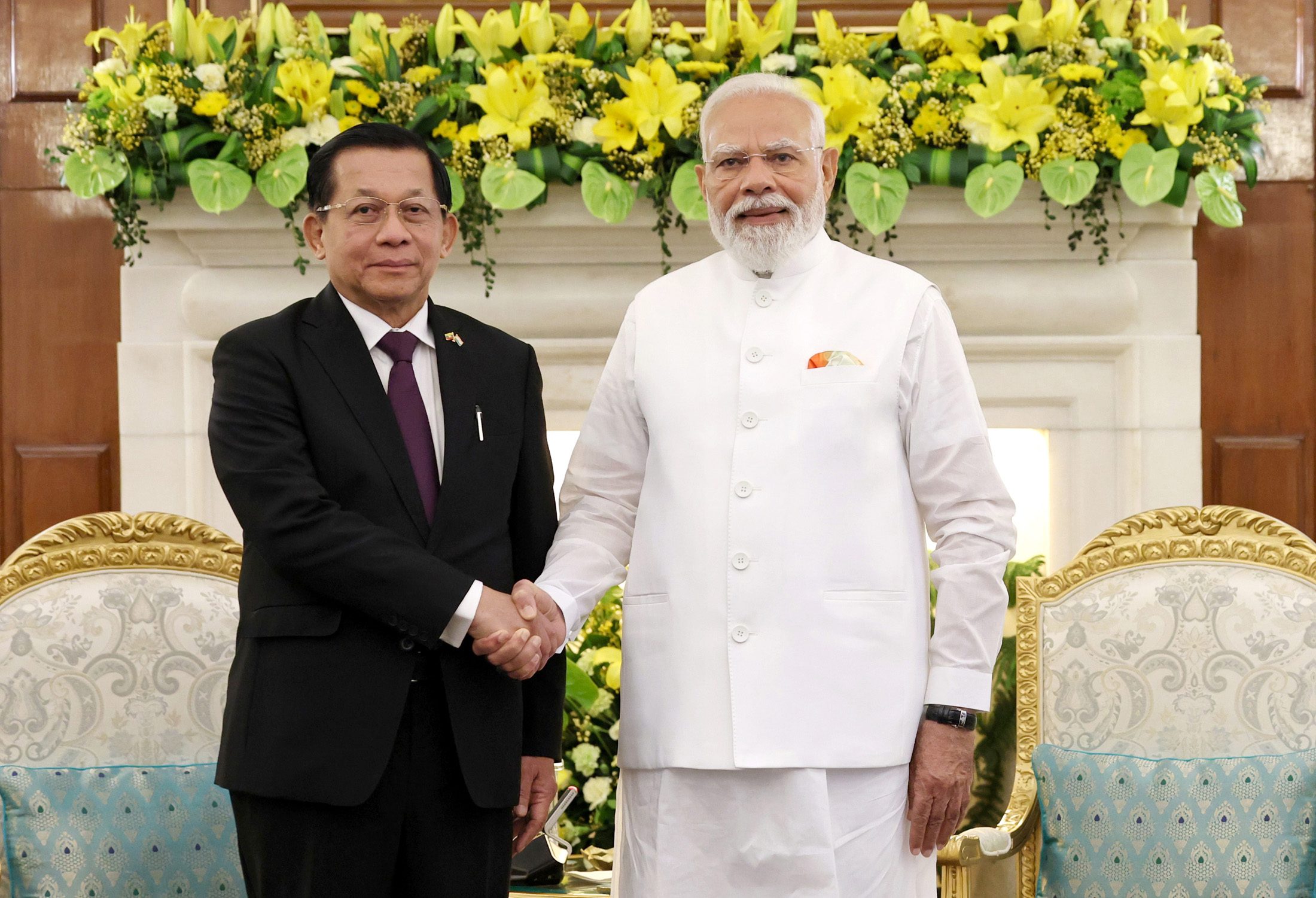
- Min Aung Hlaing’s recent visits to India, China, Laos, Thailand and Russia suggest that Myanmar’s political trajectory is moving from battlefield contest toward gradual regional normalization. After presiding over pseudo elections dominated by proxy parties, the junta chief became president in April 2026, shedding his military uniform for a civilian façade. He has survived the most serious challenge Myanmar’s armed forces have faced in decades. Having secured his position through military incumbency, Chinese strategic support and controlled elections last December and January, Min Aung Hlaing is now consolidating a delayed fait accompli through diplomatic recognition
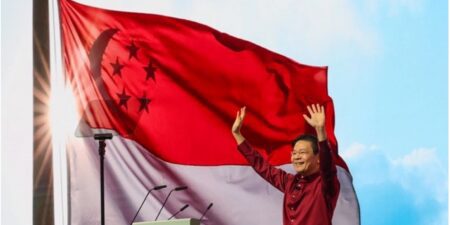
- As Min Aung Hlaing is on a roll diplomatically, the Association of Southeast Asian Nations (ASEAN) is correspondingly under growing pressure. Manila has political room to insist that Myanmar first show progress on reducing violence and allowing humanitarian access and inclusive dialogue. When ASEAN marks its 60th anniversary under Singapore’s chairmanship next year, its government will want the most successful round of ASEAN-related summits. Including Min Aung Hlaing could deter some western and Asian leaders from attending or ending up sending a downgraded level of representatives to the meetings. Keeping him out, however, will become harder to justify as more governments receive him bilaterally.
Implications
- Companies should watch at least four indicators. These include ASEAN’s gradual movement toward readmission, changes in western sanctions, the pace of Chinese-backed economic consolidation in Myanmar and junta chief-turned-president Min Aung Hlaing’s succession prospects. The resistance can continue fighting for years, while the military can rule without pacifying the whole country.
- For businesses, Myanmar should be viewed neither as returning to normal nor as permanently closed. Political and commercial space will likely reopen selectively even as civil war persists. Myanmar’s emerging new normal appears uncomfortable, familiar and realistic – an “insurgency industrial-complex” alongside entrenched military incumbency that should be closely monitored.
We will continue to keep you updated on developments in Myanmar. If you have comments or questions, please contact BGA Senior Adviser Thitinan Pongsudhirak at thitinan@bowergroupasia.com.
Best regards,
BowerGroupAsia

×