

















US-China After Washington Summit: Guardrails and Derisking
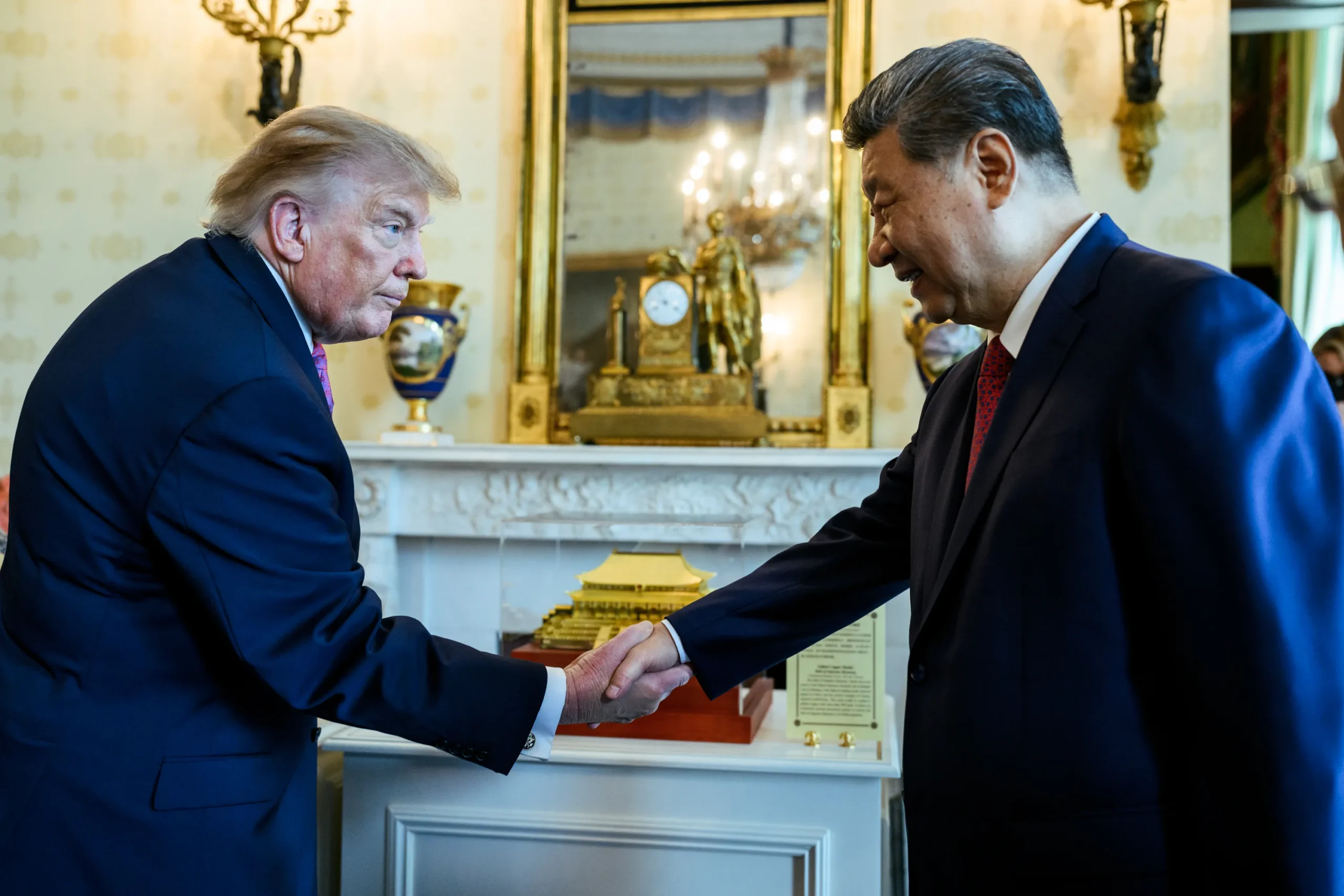
BGA Senior Adviser Dr. Thitinan Pongsudhirak wrote a client update on the status of U.S.-China relations in the wake of the Washington summit.
Context
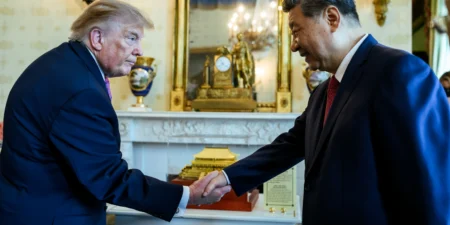
- The red-carpet welcome U.S. President Donald Trump rolled out for Chinese President Xi Jinping in Washington in late September went as well as could be expected: no big deliverables, but more guardrails. Both leaders extended the geoeconomic truce in U.S.-China relations, trimmed some tariffs and reaffirmed the so-called “constructive strategic stability,” first adopted at their Beijing summit in May. At issue is how long the current bonhomie will remain and what happens when bilateral confrontation returns.
- The Xi-Trump dialogue now spans trade, investment, fentanyl, AI and regional flashpoints. Essentially, the guardrails initially put up at their Busan meeting in October 2025 have been reinforced rather than tested. Trump even kept a pending Taiwan arms package of up to $14 billion on hold, a gesture Beijing will not have missed. For a relationship that was locked in a spiral of triple-digit tariffs only 18 months ago, this is a remarkable turnaround.
Significance
- Beijing has leverage over Washington and both Xi and Trump know it. China controls about 85 percent of global rare-earth refining and roughly 90 percent of rare-earth alloy and magnet production. These materials go into electric vehicles, wind turbines, semiconductors and, most importantly, advanced weapons systems. In August, some Chinese suppliers halted licensed rare-earth shipments to U.S. customers ahead of Xi’s visit, and the issue was left unresolved in Washington. As long as Beijing can turn the rare-earths tap on and off, Washington will tread carefully on tariffs and technology controls.
- If the United States cannot prevail against Iran, its superpower credibility and prestige will be dented, and provoking another rare-earth cutoff on top would compound the damage. Stability with Beijing is thus a necessity rather than a choice. This does not mean Trump has gone soft on China across the board. He has sanctioned Chinese “teapot” refineries that buy Iranian oil, told Xi that helping Iran was “unacceptable” and slowed exports of aircraft parts to China. But he is avoiding the kind of escalation on tariffs and technology that would invite Chinese retaliation through rare earths.
- Xi has his own reasons to keep the peace. China’s economy is slowing under the weight of a protracted property bust. Growth fell to 4.3 percent in the second quarter, the weakest since 2022, and Beijing announced fresh rate cuts and mortgage subsidies at the end of September. In his third term, Xi has also purged top military generals and senior party officials. As a result, Xi has likely made enemies within. With so much to tend to at home, Xi appears to have little appetite for a showdown with Washington. Yet it would be a mistake to read Xi’s restraint as weakness. He came to Washington holding the rare-earths card and left having conceded little.
Implications
- Overall, U.S.-China relations this year will be cordial — more than just guardrails but well short of a G2. But this superficial warmth is conditioned on China’s rare-earth leverage, America’s Iran folly and Xi’s domestic challenges. None of them is permanent. The Iran war will eventually end or settle into a stalemate, freeing American attention and assets for the Indo-Pacific. The United States and its allies are racing to build non-Chinese rare-earth supply chains. As that dependence shrinks, so does Washington’s reason for restraint. In Beijing, a recovering economy and a rebuilt military command would leave Xi with fewer reasons to stay patient. The medium-term trajectory still points towards confrontation, and possibly conflict, once the balance of leverage shifts.
- Companies should map their exposure to rare earths and critical minerals deep into their supply chains, build buffers ahead of each truce deadline, lock in non-Chinese supply contracts while new capacity is still being allocated and keep China-plus-one capacity that can be scaled up quickly. This makes the current window the time to double down on derisking, not to bank on a lasting truce. Derisking is less costly and quieter in calm times than in a crisis. This is not about exiting China, whose supplier ecosystems remain hard to replicate; it is about reducing the dependencies that would hurt most when the guardrails are next tested.
We will continue to keep clients abreast of geoeconomic dynamics in U.S.-China relations. If you have comments or questions, please contact BGA Senior Adviser Dr. Thitinan Pongsudhirak at thitinan@bowergroupasia.com.
Best regards,
BowerGroupAsia

×