


















APEC Advances Digital Trade and AI as China Reshapes the Summit
BGA Senior Adviser Amb. Lawrence Greenwood wrote a client update on the Asia-Pacific Economic Cooperation (APEC) summit.
Context
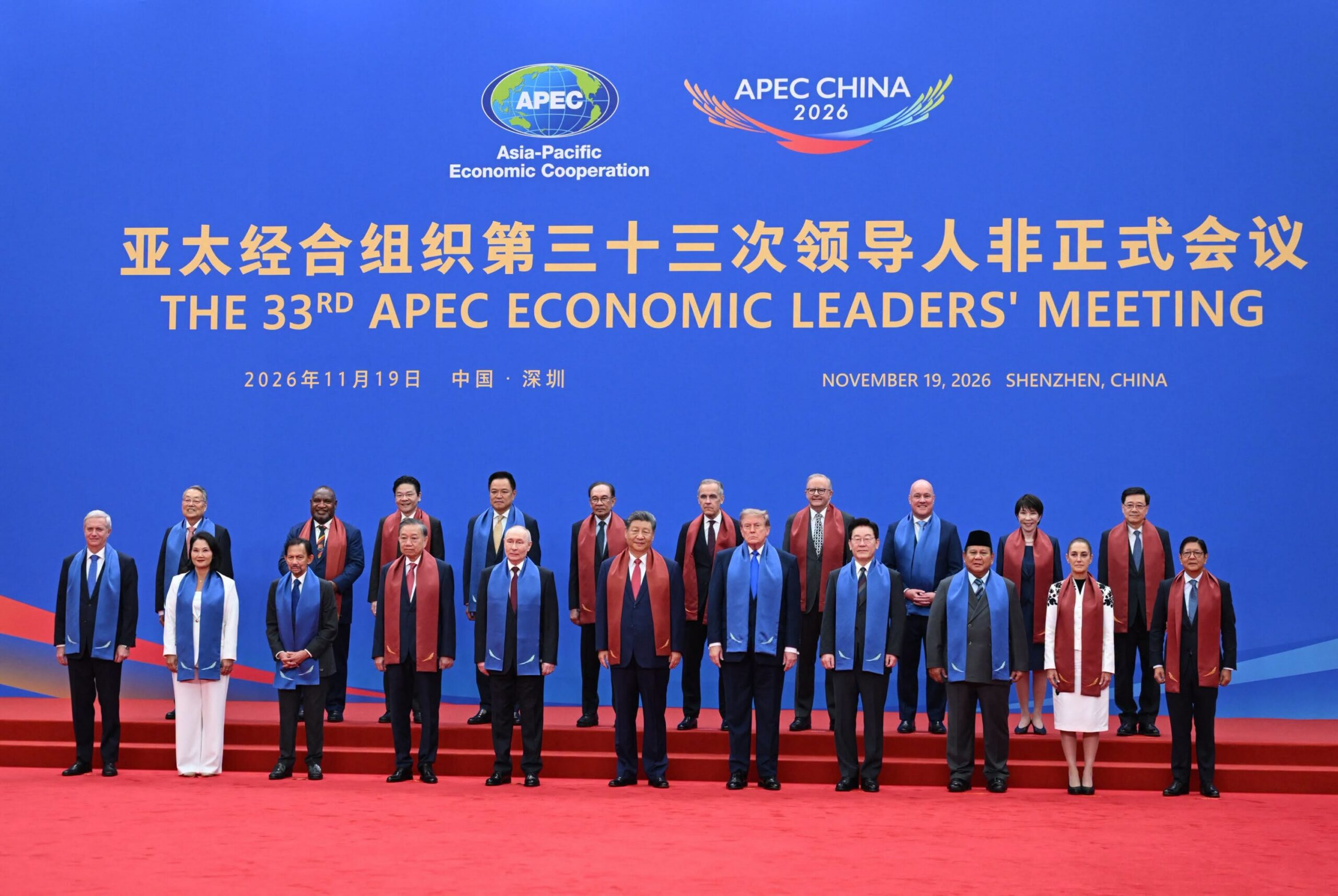
- APEC leaders concluded their annual summit in Shenzhen, China, from November 18-19 with broad support for deeper economic integration, resilient supply chains, responsible AI deployment, digital trade and greater energy security. While China carefully choreographed the meetings to emphasize consensus and regional stability, changes to the traditional summit format and reduced opportunities for private-sector engagement highlighted differences over APEC’s evolving role. Despite these shifts, the summit reinforced APEC’s value as a forum for advancing practical business priorities across the Asia-Pacific.
- The leaders’ declaration, called an “outlook” for unclear reasons, endorsed APEC’s wide-ranging work on trade and investment, promotion of AI and digital technologies, supply chains, agricultural trade and transport connectivity. The leaders also issued three separate documents: the APEC Connectivity Blueprint that focuses on transport infrastructure, customs reforms and business mobility; the Digital Trade Liberalization Cooperation Framework, which calls for collaboration on technical standards, paperless trade and trade-related AI applications; and a statement on human resource reforms needed to prepare workers for the adoption of AI.
Significance
- Trade and Investment: The leaders called for “advancing economic integration” but focused on resilient supply chains, digitalization and services, rather than liberalization of trade in goods. On the concept of a Free Trade Area of the Asia-Pacific (FTAAP), which has been an irritant between the United States and China throughout the year, Chinese President Xi Jinping reiterated support in his speech to business executives at the CEO Summit. The APEC leaders’ statement split the difference, stopping short of calling for negotiations to achieve an agreement and endorsing instead the FTAAP “agenda” as a process for helping countries participate in high-quality trade agreements.
- AI and Digital Economy: The rapid and safe deployment of AI was the focus of much discussion in APEC this year, including at the Digital and AI ministerial in July which approved the “Chengdu statement.” It endorses the development and deployment of “trusted open-source models” with strong security assurances and calls for APEC economies to collaborate to mitigate the risks of AI, provide strong intellectual property protection, prevent AI-enabled scams and fraud, protect data privacy, facilitate cross-border data regimes and promote a pro-innovation regulatory approach.
- Energy: Energy received attention in the leaders’ statement, reflecting the disruption of energy markets due to the Iran war and the rising demand for energy due to AI. It called for collaboration to increase energy supply and distribution of both conventional and low-emission sources, promote cross-border regimes to share energy and rebuild dwindling reserves. Leaders also called for continued collaboration in the areas of agribusiness, illegal logging, overfishing and corruption. In a nod to the U.S. leaders, the summit also recognized the existence of “global imbalances” in trade and called for their correction.
Implications
- China’s Summit Format: As host, China departed from traditional APEC formats in several ways. It eliminated the traditional leaders’ “retreat” where they met with a single staff member and mingled with other leaders during frequent breaks and instead staged a formal public “plenary” with each leader delivering a short speech with cameras rolling. This deprived U.S. President Donald Trump of the opportunity to interact informally with other leaders. China also made the traditional foreign and trade ministers’ meetings that precede the leaders’ summit a virtual meeting rather than in-person. Both steps limited the opportunity for leaders and ministers to informally interact with each other, forgoing one of the most useful aspects of leaders’ meetings.
- APEC and the Private Sector: China also changed the way it handled private sector interaction in APEC. It dispensed for the first time in the APEC Business Advisory Council’s (ABAC) 30-year history with the dialogue between the APAC representatives and leaders. Instead, the CEO Summit chaired by the China Council for the Promotion of International Trade issued the “Shenzhen Initiative” containing “private sector” recommendations for government action. Although that initiative drew on the ABAC’s massive annual “report to leaders,” laboriously compiled and drafted over the last year, this process effectively overshadowed the traditional role of ABAC. Finally, the CEO Summit was held in a small venue with most seats reserved for Chinese firms, severely limiting the number of non-Chinese business participants. This meant that U.S. participation was small compared to previous years
- Though China downplayed the role of the private sector in the traditional APEC process, it still supported many of the priorities that business has advanced in APEC. This included responsible AI deployment, digital transformation, cross-border data flows, energy development, pro-innovation regulatory reform, more resilient supply chains and intellectual property protection. APEC, with its many vibrant technical workstreams and a well-developed process for getting business views before government officials, remains a useful organization to advance business interests in the Asia-Pacific.
We will continue to keep you updated on developments in APEC. If you have any comments or questions, please contact BGA Senior Adviser Amb. Lawrence Greenwood.
Best regards,
BowerGroupAsia

×