















Australia Announces New Hate Speech Laws Following Terrorist Attack
The BGA Australia team, led by Managing Director Michael “Mick” McNeill wrote an update to clients on Australia’s new hate speech laws.
Context
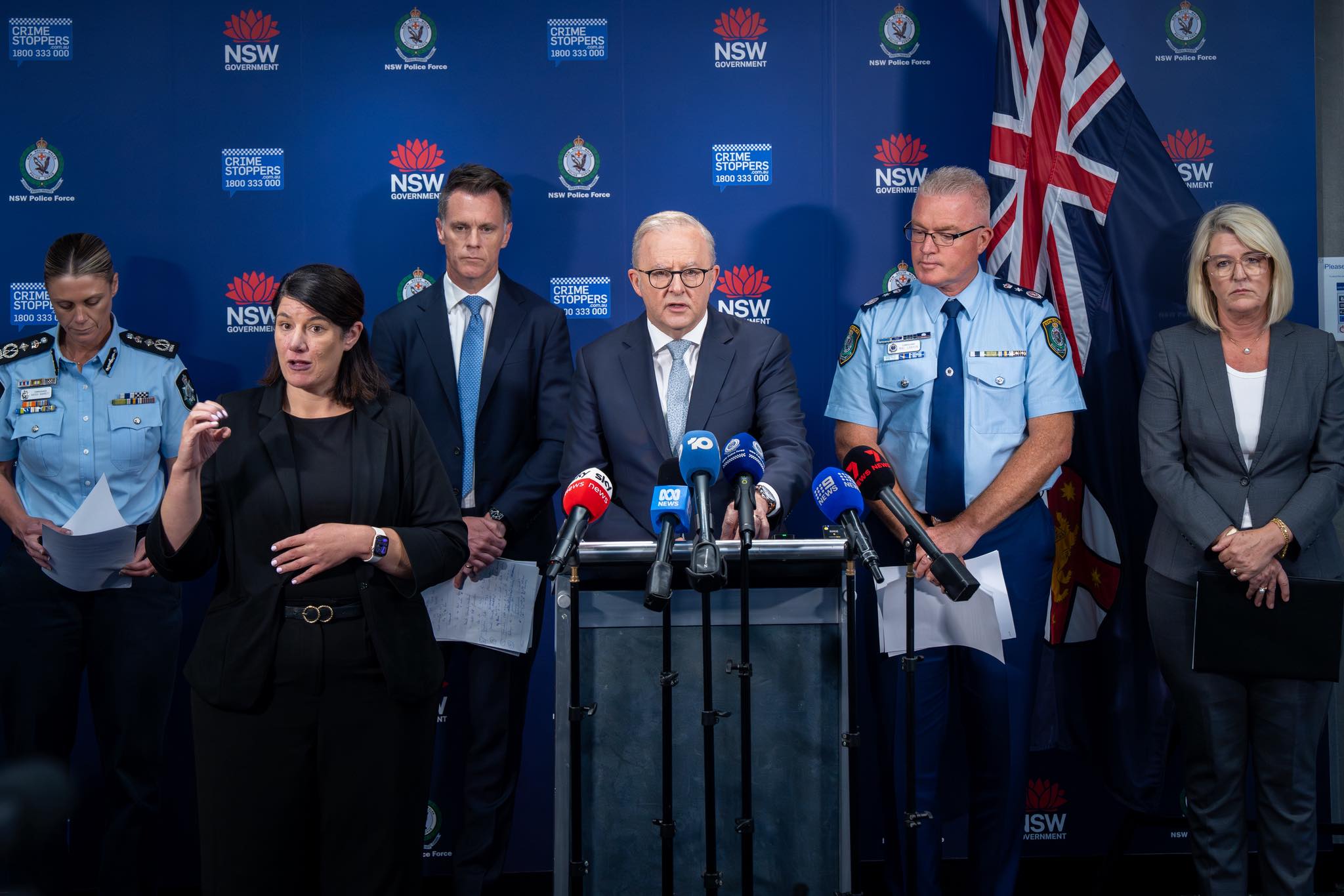
- Prime Minister Anthony Albanese has announced a package of measures to address antisemitism following the December 14 terrorist attack at Bondi Beach in Sydney that killed at least 15 people. This includes hate speech offences for preachers, increased penalties for hate speech promoting violence and new powers to cancel or reject visas. The eSafety Commissioner, the special envoy for antisemitism and the minister for communications will work together to provide online safety advice to address antisemitism.
- There are sharp political differences on how the Labor government has handled the rise in antisemitism since October 7, 2023, with conservative critics accusing Albanese and his ministers of being weak due to the voting power of Muslim communities, the left-leaning Labor rank-and-file and pro-Palestinian sentiment among young voters. For some in the Liberal-Nationals opposition, the Jewish community and conservative commentariat, it is a “line in the sand” moment for immigration policy, defense of liberal values and the pushback against progressive influence in politics, education and corporate Australia.
Significance
- Informed by the special envoy to combat antisemitism’s Plan to Combat Antisemitism, the attorney-general and minister for home affairs will develop a package of legislative reforms. These measures will introduce aggravated hate speech offences for preachers and leaders who promote violence, increase penalties for hate speech promoting violence and make hate an aggravating factor in sentencing crimes for online threats and harassment. The measures will develop a regime to list organizations whose leaders engage in hate speech promoting violence or racial hatred and create a narrow federal offence for serious vilification based on race or advocacy for racial supremacy.
- The special envoy’s Plan to Combat Antisemitism was released in July 2025, and the government had been criticized for the delay in releasing its full response. President of the Executive Council of Australian Jewry Daniel Aghion “cautiously welcomed” the government’s response, while criticizing the government for not heeding warnings to address antisemitism much earlier. “It is an absolute tragedy that it has taken a massacre of Jews and Australians to trigger an acceptable response.”
Implications
- Home Affairs Minister Tony Burke said the legislative reforms would “take Australia into new legal territory, creating new offences that have never before existed.” National Security expert Dr. John Coyne cautioned this would need to “walk the delicate balance between freedom of expression and hate speech” while noting certain behavior had been “normalized” and things had been allowed to “slip.” Opposition Leader Sussan Ley called on Albanese to recall Parliament before Christmas “to pass legislation to eradicate antisemitism and to strengthen Australia’s counter-terrorism laws.” Ley also wants new electronic surveillance legislation, powers to strip dual citizenship from and deport “extremists and radicals,” preventing visas being granted “to any person coming from a terrorist enclave” and elevated security and character assessment checks “beyond current processes and protocols through enhanced interrogation by authorities.” Legislation will be referred to parliamentary committees, including the Parliamentary Joint Committee on Intelligence and Security, for examination.
- The terrorist threat level remains at “probable,” meaning there is a greater than 50 percent chance of a domestic terrorist attack or attack planning in the next 12 months. It was raised to this level in August 2024 due to anticipated spikes in politically motivated violence. In January 2025, the ASIO director-general said there had been “a disturbing escalation in the targeting of Jewish interests and a disturbing escalation in the severity and recklessness of the targeting, with general harassment and intimidation moving to the targeting of people and places.” The current terrorism threat level is the same as it was at the height of the Islamic State caliphate. In February 2025, the ASIO director-general said, “normalization of violent protest and intimidating behavior lowered the threshold for provocative and potentially violent acts” and that narratives originally centered on “freeing Palestine” had expanded to include incitements to “kill the Jews.”
We will continue to keep you updated on developments in Australia as they occur. If you have any questions or comments, please contact BGA Australia Managing Director Michael “Mick” McNeill at mmcneill@bowergroupasia.com or BGA Senior Director for Technology William Heidlage at wheidlage@bowergroupasia.com.
Best regards,
BGA Australia Team

×