


















Australian Energy Transition Faces Reality in 2026
The BGA Australia team, led by Managing Director Michael “Mick” McNeill wrote an update to clients on Australia’s energy transition.
Context
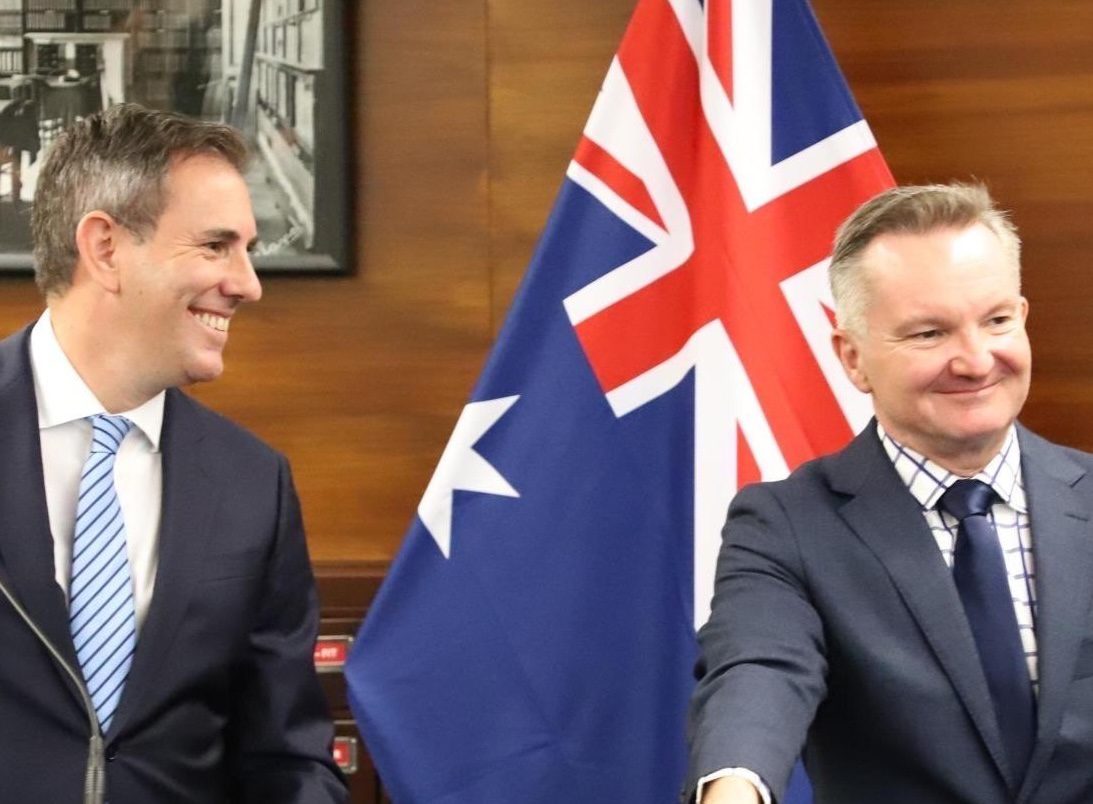
- The Labor government’s net-zero transition — fundamental to its economic narrative — will come under increasing pressure this year as doubts emerge about its ability to meet ambitious emissions targets and as businesses and households face cost pressures. While Climate and Energy Minister Chris Bowen views Labor’s 2025 election win as vindication of the government’s approach, promised lower electricity prices for households have not materialized amid concerns that the pace of investment in renewables and associated infrastructure — largely underpinned by taxpayers — is not sufficient for the government to meet its 2030 renewable energy target.
- The government now firmly acknowledges gas as critical to filling the gap between the retirement of coal-fired power stations and the rollout of renewables, and it is determined to secure an adequate supply of gas for domestic use. Meanwhile, Treasurer Jim Chalmers, who is optimistic about the potential of artificial intelligence (AI), has declared productivity his priority for this term, with the government seeking to entrench Australia as an AI and data center hub. Policymakers are increasingly focused on the energy implications of this push.Down in the opinion polls following the December 14, Bondi Beach terrorist attack, the Labor government will face a public less forgiving for policy failings in 2026. The Liberal-Nationals opposition, which is losing support to the right-wing One Nation Party, may see an opportunity to attack the government on renewables amid mixed international signals about its commitment to net zero and a deteriorating strategic environment. On January 20, Australia’s largest coal-fired power station announced it would have its life extended two years to 2029 due to concerns about supply shortfalls and grid instability.
Significance
- The government aims for a 62-70 percent reduction of greenhouse gas emissions by 2035 — from 2005 levels — and net zero by 2050. Two key components of the government’s emissions-reduction agenda are its goal of 82 percent renewable energy by 2030 and the Safeguard Mechanism, which requires Australia’s heaviest emitters to reduce emissions by 4.9 percent each year until 2030.
- The government’s Net Zero Plan is anchored by the Safeguard Mechanism and highlights Australia’s comparative advantages in carbon capture and storage. The mechanism will be reviewed from 2026-2027 to ensure it is supporting progress toward the 2035 emissions target. The government has signaled it is particularly focused on emissions reductions in the electricity, transport and industrial sectors. The Minerals Council of Australia has warned that expanding Safeguard Mechanism coverage to a significantly larger number of facilities would increase compliance complexity and costs.
- The government will establish an AUD 5 billion (US$3.3 billion) Net Zero Fund, within the National Reconstruction Fund, to help industrial facilities decarbonize and scale up more renewables and low-emissions manufacturing. This will complementthe government’s Capacity Investment Scheme, which provides a long-term revenue safety net for investors, as well as the government-owned Clean Energy Finance Corporation’s Rewiring the Nation Fund, which co-invests in large-scale transmission projects.
- The share of electricity from renewable energy has increased to about 40 percent, but experts believe construction of solar and wind farms must accelerate for the government to reach 82 percent by 2030. While the Clean Energy Investor Group has acknowledged the benefits of the Capacity Investment Scheme, it has pointed to state government planning delays, grid connection uncertainty, transmission constraints, rising project costs and lack of long-term revenue certainty as working against final investments.
Implications
- The Climate Change Authority reported in November that of the 65 projects selected for Capacity Investment Scheme funding, only nine have reached final investment decision and only one is operational. The government hopes its recent environmental law reforms will expedite renewable projects by streamlining approvals while strengthening nature protection. Additionally, the government’s Investor Front Door aims to simplify approvals for overseas investors and companies with major clean energy investment proposals.
- The Australian Energy Market Commission projects that the price of residential electricity per unit (not bills) will increase around 5 percent in the next five years, but those prices risk rising by 13 percent from 2030-2035 unless new renewable generation, battery and transmission projects are delivered faster than currently expected. The Clean Energy Finance Corporation anticipates an increase in large-scale wind, solar and battery investment in 2026. It believes Australia’s data center industry presents a huge opportunity for the renewable energy sector; AI could account for more than 10 percent of Australia’s electricity consumption by 2035. Critics argue that while renewables’ “free” generation costs are low, the total system cost for a grid dominated by variable renewables (solar and wind) becomes very high — potentially two to six times more expensive than coal and nuclear systems. This is due to the need for massive backup, storage and grid infrastructure, significantly raising electricity prices for consumers.
- The Australian Gas Market Review Report was released in December. Central to the report is the proposal to establish a domestic gas reservation scheme to commence in 2027 following consultations. This could see east coast gas exporters forced to set aside between 15-25 percent of their gas production for domestic supply. While manufacturers are supportive, some in the gas sector believe it will deter investment and that more focus on unlocking supply is needed. The government has briefed major export partners. Existing domestic and international contracts would be respected under the proposal.
We will continue to keep you updated on developments in Australia as they occur. If you have any questions or comments, please contact BGA Australia Managing Director Michael “Mick” McNeill at mmcneill@bowergroupasia.com or BGA Senior Director for Technology William Heidlage at wheidlage@bowergroupasia.com.
Best regards,
BGA Australia Team

×