


















India-AI Impact Summit 2026: Bridging the Global AI Divide
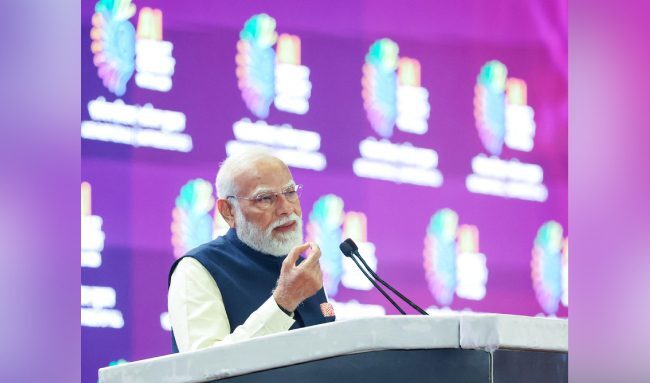
The BGA India team, led by Managing Director Anuj Gupta, wrote an update for clients on India’s successful hosting of the India-AI Impact Summit 2026 and the country’s emerging strategy to become a global AI hub through inclusive, innovation-focused governance.
Context
- India convened one of the largest AI gatherings ever hosted by a Global South nation. Held in New Delhi from February 16–21, the summit brought together 20 heads of state, 59 ministers, 100+ AI leaders, and an estimated 500,000 students and early-stage innovators. The event combined high-level policy discussions with broad-based participation to explore real-world AI deployment across healthcare, agriculture, education, climate action, and governance.
- The summit established actionable frameworks for AI governance and infrastructure. The New Delhi Declaration, endorsed by 89 countries, and the voluntary New Delhi Frontier AI Commitments, co-signed by leading global and Indian firms, emphasizes democratized access, workforce readiness, secure systems
,and cross-border science. India also unveiled its human-centric MANAV governance framework and expanded shared compute capacity through the IndiaAI Mission, signaling a phased but aggressive scale-up of AI infrastructure.
Significance
- India is positioning AI as a lever for inclusive economic growth and global collaboration. By balancing innovation freedom with responsible deployment, India is consolidating its role as a neutral bridge between advanced economies and emerging markets, offering multinationals diversified infrastructure, regulatory frameworks
,and market access beyond U.S.- or China-centric models.
- The summit signals India’s emergence as a strategic AI rule-shaper and innovation hub. Initiatives such as the IndiaAI Mission, which aims to boost compute scaling to 100,000 graphics processing units, and partnerships under Pax Silica strengthen India’s role in global AI and semiconductor supply chains while promoting human-centric, inclusive AI aligned with its broader Viksit Bharat@2047 development vision.
Implications
- Companies can expect a rapidly expanding, commercially viable AI ecosystem. India’s investment in shared compute resources, public–private data centers, talent development
,and flexible governance frameworks creates opportunities for global cloud providers, semiconductor firms, and AI platform developers to engage in large-scale deployment, model training, localization, and enterprise integration.
- Businesses should monitor India’s policy signals, multilateral partnerships
,and talent mobilization. Aggressive AI hiring, combined with initiatives like Pax Silica, will shape workforce availability and cross-border AI collaboration, offering firms scalable pathways to deploy AI solutions across South Asia and emerging markets.
We will continue to keep you updated on developments in India’s AI ecosystem and its global engagement strategy as they occur. If you have any comments or questions, please contact BGA India Managing Director Anuj Gupta at agupta@bowergroupasia.com.

×