




















India-Oman Economic Agreement Expands New Delhi’s Trade Outreach
The BGA India team, led by Managing Director Anuj Gupta, wrote an update to clients on the India-Oman comprehensive economic partnership agreement (CEPA).
Context
- India has advanced its trade outreach by signing a CEPA with Oman December 18. This builds on a series of transformative trade accords over the last five years, including CEPAs with the United Arab Emirates, Australia, the European Free Trade Association, Mauritius and the United Kingdom. Describing the agreement as a bridge from “trade to trust,” Indian Prime Minister Narendra Modi underlined the growing depth of the country’s trade partnerships.
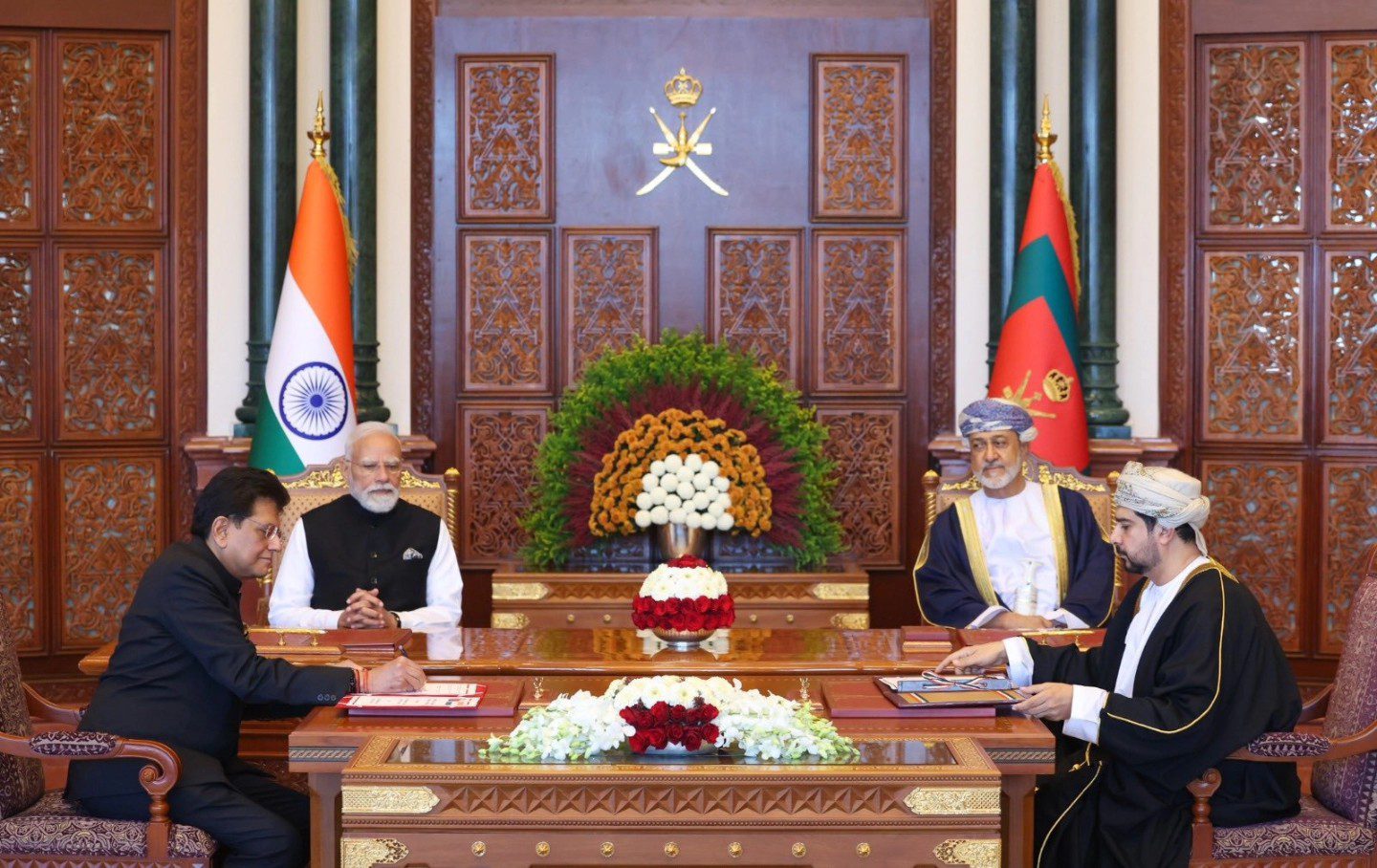
- Signed in Muscat in the presence of Modi and Omani Sultan Haitham bin Tariq, the CEPA is a comprehensive agreement covering goods, services, investment and movement of professionals. It delivers near-total duty free access for Indian exports, Oman’s most ambitious services commitments to date, enhanced mobility for professionals and stronger investment protections, positioning the agreement as both an economic and strategic anchor in India’s engagement with West Asia.
- The timing of the deal is significant: India has embarked on this agreement as its exports have reached a 10-year high, recording strong growth despite elevated tariff pressures abroad, including tariffs of up to 50 percent in the U.S. market. Against this backdrop, the Oman CEPA reflects New Delhi’s push to lock in stable export destinations, diversify market access and deepen economic engagement with strategically important regions such as the Gulf.
Significance
- The agreement creates near-total duty free access for Indian exports. Under the CEPA, Oman will eliminate customs duties on 98.1 percent of its tariff lines, covering 99.4 percent of India’s exports to Oman by value. This provides Indian exporters with near-complete duty free access and significantly improves competitiveness across key sectors, including engineering goods, pharmaceuticals, medical devices, textiles and apparel, leather, gems and jewelry, agricultural and marine products, plastics, furniture and automobiles. A large share of tariff elimination is front-loaded, ensuring early commercial gains.
- India will liberalize duties on 77.8 percent of its tariff lines, covering 94.8 percent of imports from Oman by value, while protecting sensitive sectors through exclusions and tariff-rate quotas. Sensitive products such as agricultural items (including dairy, tea, coffee, rubber and tobacco), precious metals and jewelry, labor-intensive goods like footwear and sports goods and base-metal scrap remain excluded or subject to tariff rate quota-based liberalization, reflecting India’s calibrated free trade approach that balances market access with domestic safeguards.
- The agreement represents Oman’s most ambitious services offer to date, covering 127 sub-sectors across business and professional services, information technology (IT) and IT-enabled services, education, health care, research and development, environmental services and financial-adjacent activities. For corporates, a key outcome is enhanced movement of natural persons (Mode 4) through eased entry conditions and extended stay durations for intra-corporate transferees, contractual service suppliers and independent professionals. Notably, the permitted duration of stay for Contractual Service Suppliers has been extended eightfold, from 90 days to two years, with the possibility of a further two-year extension, materially reducing deployment friction for cross-border operations.
- Oman has committed to allowing 100 percent foreign direct investment for Indian companies in major services sectors. Complementing this, the CEPA introduces modern disciplines on investment protection, trade facilitation, customs procedures and regulatory transparency, including clearer investor treatment rules and enhanced regulatory cooperation, improving predictability and reducing compliance and operational risks for multinational firms.
Implications
- The CEPA offers immediate gains for labor-intensive sectors. The front-loaded nature of tariff elimination is particularly beneficial for labor-intensive sectors and micro, small and medium-sized enterprises, making the agreement especially relevant for firms with India-based manufacturing hubs supplying the Gulf, where tariff margins have traditionally constrained scale and profitability.
- Oman has made comprehensive commitments on traditional medicine across all modes of supply. This is the first such commitment in any Indian CEPA, opening new commercial opportunities in health care delivery, wellness services, pharmaceuticals and medical tourism, particularly within the Gulf ecosystem.
- Oman’s location near the Strait of Hormuz and its role as a regional logistics and energy hub amplify the agreement’s strategic value. The CEPA strengthens India’s commercial footprint in the Gulf and supports value-chain diversification into West Asia and Africa.
- Looking ahead, India views the Oman CEPA as part of a broader trade expansion strategy. New Delhi hopes to build its trade journey further through trade deals with other key partners including the European Union, the United States and New Zealand, alongside ongoing discussions with Chile and Peru. Several deals are actively being negotiated and will likely be concluded in the coming months, reflecting a strategic effort to diversify export destinations and counter tariff barriers in major markets.
If you have questions or comments, please contact BGA India Managing Director Anuj Gupta at agupta@bowergroupasia.com.
Best regards,
BGA India Team

×