




















India’s Budget 2026 Focuses on Strengthening Domestic Economy to Further Economic Integration
The BGA India team, led by Managing Director Anuj Gupta, wrote an update on India’s 2026-27 Union Budget
Context
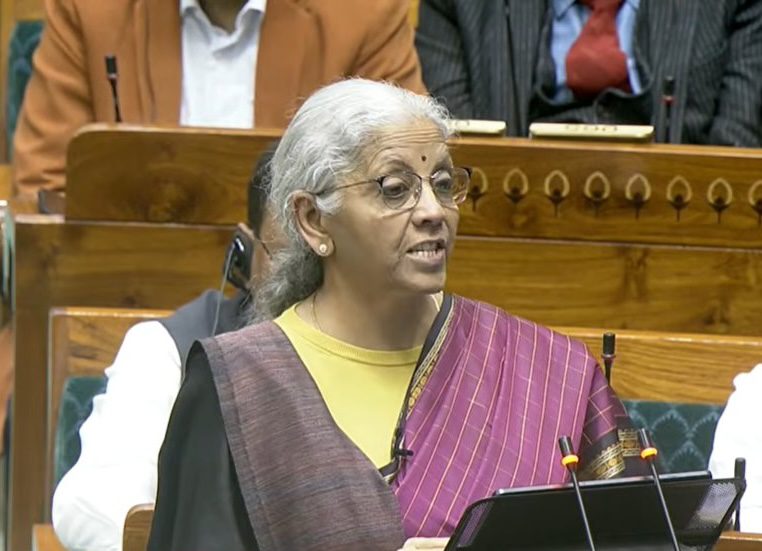
- Indian Finance Minister Nirmala Sitharaman presented her ninth consecutive Union Budget February 1, the second budget in Prime Minister Narendra Modi’s third term. The budget focuses on incremental reforms with four pillars of sustained growth, moderate inflation, fiscal discipline and macro‑stability. GDP growth is projected at around 7.4 percent in fiscal year (FY) 2025-26, with inflation expected at 4 percent and fiscal deficit at 4.3 percent of GDP, reflecting India’s strong macroeconomic fundamentals.
- The budget demonstrates notable strengths in three critical areas: a sustained commitment to infrastructure development, with capital expenditure allocation reaching $134 billion, to create a multiplier effect across the economy; a renewed emphasis on the services sector recognizing India’s comparative advantage in human capital-intensive sectors; and a trust-based approach toward taxpayers and states, with rationalized tax compliance procedures, reduced prosecution frameworks and enhanced cooperative federalism through $15.3 billion Finance Commission Grants — signaling a shift from control to facilitation.
- On the other hand, the budget falls short in three ways: it provides for an expansive role of the state, with government-led initiatives spanning industrial training, skill development, enterprise support and sectoral manufacturing schemes; it offers an insufficient allocation for micro, small and medium enterprises (MSMEs) at $219 million, translating into $3 per enterprise across 70 million MSMEs; and it does not include any substantive allocation toward strengthening India’s judicial infrastructure and law enforcement systems — areas where the state can act and where capacity constraints impose significant costs on businesses and citizens alike.
Significance
- The budget strengthens macroeconomic credibility by meeting prior commitments rather than recalibrating them, with fiscal deficit for FY 2025 and FY 2026 at 4.4 percent and 4.3 percent of GDP, respectively — furthering consolidation. At the same time, the revenue deficit declines sharply to about 0.7 percent of GDP, indicating a structural improvement in deficit quality, with borrowing increasingly directed toward capital formation rather than current expenditure.
- The budget simplifies tax administration through decriminalization of minor offences, automated rule-based processes and extended timelines for compliance. It also incentivizes voluntary disclosure and dispute resolution. These measures will foster a more collaborative, transparent and predictable environment for economic growth.
- Inland waterways take center stage with a 48 percent increase in funding toward 20 new national waterways and a target to raise inland and coastal freight’s share to 12 percent from 6 percent currently — moving waterways to a key pillar of the sustainable freight system. The linkage of waterways to industrial clusters and ports, alongside new east‑west freight connectivity (Dankuni-Surat), makes this the first budget to treat inland waterways as a core logistics backbone.
- The new budget marks a shift from metro‑centric growth to distributed, region‑led urbanization through the development of city economic regions (CERs) across Tier II and III cities as well as temple towns. This will be accomplished by mapping CERs around specific economic drivers and committing $545 million per region over five years, implemented through a challenge‑mode, results‑linked financing framework and tying urban funding to governance reforms.
- For companies — particularly IT services, global capability centers and manufacturing — this expands credible location choices by offering access to emerging talent pools and greater policy certainty in fast‑growing cities.
- The health care and biopharmaceuticals sectors have emerged as key drivers of growth, with health care allocations crossing $11 billion for the first time, alongside a $1 billion outlay for a scheme aimed at strengthening domestic biopharma manufacturing.
- For companies, the immediate impact lies in the strategic removal of customs duties on 17 cancer drugs and expanded rare disease treatments, which lowers operational costs and improves market penetrationfor life-saving therapies.
- The push for domestic biologicals and biosimilars creates a de-risked pathway for firms to move beyond traditional generics into higher-margin, complex therapies, supported by expanding clinical-trial infrastructure and specialized research and development institutions.
- The India Semiconductor Mission (ISM) 2.0 targets equipment and materials manufacturing to fill the missing gap left by ISM 1.0’s focus on fab capacity. Addressing the critical mineral supply chain gap from just mining to value-added manufacturing, India is acting to build self-reliance in necessary materials for clean energy, electronics and defense technologies. Success requires anchored purchase contracts from defense sector, electric vehicle manufacturers and renewable energy suppliers to signal credible demand.
- The Electronics Component Manufacturing Scheme (ECMS) outlay has been doubled to $4.3 billion, aiming to localize key components, raise domestic value addition in mobile phones and anchor India’s transition into a high-value electronics manufacturing hub.
Implications
- Key sectors of focus and opportunities include infrastructure, manufacturing incentives — particularly in sectors like semiconductors, electronics and rare earths — and a parallel push to scale the services sector through health, education, tourism, global capability centers and information technology (IT) and the creative economy, also referred to as the “orange economy” in the budget. Overall, the budget signals continuity of growth through investments, structural reforms and sectoral competitiveness, rather than demand‑side fiscal expansion.
If you have questions or comments, please contact BGA India Managing Director Anuj Gupta at agupta@bowergroupasia.com.
Best regards,
BGA India Team

×