















Korea Pursues Strategic Reset With China While Deepening Cooperation With Japan in State Visits
The BGA Korea team, led by Managing Director B.J. Kim, wrote an update to clients on Korean President Lee Jae-myung’s state visits to China and Japan.
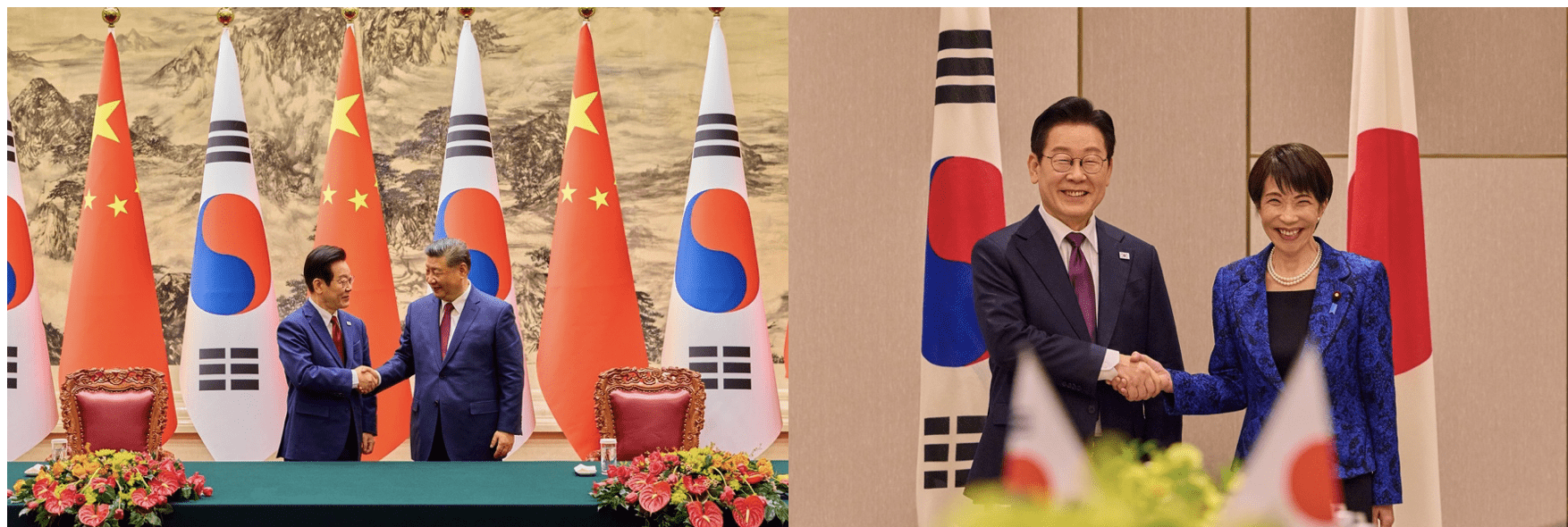
- Korean President Lee Jae-myung visited Beijing, China, from January 4-6 and Nara, Japan, from January 13-14 on official state trips. By visiting both neighboring powers within two weeks, Lee sought to reset Korea’s ties with China, while trying to further strengthen the foundations for economic and security cooperation with Japan.
- The summit meetings underscored the high-stakes diplomacy among Korea, Japan and China to balance and bandwagon in Northeast Asia. They have achieved partial success, with some shortcomings that will require further work.
Significance
China Summit
- The state visit to China took place about two months after Lee met Chinese President Xi Jinping alongside the Korea-hosted Asia-Pacific Economic Cooperation gathering in November, prompting observers to speculate whether the summit was being hurried. It is believed that Beijing wanted the bilateral summit to take place before Lee met with Japanese Prime Minister Sanae Takaichi and that Seoul wanted the Lee-Xi meeting before U.S. President Donald Trump’s widely expected April visit to China, where the U.S. president may try to meet with North Korea’s Kim Jong-un. The two leaders did not issue a joint statement nor did they hold a joint press conference, as was the case with Xi’s state visit to Korea in November.
- Korea’s primary goal was to reset the relationship, which had stagnated under previous administrations, particularly the period following Korea’s installation of the U.S. Terminal High Altitude Area Defense (THAAD) anti-missile defense system in 2016 and the subsequent retaliations of China, some of which — many Koreans believe — continue to this day.
- China’s goal was to pull Korea away from Japan and keep the Lee government neutral on the Taiwan question.
- To these ends, both sides seem to have achieved limited success.
Japan Summit
- The summit in Nara, Prime Minister Takaichi’s hometown, was Lee’s fifth meeting with Japan’s head of government during his first seven months in office, underscoring his vision of “shuttle diplomacy” between the two countries.
Implications
Results Delivered From China Summit
- Memorandums of understanding (MOUs) on policy cooperation: The two governments agreed to hold regularly scheduled ministerial meetings on commerce and industry policies. MOUs were signed to expand cooperation in digital technology development, industrial park development, intellectual property management, environmental and climate cooperation and research and development to address global challenges.
- Status highlighted by protocol: China did its part to make Lee’s state visit look good by offering the highest level of protocol from his arrival to his departure. Together with Xi, Lee met with the country’s second- and third-highest-level leaders.
- Highest-level business communication: All of Korea’s biggest names in business — heads of the country’s largest groups of companies — accompanied Lee, an unprecedented case highlighting China’s economic importance. The Korean business leaders took advantage of the opportunity to convey key messages to their counterparts and Chinese authorities.
Results Delivered From Japan Summit
- Unprecedented personal touch: Takaichi went out of her way to express her welcome and affection for Lee on his arrival, meeting on five occasions in two days and at his final departure. Her efforts and Lee’s warm responses were widely carried by the media in both countries.
- Japan’s forthcoming gesture on history: Takaichi offered a joint DNA investigation of the remains of Korean victims from the 1942 Chosei Mine disaster in Japan. Lee strongly welcomed the gesture.
- Economic and tech alignment: Agreements were reached on strategic cooperation in artificial intelligence, semiconductors and intellectual property. Japan also agreed to join a Korean-led international council against transnational crime focused on voice phishing.
- Security solidarity: Unlike the China summit, both leaders strongly reaffirmed their commitment to the complete denuclearization of North Korea and the importance of the trilateral alliance with the United States.
We will continue to keep you updated on developments in Korea as they occur. If you have any comments or questions, please contact BGA Korea Managing Director B.J. Kim at bjkim@bowergroupasia.com.
Best regards,
BGA Korea Team

×