
















Quad Leaders Push Forward on Business, Technology and Maritime Security
BGA Head of Research Murray Hiebert, Australia Managing Director Michael “Mick” McNeill, India Managing Director Anuj Gupta, Japan Managing Director Kiyoaki Aburaki and Senior Adviser Dr. Thitinan Pongsudhirak provided an update to clients on key business, technology and economic security outcomes from the Quadrilateral Security Dialogue (“the Quad”) Leaders’ Summit in Manila.
Context
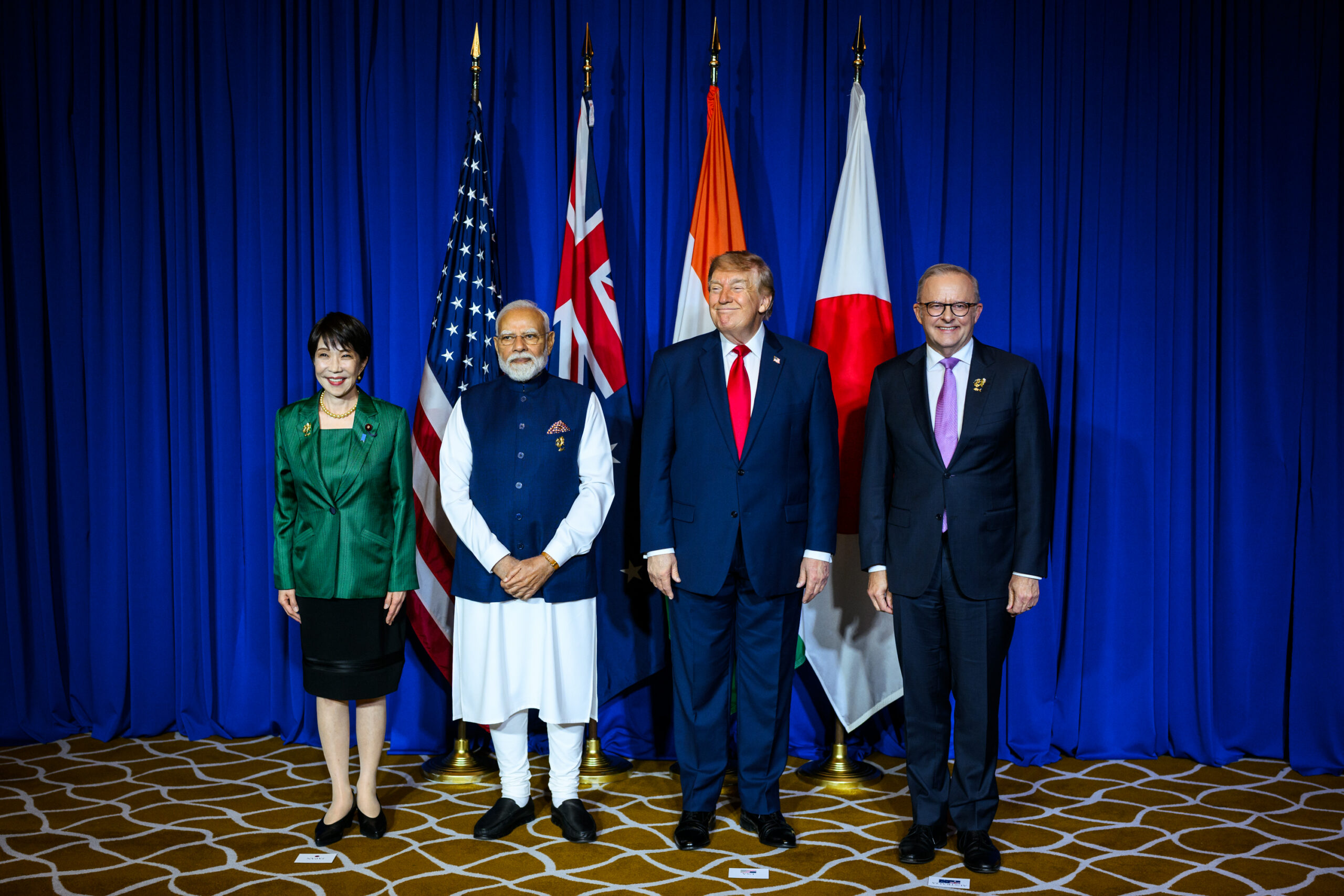
- The Quad Leaders’ Summit in Manila highlighted the group’s continued evolution from a strategic dialogue into a more operational platform focused on economic security, technology cooperation, supply chain resilience and regional infrastructure development. Leaders from the United States, Australia, India and Japan emphasized the need to strengthen trusted networks across the Indo-Pacific while improving resilience against economic coercion and supply chain disruptions.
- While security issues remain central to the Quad’s agenda, the summit’s most significant developments for businesses centered on commercial cooperation, trusted technology infrastructure, digital connectivity and critical supply chains. The leaders reiterated concerns about economic coercion and arbitrary export restrictions while committing to deepen cooperation in areas such as cybersecurity, maritime infrastructure and emerging technologies.
- The summit also underscored growing efforts to translate strategic alignment into practical initiatives. Rather than announcing broad new frameworks, the Quad focused on specific mechanisms designed to support investment, partnerships, connectivity and technology deployment across the Indo-Pacific.
Significance
- The announcement of a new Quad Business Leaders’ Forum in early 2027 is among the summit’s most commercially relevant outcomes. By bringing together business executives, government officials and policy experts, the forum is intended to create a more direct channel for commercial partnerships, investment opportunities and public-private cooperation across Quad markets.
- Economic security remains a core priority. The leaders linked concerns over economic coercion and export restrictions with efforts to strengthen critical supply chains, reinforcing ongoing trends toward diversification and trusted production networks in strategically important industries.
- Technology cooperation continues to expand. The Quad endorsed the Super Intelligence Accelerator, aimed at supporting access to trusted AI technologies and accelerating deployment across the Indo-Pacific. The initiative could create opportunities for firms involved in digital infrastructure, advanced technology and AI implementation.
- Connectivity and infrastructure remain key pillars of the Quad agenda. Progress on undersea cable initiatives, energy connectivity and the Partnership for Cable Connectivity and Resilience reflects growing attention to the physical and digital networks that underpin economic growth and regional resilience.
- Maritime and cybersecurity cooperation are becoming increasingly operational. New initiatives on maritime surveillance, information sharing, cyber resilience and regional security infrastructure signal a broader effort to support secure trade routes, digital systems and critical infrastructure.
Implications
- Companies operating in technology, telecommunications, infrastructure, logistics, energy and advanced manufacturing should closely monitor the Quad Business Leaders’ Forum. The initiative could become an important platform for identifying new partnerships, investment opportunities, and government-supported projects.
- The continued emphasis on trusted technology ecosystems suggests opportunities for companies involved in AI, cybersecurity, cloud infrastructure, digital connectivity and secure communications. At the same time, firms should expect governments to place greater emphasis on technology security, resilience, and trusted suppliers.
- Businesses should view the Quad’s economic agenda as part of a broader regional push toward supply chain diversification and economic resilience. Future investment incentives, procurement decisions and infrastructure initiatives are increasingly likely to reflect these priorities.
- The summit reinforces a broader trend across the Indo-Pacific: economic security, technology policy, infrastructure development and geopolitical considerations are becoming increasingly interconnected. Companies that understand how these priorities shape government decision-making will be better positioned to identify opportunities and manage risk.
We will continue to keep you updated on developments in the Indo-Pacific. If you have any comments or questions, please contact BGA Head of Research Murray Hiebert, Australia Managing Director Michael “Mick” McNeill, India Managing Director Anuj Gupta, Japan Managing Director Kiyoaki Aburaki or Senior Adviser Dr. Thitinan Pongsudhirak.
Best regards,
BowerGroupAsia