
















Taiwan Secures Favorable US Tariff Terms as Semiconductor Investments Expand
The BGA Taiwan team, led by Senior Adviser Rupert Hammond-Chambers, wrote an update on the Taiwan-U.S. tarrif memorandum of understanding (MOU).
Context
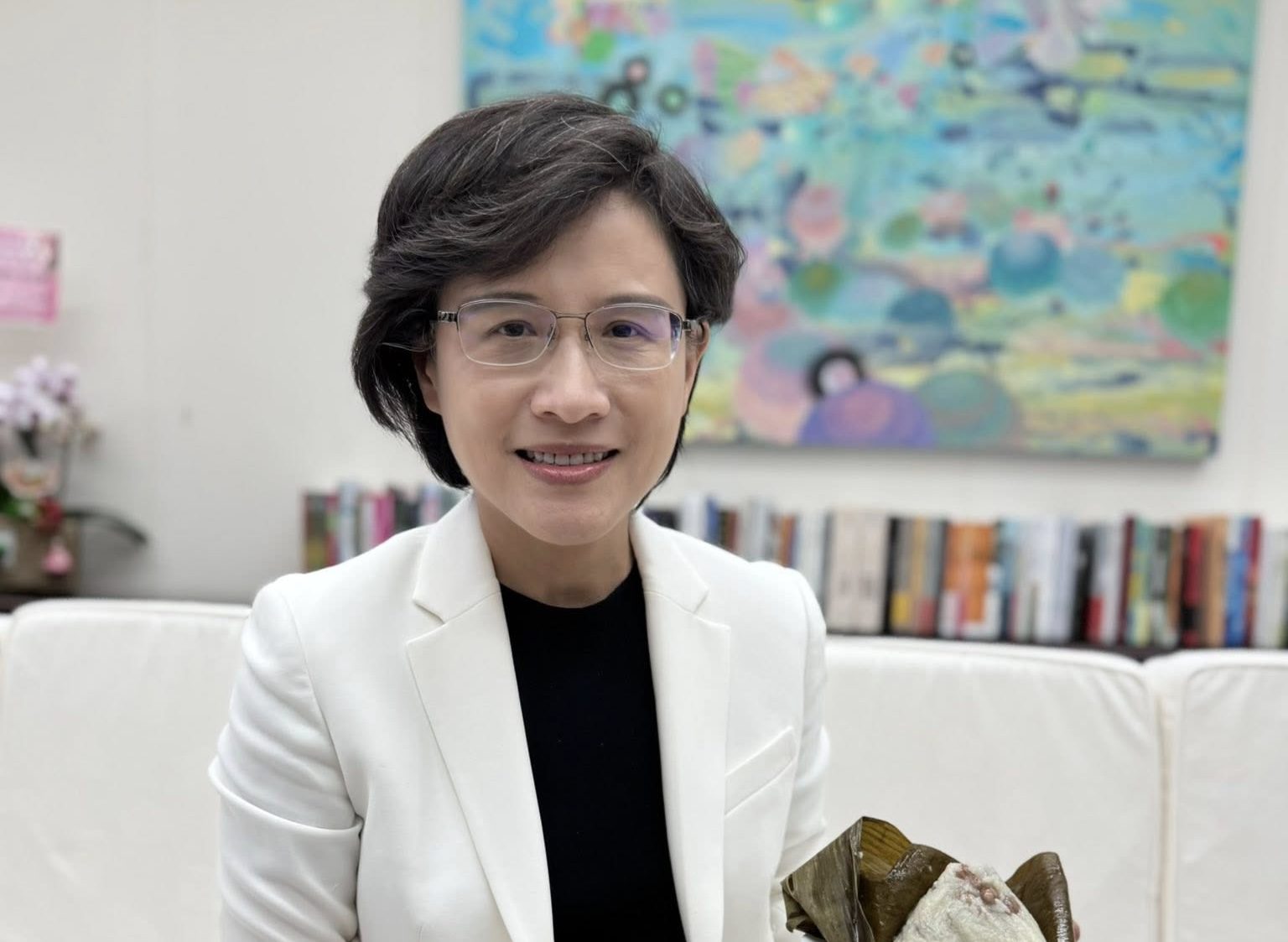
- After concluding a wrap-up meeting in the United States, Vice Premier Cheng Li-chun said at a January 16 press conference that Taiwan and the United States had signed a memorandum of understanding (MOU) and settled the headline tariff outcome: a 15 percent reciprocal tariff rate on a non-stacking basis. She also said Taiwan would receive preferential treatment if Washington later imposes Section 232 tariffs on semiconductors and related derivative products (see BGA update “Section 232 Findings on Semiconductors and Critical Minerals Signal Next Phase of US Trade Policy”).
- The separate, formal agreement with the U.S. Trade Representative (USTR) is still under legal review and is expected to be signed within the next few weeks before being submitted to the Legislative Yuan. In other words, the 15 percent rate is not in force yet; it will take effect only after the formal signing and implementation steps are completed.
- Key elements of the U.S.-Taiwan tariff MOU are as follows:
- The MOU establishes a “Taiwan model” investment framework, including US$250 billion in foreign direct investments by Taiwanese businesses in the United States, primarily in semiconductors, artificial intelligence (AI) servers and energy.
- The agreement includes up to US$250 billion in Taiwan government credit guarantees. Cheng emphasized this figure as a fiscal ceiling rather than a mandatory minimum.
- Duty-free treatment is granted for raw materials and equipment required for U.S. investments within a quota of 2.5 times the planned investment capacity.
- Products in the automotive and timber sectors exported to the United States will receive preferential Section 232 treatment under the terms of the MOU.
- Business-to-business and government-to-government models will be used to secure U.S. assistance in land acquisition, utilities (water and power) and streamlined administrative procedures to foster a pro-investment environment.
- Both parties will negotiate item-by-item to secure further preferences as Section 232 coverage expands, while establishing a synchronized mechanism to attract U.S. investment into Taiwan.
Significance
- One distinctive feature of Taiwan’s package is that it does not rely on direct state-led investment. Instead, companies decide whether and where to invest, while the government’s role is mainly to provide credit support and administrative coordination. Credit guarantees do carry contingent risk, but the participating firms are large and investment is heavily concentrated — Taiwan Semiconductor Manufacturing Company (TSMC) alone accounts for roughly two-thirds of the headline amount — so the probability of a broad default is low. In practical terms, Taiwan is committing relatively limited fiscal exposure to secure a significant tariff outcome, suggesting Washington’s primary concern is less the long-standing trade deficit or market barriers and more whether Taiwan’s semiconductor supply chain capacity can be scaled quickly inside the United States.
- That is why TSMC’s U.S. investment trajectory has become central to the bargaining dynamics. Facing continued pressure from the administration of U.S. President Donald Trump to expand production capacity in the United States, TSMC was initially cautious about the returns on additional investment. More recently, yield performance at its U.S. facilities has reportedly exceeded expectations, reinforcing internal confidence to expand. That shift aligns with Washington’s supply chain security agenda and has become a key lever in moving the reciprocal tariff rate from the earlier 20 percent baseline toward 15 percent.
- Taiwan’s government has reacted positively overall and has moved quickly to counter domestic “hollowing-out” criticism. Cheng has argued the goal is not industrial relocation but industrial extension and expansion, while continuing to support “rooting in Taiwan.” Economic Minister Kung Ming-hsin added specific capacity estimates from the Ministry of Economic Affairs: for sub-5nm advanced nodes, Taiwan versus U.S. capacity is projected at roughly 85 percent to 15 percent in 2030 and 80 percent to 20 percent in 2036. He also emphasized the MOU’s two-way investment framing, saying Taiwan wants to attract more U.S. investment into Taiwan’s trusted industries and highlighting areas where Taiwan is explicitly seeking deeper U.S. technology collaboration, such as drones, robotics and quantum. Both the government and TSMC have also stressed that the most advanced technology will remain anchored in Taiwan, with core research and development and leading-edge volume production continuing to be developed and scaled domestically even as the U.S. footprint expands.
- Industry reaction in Taiwan has also been broadly supportive. As an export-oriented economy dominated by small and medium-sized enterprises, Taiwan benefits when large semiconductor investments help keep its broader supplier base from facing higher tariff rates than key competitors such as Japan and Korea. Nevertheless, some industry voices remain concerned that rapid supply chain regionalization and friend-shoring could force restructuring faster than existing ecosystems can absorb, with potential implications for employment stability.
- Opposition parties continue to focus on transparency and offshoring risks. The Kuomintang is demanding the full text and a comprehensive impact assessment and to intensify scrutiny once the formal agreement is submitted to the Legislative Yuan. Opposition parties are also leaning into the “supply chain moving to the United States” narrative, questioning whether Taiwan is trading investment for tariff relief and whether the government has over-committed internationally, especially after U.S. Commerce Secretary Howard Lutnick’s public messaging that the Trump administration aims to shift 40 percent of semiconductor capacity during Trump’s term, which has fueled skepticism among some constituencies. These disputes will shape the environment for Legislative Yuan review once the USTR-track agreement is finalized.
- Meanwhile, the Section 232 phase 1 outcome was released before the MOU was signed. Industry generally views the direct impact on Taiwan as limited: the 25 percent tariff applies to a very narrow set of advanced AI compute chips (such as NVIDIA’s H200 and AMD’s MI325X) and includes broad end-use exemptions. Chips used for U.S. data centers, research and development, maintenance or mass-market consumer electronics (such as smartphones and laptops) are exempt. In practice, as long as the end customer is a U.S. firm and the product is used in the United States, Taiwanese contract manufacturers are likely to see minimal disruption.
Implications
- Looking ahead, the remaining uncertainties are concentrated in three areas:
- The investment commitment is being described differently on each side: Taipei has emphasized the US$250 billion credit guarantee as “up to” (a ceiling), while the U.S. Commerce Department fact sheet uses “at least,” which reads as a floor and would materially change expectations for delivery.
- The incentive design is not fully nailed down beyond the quota formula: while the MOU provides duty-free treatment for materials and equipment within a quota set at 2.5 times planned investment capacity, Taiwan is still pushing for a preferential 15 percent rate for volumes above the quota.
- The formal reciprocal trade agreement has not yet been signed with USTR and will require Legislative Yuan approval; with an opposition-led legislature and heightened “hollowing-out” scrutiny, ratification could become a political bottleneck.
- Until the operative text is published and Taiwan releases its full report, these gaps will continue to define the implementation risk.
- Still, the 15 percent tariff outcome, together with the current Section 232 framework, should support Taiwan’s semiconductor and electronics exporters in the near term. The longer-term question is whether Taiwan can keep its most competitive industries growing at home while expanding overseas, and what the next “core industry” will be once today’s semiconductor-led growth starts to mature.
We will continue to keep you updated on developments in Taiwan. If you have any comments or questions, please contact BGA Taiwan Senior Adviser Rupert Hammond-Chambers at rupertjhc@bowergroupasia.com .
Best regards,
BGA Taiwan Team

×