




















Taiwan’s Sovereign AI Push: Strategy, Policy Programs and Implications for Businesses
The BGA Taiwan team, led by Senior Adviser Rupert Hammond-Chambers, wrote an update on Taiwan’s sovereign artificial intelligence (AI) push.
Context
- President Lai Ching-te has prioritized artificial intelligence (AI) since taking office in May 2024. He calls his cabinet an “AI (active and innovative) cabinet,” and says developing Taiwan into a “smart Island” is a centerpiece of his industrial policy. Lai’s administration aims for Taiwan to get ahead in the global AI race and believes that AI development can solve a multitude of economic and social needs. These include serving a new economic growth engine, providing opportunities for small and medium-sized enterprises, managing a rapidly aging society and expanding long-term care.
- The Lai administration’s AI policy rollout is beginning to take shape 1.5 years after Lai’s inauguration. By 2040, the administration aims to create TWD 1.5 trillion (US$48 billion) in AI-related output value, 500,000 AI-related jobs and three international AI labs and place Taiwan among the top five countries in the world in terms of compute power. Much of these efforts will fall under and be funded by the “10 new AI infrastructure initiatives.” Details of the 10 AI initiatives are still being formulated. The government has proposed TWD 31.1 billion ($1 billion) for the initiatives in 2026, pending approval by the Legislative Yuan. Nevertheless, the opposition-dominated legislature could create budgetary uncertainties for implementing some of these programs.
- The Lai administration places great emphasis on fostering an indigenous critical AI technology supply chain — ranging from chips, equipment and parts made in Taiwan — and on systems integration. Still, Taiwan’s AI initiatives are expected to create public-private cooperation opportunities for foreign technology companies operating in Taiwan.
- Sovereign AI is a central theme of the Lai administration’s AI strategy. Officials see computational autonomy as essential to economic competitiveness and technological independence. The National Science and Technology Council (NSTC) emphasized that Taiwan’s sovereign AI framework rests on two pillars: a self-sustaining domestic AI computing environment and models that accurately reflect Taiwan’s linguistic and cultural context.
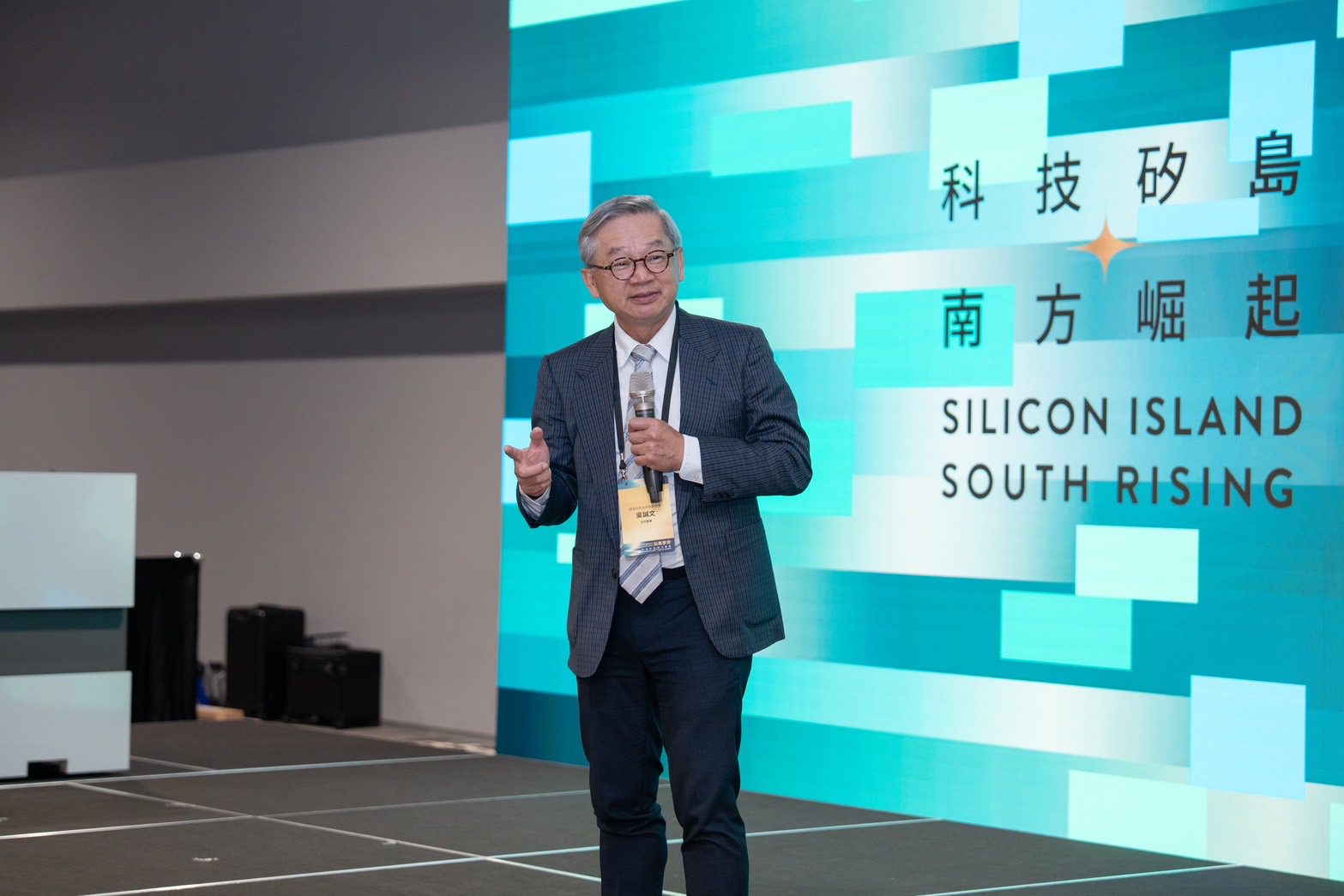
- The administration embraces the view that computing power is a form of national power. The government has three strategies for compute buildup: significant state investment, targeted regional deployment and open collaboration. Since 2025, the Executive Yuan and the NSTC have accelerated funding for AI supercomputers, national cloud data centers and high-performance computing platforms to secure autonomous, locally governed capacity for large-scale model training. New compute facilities are concentrated in southern Taiwan under the Southern Taiwan Silicon Valley Initiative, aligning with Lai’s agenda to rebalance development while establishing the south as the country’s core hub for AI training and semiconductor industries.
Significance
- The NSTC developed the Trustworthy AI Dialogue Engine (TAIDE) in 2023. TAIDE is a domestically built language model based on Llama 2 and Llama 3 by Meta AI that embeds local collections of texts, linguistic context and Taiwan’s value framework. The first commercially usable TAIDE model was released in May 2024.
- Under Minister Wu Cheng-wen, the NSTC has reframed TAIDE’s mission: rather than competing with frontier models like GPT-4 or Claude, TAIDE should serve as infrastructure enabling AI deployment across Taiwan’s industries. Under this recalibration, TAIDE’s value lies in supporting localized applications aligned with the government’s broader sectoral adoption strategy. This recalibration also signals Taiwan’s growing alignment with the open-source AI ecosystem, building on international base models rather than developing proprietary systems in isolation.
- The NSTC and the National Center for High-performance Computing (NCHC) showcased on November 11 the newly launched TAIWAN AI RAP(a government-funded high-performance AI application development platform) and the TAIDE language model under the theme “Sovereign AI Driving Innovation: Building a Smarter Taiwan.” The NCHC outlined the government’s next phase plan to expand national computing capacity and presented proof-of-concept outcomes demonstrating how the AI RAP platform and TAIDE model are being introduced into real-world applications across healthcare, education, agriculture and commercial services.
- The government’s approach emphasizes ecosystem building over centralized control. The Taiwan AI RAP platform reflects this: public institutions supply compute resources, standardized tools, and secure environments. Private businesses train models, test applications and contribute datasets. Companies with their own computing capacity can join as additional resource providers. Led by the NSTC, the platform combines public infrastructure with private computing resources through the Taiwan Compute Alliance. Initial alliance members include Hon Hai, Wistron NeWeb, Ubilink, Advanced Micro Devices, the Central Weather Administration, the NCHC and Nvidia. The alliance is open to more domestic and international companies following internal discussions and a review of existing members. The goal is to ensure that this collaborative architecture transforms sovereign AI from a government program into a national undertaking.
Implications
- Cross-agency AI deployment has become the government’s core strategy, with the Ministry of Economic Affairs, the National Science and Technology Council and the Ministry of Digital Affairs leading coordinated efforts to drive the adoption of AI applications across all sectors. Even ministries like the Ministry of Agriculture are joining collaborative initiatives to implement domain-specific AI solutions.
- Taiwan’s sector-wide AI deployment is expected to drive exponential demand for cloud computing (IaaS, PaaS, SaaS), model training and inference. This directly benefits global cloud and infrastructure providers while reinforcing demand for Taiwan’s semiconductor, IC design and hardware manufacturing strengths. The government is advancing support for edge AI and on-device capabilities, creating new upgrade cycles across OEM/ODM and component sectors. For multinational technology companies, the strategic opportunity lies in aligning with Taiwan’s sovereign AI architecture, particularly compute localization, data governance, and participation in the Compute Alliance, positioning themselves as long-term partners in Taiwan’s transition from hardware manufacturing to full-stack solution provision.
- The government does not favor cloud-based or edge AI per se. Instead, the “AI for all industries” strategy aims to transform Taiwan from pure hardware manufacturer to total solution provider. For multinational firms, this shift elevates Taiwan from manufacturing node to strategic partner in the global AI infrastructure landscape, opening opportunities for deeper, higher-value collaboration beyond traditional supply chain relationships.
We will continue to keep you updated on developments in Taiwan. If you have any comments or questions, please contact BGA Taiwan Senior Adviser Rupert Hammond-Chambers at rupertjhc@bowergroupasia.com .
Best regards,
BGA Taiwan Team

×