















Thailand’s New Government Under PM Anutin: What’s Next?
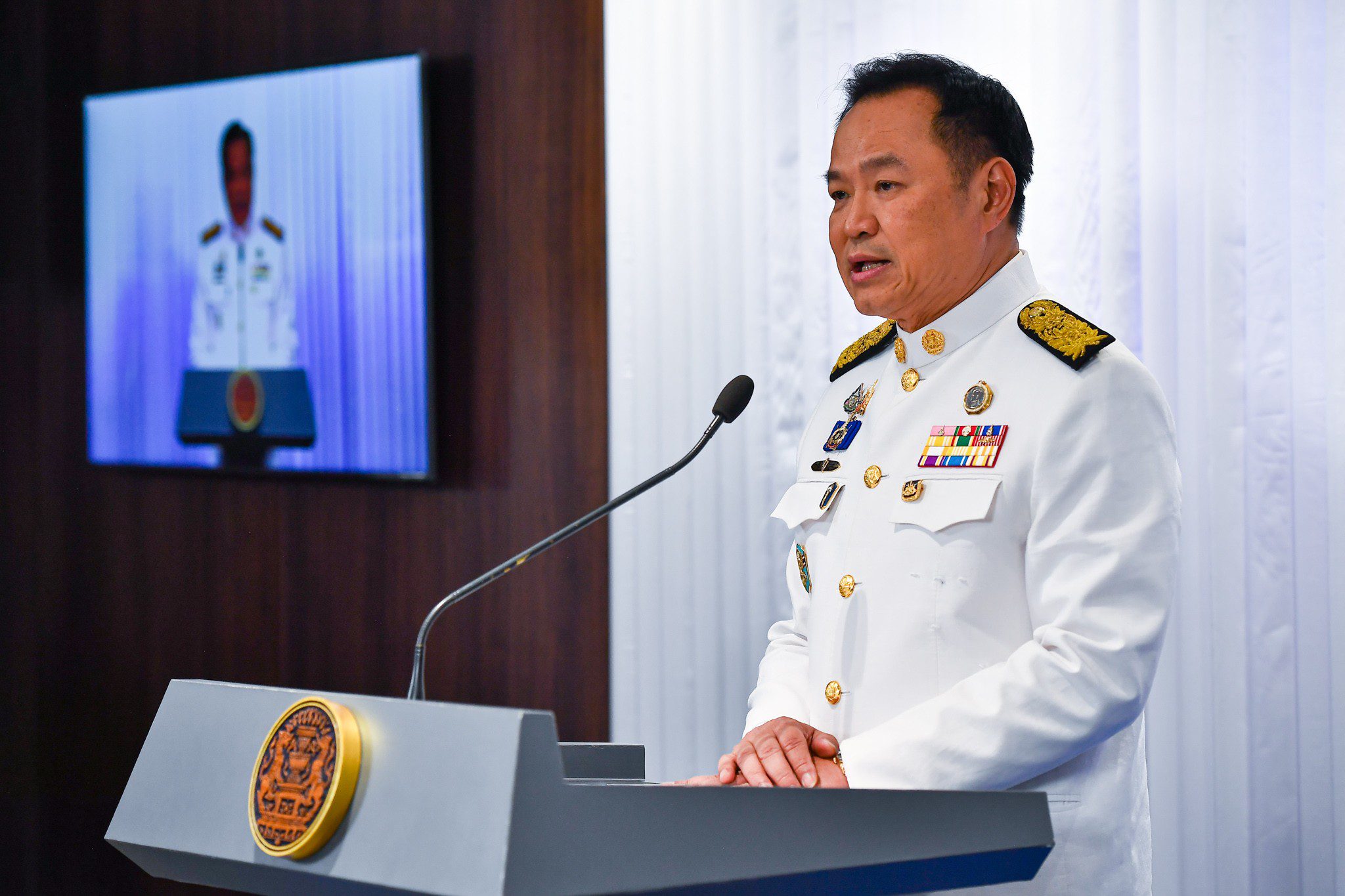
BGA Senior Adviser Thitinan Pongsudhirak wrote an update to clients on Thailand’s new prime minister, Anutin Charnvirakul, and the political drama that culiminated in his election.
Thailand’s recent political tumult has culminated in the Constitutional Court’s removal of Paetongtarn Shinawatra of the erstwhile ruling Pheu Thai Party from office August 29. This paved the way for Bhumjaithai Party (BJT) leader Anutin Charnvirakul to succeed her as prime minister with the lower house’s majority support a week later. BJT is the third-largest party with 69 members of Parliament (MPs), so it needed to form an alliance with People’s Party, the successor to Move Forward Party, which won the May 2023 election. At issue now is whether the memorandum of agreement between BJT and People’s Party will be honored and how Anutin will capitalize in the interim.
The Constitutional Court’s dismissal of Paetongtarn was attributable to her damaging leaked phone call with former Cambodian Prime Minister Hun Sen, in which she kowtowed and compromised her premiership and Thailand’s standing. It came just over a year after her predecessor Srettha Thavisin was judicially sacked for a minor cabinet reshuffle. By virtue of elastic clauses in the coup-inspired 2017 constitution requiring demonstrable integrity and ethical conduct, the court has evidently exerted authority over parliamentarians and elected governments. The back-to-back demise of Srettha and Paetongtarn indicates that more elected leaders could be similarly ousted in the future, undermining longer-term political stability.
After Paetongtarn’s downfall, Pheu Thai’s acting Prime Minister Phumtham Wechayachai launched a royal decree to dissolve the lower house and usher in a snap election. However, the Privy Council, an advisory body to the king, rejected it on the grounds of a personal opinion of the secretary-general of the Council of State, the government’s legal advisory body. This individual view is that a prime minister in an acting capacity does not have the authority to enact a lower house dissolution. It thus appears that Thailand’s executive branch and parliamentary processes are being superseded by extra-parliamentary agencies, with crucial implications moving forward. Given Anutin’s public images with the principal private secretary to the king available on the internet, influential forces behind the scenes seemed to have lined up behind his premiership.
But Anutin’s chances were outnumbered by People’s Party’s 143 MPs to and Pheu Thai’s 140 in the nominally 500-member assembly (currently 492). The ongoing and intensifying policy rifts and political gamesmanship between Pheu Thai and BJT over cannabis, casinos and control of patronage-driven cabinet portfolios — particularly the Interior Ministry — meant that People’s Party effectively became the kingmaker. Because Thailand’s political system has been designed to enfeeble political parties and elected representatives, People’s Party’s original party leader and prime minister candidate, Pita Limjaroenrat, was banned from running for office for 10 years when Move Forward was disbanded in August 2024. The largest election winner can only vote for other parties’ prime ministerial candidates but not its own.
People’s Party’s kingmaker dilemma boiled down to the choice between Anutin and Pheu Thai’s Chaikasem Nitisiri, who was relatively obscure and unknown. Already betrayed by Pheu Thai when it broke away from a government-forming memorandum of understanding between the top-two winners after the May 2023 poll, People’s Party opted for the more tolerable alternative and endorsed Anutin. Failure to pick one or the other could have exacerbated the political crisis and potentially paved the return of Gen. Prayut Chan-o-cha, the coup-maker in 2014 and former leader of United Thai Nation Party. Although he was appointed to the Privy Council in December 2023, Prayut remained eligible on the United Thai Nation ticket.
People’s Party’s vote for Anutin as prime minister was unusual and unprecedented because the party with the largest number of MPs chose not to join the ensuing coalition government. All Thai political parties in the past have always clamored to be in government because it provides power, prestige, pork-barreling projects and patronage for the poll prospects. Yet People’s Party insists on staying in the opposition, effectively rendering a minority government under Anutin.
Instead, People’s Party has outlined five conditions for its support of Anutin, mainly to return the mandate to the people within four months and to organize a referendum to set up a constitution-drafting assembly for a new charter, while asking BJT not to seek an expansion of its number to a majority government. Because these stipulations in the memorandum of agreement are not binding, People’s Party’s leverage pivots on the BJT-Pheu Thai conflict. As long as BJT and Pheu Thai remain at odds, the Anutin-led minority coalition government will be forced to stick to the agreed timetable for a new poll. A minority government would face obvious defeats on major bills in Parliament.
But this four-month timeframe can be stretched. It is understood to begin after the government’s formation and its policy announcement in Parliament, a process that could lead into October-November. Another four months would mean a lower house dissolution by February-March with a new election within 60 days, around April-May. There have been royal announcements in Thailand about the deteriorating health of a princess. Any royal event associated with these announcements may also put off an election.
On face value, Prime Minister-designate Anutin has reaffirmed the BJT-People’s Party four-month timeline and a consequent new poll. He has pledged to work hard and start immediately to address the economic malaise, border security with Cambodia, natural disasters and social ills. However, the tone and tenor of his government formation do not suggest a stopgap, ad-hoc caretaker administration to return the mandate to the people and promote charter change. Incoming cabinet members, some in these top jobs for the first time, appear too enthusiastic for a short stint. All of them, Anutin included, will likely be incentivized to stay in office as long as they can to augment electoral war chests and deliver budget expenditures in key constituencies.
Doing so might include poaching MPs from other parties to bolster BJT’s numbers. With pressure for a new election expected to mount by early 2026, Pheu Thai will likely play a decisive role. If Pheu Thai continues to stand apart from BJT, Anutin’s minority government cannot endure for long. But if Pheu Thai as a whole or some of its members realign with BJT, the Anutin-led government can remain in power until mid-2027, when a new poll is due.
This is a tumultuous time in Thailand’s business landscape and economic policy directions. Yet with an eye toward the next election, the new government will be incentivized to get the economy moving to gain electoral advantages. BJT knows that People’s Party is electorally poised to come out on top again, but the newly minted ruling party will likely do everything it can, with potential assistance from extra-parliamentary bodies, to retain the reins of government after the next election. Business planners should continue to engage where policy movements are geared for growth with minimum meddling.
We will continue to keep you updated on developments in Thailand as they occur. If you have comments or questions, please contact BGA Senior Adviser Thitinan Pongsudhirak at thitinan@bowergroupasia.com or BGA Thailand Managing Director Teerasak “Art” Siripant at tsiripant@bowergroupasia.com.
Best regards,
BGA Thailand Team