















Thailand’s Newly Elected Government Heralds Stability and High Expectations
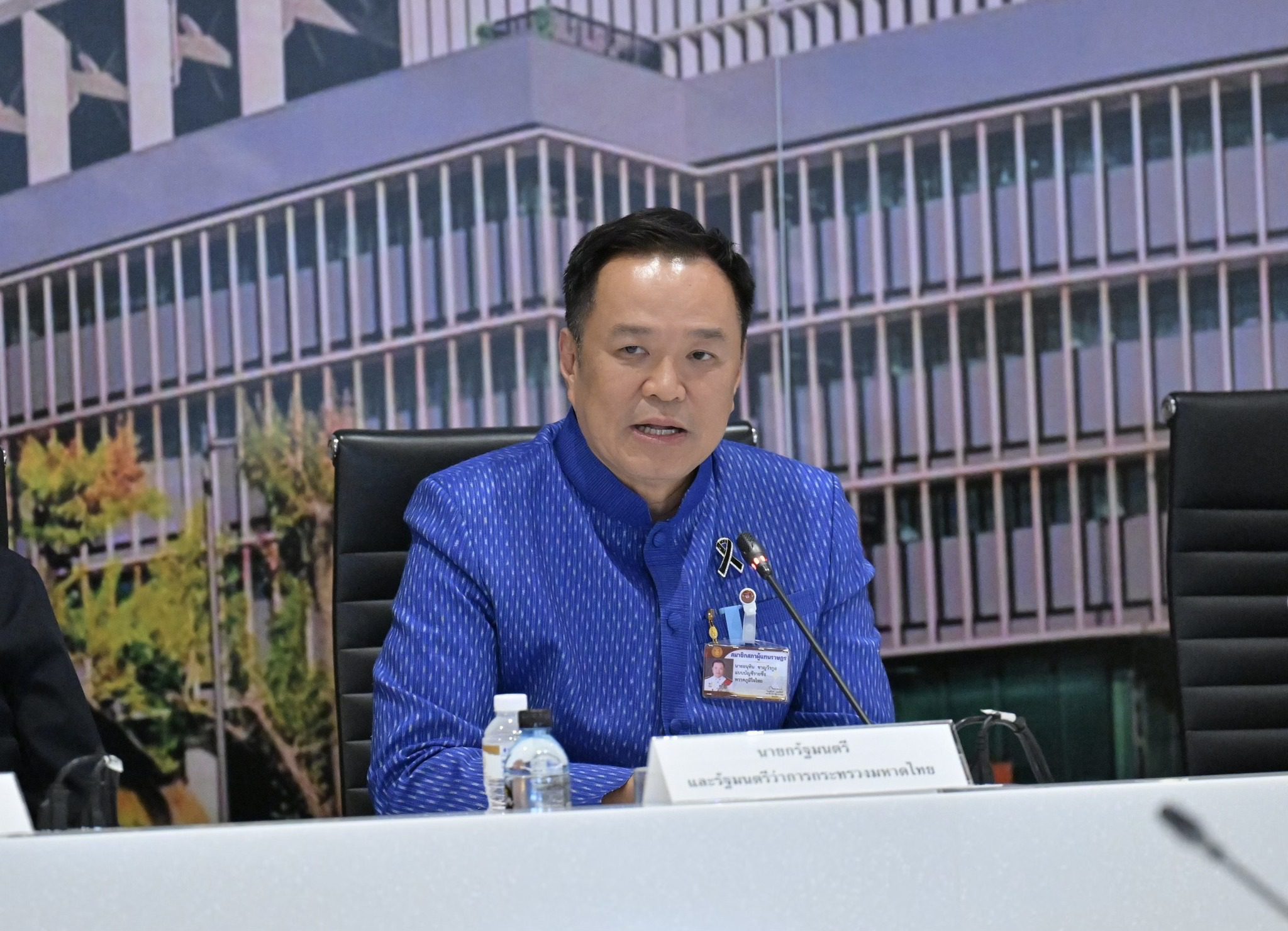
BGA Senior Adviser Thitinan Pongsudhirak wrote an update to clients on Thailand’s post-election political landscape.
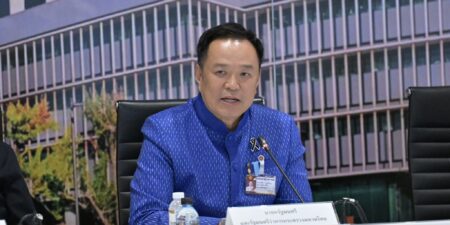
Prime Minister Anutin Charnvirakul has progressed from strength to strength in leveraging a stop-gap minority government late last year into a solid majority rule after the February 8 election. His Bhumjaithai (BJT) Party’s 191 seats in the 500-member House of Representatives now anchors a strong and stable coalition government comprising 16 parties. After 20 years of a topsy-turvy political trajectory underpinned by street protests, military coups and judicial interventions, the establishment-backed Anutin-led government appears poised to govern for a full four-year term in view of a fragmented opposition, notwithstanding global adversity and local expectations for stronger economic performance.
Following King Maha Vajiralongkorn’s opening of Parliament March 14, BJT stalwart Sophon Zaram was elected along party lines as Parliament speaker. The weekend proceedings led to Anutin’s expected majority victory in a similar parliamentary ballot on March 19, with 293 votes over 119 for opposition People’s Party (PP) leader Natthaphong Ruengpanyawut. Equally notable were 86 abstentions, largely from the Kla Tham (KT) and Democrat (DP) parties, with 58 and 21 seats, respectively. Just hours after Anutin won the vote, the king endorsed his premiership. As Cabinet ministers’ backgrounds and qualifications are being vetted by various agencies, the new ministers are expected to receive royal assent March 31, with an inaugural policy announcement and official term prospectively starting April 7.
The premiership vote suggests the opposition will be divided because KT, led by disreputable and formerly convicted drug trafficker Thamanat Prompow, positions itself to join the coalition government at the earliest opportunity. The party was kept out of the Cabinet this time because it had outspent and outcompeted BJT in a host of rural constituencies despite a collusive gentleman’s agreement between Thamanat and the ruling party’s head honcho from the northeastern province of Buriram, Newin Chidchob, who is effectively party chairman compared to Anutin as chief executive. Because cabinet portfolios offer the spoils of office from graft-ridden procurement projects and budget outlays based on patronage, and because KT is neither known nor keen to play an opposition role, Thamanat will rely on his close ties with Anutin and the passage of time to rejoin the government after a brief stint prior to the poll.
The smaller DP, under former Prime Minister Abhisit Vejjajiva, did not vote for Natthaphong or Anutin, ostensibly on governance and accountability principles. Natthaphong and 43 other PP members are in the dock for a Constitutional Court ruling that could land them long-term bans from office for proposing to amend the royal defamation law (also known as lèse majesté) in its campaign ahead of the May 2023 poll. Not supporting Natthaphong on this ground suggests that DP has positioned itself as a “new” conservative force, prioritizing and protecting the monarchy’s role in the political system while minimizing the corruption and graft often associated with BJT’s “old” conservative camp, which stands for the monarchy and business-as-usual.
Given these party dynamics, Anutin and Newin — a Thai quip combines them as “Anuwin” — can govern in a divide-and-rule fashion. While Pheu Thai (PT) Party with its 74 members of Parliament is the second largest in the coalition government, it has little leverage. Thaksin Shinawatra, its founder and patriarch for nearly three decades, is serving a jail sentence for corruption. Because oversight agencies — the Constitutional Court, Election Commission and Anti-Corruption Commission — have virtually taken on “custodial” and supervisory functions of the political system in alignment with BJT and its leaders, PT has to play along to ensure that Thaksin’s eligibility for parole in May is facilitated. The party also wants to ensure that Thaksin’s daughter and ex-Prime Minister Paetongtarn Shinawatra does not face the same fate in view of charges against her on ethical misconduct, conflict of interest and dereliction of duty. Thaksin’s exiled sister and former Prime Minister Yingluck Shinawatra is also known to want to come home. That the Shinawatra clan now have few bargaining chips is ironic because Newin used to be an underling and junior minister under Thaksin 20 years ago.
This reversal of political fortune explains PT’s acceptance of just eight cabinet portfolios across five lower-grade ministries with less authority and smaller budgets, compared to BJT’s lion’s share of 27 ministers in the top 14 ministries, including Interior, Defense, Transport, Energy, Health, Digital, Finance, Commerce and Natural Resources. If PT overplays its hand down the road, Anutin can always bring KT into the 35-member Cabinet. After its lowest-ever poll results, PT is keen to be in office to regain lost electoral ground. Keeping KT from widening its base and excluding it at this time also allow BJT to take more portfolios and reward them to party patrons and dynastic bosses under “big houses,” or “baan yai” in Thai. With KT’s miscast and DP’s ambiguous roles, PP will be the principal opposition party, a familiar outcome given its thwarted poll victory in 2023.
The upshot is that Newin and the Buriram “big house” are at the peak of their political power, with Anutin as their front man and BJT as their political vehicle. Anutin, for instance, lives in Bangkok but holds his household registration in Buriram. This Buriram-based power center has virtual majority control of the 200 senators from having gamed the Senate elections in 2024. Similarly, the Anutin-led government and Newin-steered BJT from its Buriram stronghold have the backing of the palace, the military and custodial oversight agencies. The incoming justice and defense ministers — the latter a retired army general — cut their teeth from time served in Buriram. Newin’s son and BJT Secretary-General Chaichanok Chidchob is geared up to return as minister of digital economy and society. Sophon, the Parliament speaker, is a longtime loyalist dating back to the tenure of the late Chai Chidchob, Newin’s father and veteran politician who also served as House speaker.
With such a firm grip on power, the BJT-led government under Anutin is now under pressure from low-growth pressure and rising prices stemming from the Iran war. As Thailand’s economic growth trajectory is now under 2 percent, Anutin’s handful of returning technocrats, led by Finance Minister Ekniti Nitithanprapas and Commerce Minister Suphajee Suthumpun, have pledged to bring it up to a 3 percent range. This objective now looks dampened by adverse war spillovers. In addition to low-growth complaints, public grievances are mounting in reaction to fuel price rises and shortages. Anutin responded early with piecemeal work-from-home encouragement and energy conservation mechanisms, but much more will be needed. His flawed crisis management outcomes in the recent past, from vaccines procurement and cannabis legalization to the southern floods and scam networks, do not inspire confidence in his handling of the energy crisis from the Middle East conflict.
The good news in Thai politics is that there is government stability for the first time in more than two decades, precluding street protests and military and judicial interventions. The bad news is that it remains unclear whether the new government is up to the task of meeting public demands and expectations under economic doldrums and a deep external shock from the Iran war. The onus is clearly on the royalist-conservative establishment-backed BJT-led coalition under Anutin.
BGA will continue to keep clients up to speed on the cut and thrust of what goes on in Thailand’s political environment and policy repercussions. If you have comments or questions, please contact BGA Senior Adviser Thitinan Pongsudhirak at thitinan@bowergroupasia.com or BGA Thailand Managing Director Teerasak “Art” Siripant at tsiripant@bowergroupasia.com.
Best regards,
BGA Thailand Team