
















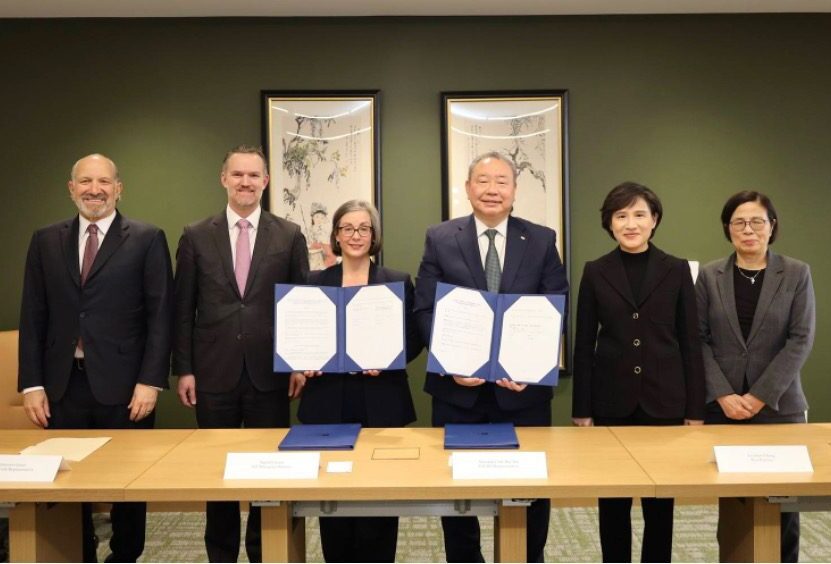
US, Taiwan Sign Agreement on Reciprocal Trade
The BGA Taiwan team, led by Senior Adviser Rupert Hammond-Chambers, wrote an update to clients regarding the recently finalized Agreement on Reciprocal Trade (ART) between Taiwan and the United States.
Context
- Taiwan and the United States finalized a bilateral Agreement on Reciprocal Trade (ART) February 13, following a semiconductor-focused investment and trade memorandum of understanding signed January 15. The ART secured reciprocal tariffs at 15 percent (non-cumulative) and Section 232 most-favored nation treatment for Taiwan (terms reached preliminarily in the memorandum).
- The U.S. 15 percent reciprocal tariff rate will take effect upon publication in the U.S. Federal Register. Taiwan’s Executive Yuan will submit the ART and the memorandum to the Legislative Yuan for approval. Taiwan’s new tariffs for U.S. products are expected to become effective only after the ART is approved by Taiwan’s legislature.
Significance
- The negotiations with USTR secured reciprocal tariff exemptions for 2,072 product categories exported to the United States. These include 261 agricultural products and 1,811 industrial products-such as radio navigation equipment, communications instruments, lithium-ion batteries, aircraft components and metal parts. These items will be exempt from the reciprocal tariff and subject only to most-favored nation rates.
- The agreement broadly eliminates or reduces Taiwan’s import tariffs on a range of U.S. imported industrial and agricultural products, including zero tariffs for passenger vehicles, car parts, beef, dairy products and corn. Taiwan will reduce tariffs by 50 percent in three years on 15 pork products. The agreement incorporates provisions on agricultural and food safety standards and procedures. The ART also includes pledges by state-owned enterprises to purchase U.S. energy, power equipment and civilian aircraft on top of the January 15 investment memorandum.
Implications
- The trade deal heavily favors semiconductor and information and communication technology supply chain investments in the United States, while allowing U.S. products greater access to the Taiwan market. Taiwan gained by achieving competitive tariff rates and closer supply chain and a strategic alliance with the United States. In a press conference February 13, Vice Premier Cheng Li-chiun said the U.S. Trade Representative acknowledged that the Taiwan ART is not comparable to other reciprocal agreements due to the unique position of Taiwan’s technology supply chain.
- The agricultural sector is expected to be the most directly affected. The administration has emphasized that many of the impacted products have low domestic self-sufficiency rates, are not produced domestically, or occupy differentiated and complementary market segments relative to Taiwanese products. It also stressed that food safety standards remain aligned with international norms. Nevertheless, given the sensitivity of agricultural imports and the long-standing public debate surrounding food safety, the issue is likely to become a focal point of partisan contention. The opposition parties have already characterized the negotiations as lacking transparency.
We will continue to keep you updated on developments in Taiwan. If you have any comments or questions, please contact BGA Taiwan Senior Adviser Rupert Hammond-Chambers at rupertjhc@bowergroupasia.com.
Best regards,
BGA Taiwan Team

×