
















Australian Prime Minister To Discuss Security Ties and Critical Minerals With Trump
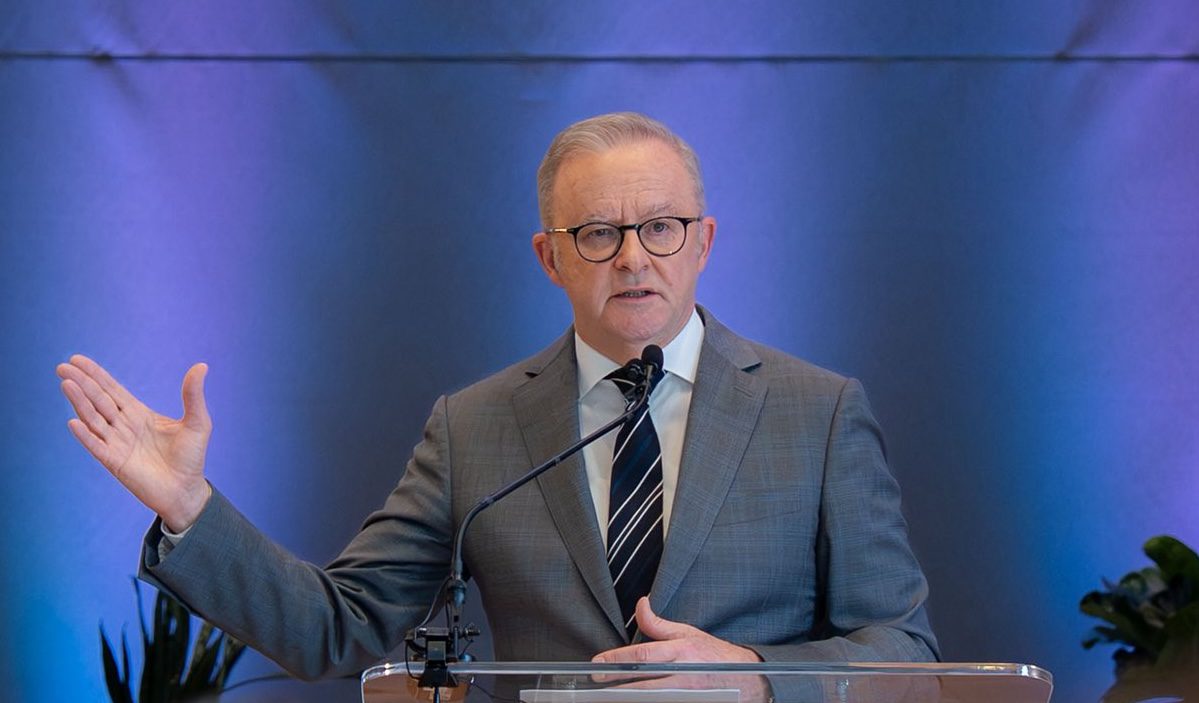
The BGA Australia team, led by Managing Director Michael “Mick” McNeill, wrote an update to clients about the upcoming meeting between Australian Prime Minister Albanese and U.S. President Trump.
Context
- Australian Prime Minister Albanese and U.S. President Trump will hold their first formal in-person meeting October 20 at the White House. Albanese’s center-left Labor party won a landslide victory in the May election, linking the opposition to Trump and contrasting the health systems of the two countries. Following the election, Albanese declared support for “progressive patriotism,” increased greenhouse gas emissions-reduction targets, recognized a Palestinian state and publicly resisted U.S. calls to boost defense spending. Conservative critics have accused Albanese, historically a warrior of Labor’s left-wing faction, of neglecting to develop a personal relationship with Trump and thus weakening Australia’s standing with its most important security partner.
- Previewing the October 20 meeting, Albanese said, “Australia and the United States are great partners. I expect it to be very constructive.” Albanese and Trump were scheduled to meet in June on the sidelines of the Group of Seven summit in Canada, but this was canceled due to Trump’s Middle East-related departure. The United States has been Australia’s most important security partner since the 1940s.
Significance
- The meeting is expected to be amicable despite policy and ideological differences. Australian officials have assiduously prepared for the meeting, and senior Australian ministers have held productive meetings with their U.S. counterparts. Albanese and his ministers have strongly praised Trump for his role in the Israel-Hamas ceasefire deal. Key goals for Albanese include securing continued U.S. support for the Australia-United Kingdom-United States (AUKUS) trilateral security partnership’s nuclear submarine program, which is under review by the Trump administration; continued (relatively) favorable tariff treatment; and alignment on strategic challenges in the Indo-Pacific. In addition to Australia’s geographical importance, Albanese will emphasize his country’s abundance of critical minerals and rare earths as he seeks to keep the alliance on sound footing with the transactional Trump. Digital platforms are lobbying the White House to raise concerns with Australia’s online safety legislation and news media bargaining legislation.
- Trump expects a firm commitment from Albanese to increase defense spending. The U.S. Defense Department confirmed June 12 that it was reviewing the AUKUS submarine agreement — established under the previous administration of President Joe Biden — to ensure it aligned with Trump’s “America First” agenda. The review is expected to be finalized shortly. Some viewed the review as leverage to force Australia to raise defense spending. Others perceived the review as reflecting U.S. concerns that delivering three Virginia-class submarines to Australia — Australia is contributing funding to the U.S. shipbuilding industrial base — would come at the expense of U.S. efforts to counter China.
Implications
- As part of efforts to secure AUKUS and reduce tariffs, the Australian government has highlighted the potential for Australia’s vast deposits of critical minerals and rare earths to become part of U.S. defense and civil-use supply chains. Albanese last month suggested a role for critical minerals and rare earths in Pillar 2 (advanced capabilities) of AUKUS. The government’s Critical Minerals Strategic Reserve, set to commence 2026, intends to assist Australia and its strategic partners to diversify supply chains beyond China. The Future Made in Australia policy includes a critical minerals production tax Incentive for Australia’s 31 critical minerals. In addition, the Australian government will host a Future Made in Australia Investor Forum, to be held in November.
- Albanese may have other opportunities for meaningful engagements with Trump this year. Albanese is expected to attend the Association of Southeast Asian Nations and East Asia summits in Malaysia from October 27-28; the Asia-Pacific Economic Cooperation Economic Leaders’ Meeting from October 31-November 1 in Korea; and the Group of 20 Leaders’ Meeting from November 22-23 in South Africa. The White House has not confirmed which of these summits Trump will attend.
We will continue to keep you updated on developments in Australia as they occur. If you have any questions or comments, please contact BGA Australia Managing Director Michael “Mick” McNeill at mmcneill@bowergroupasia.com.
Best Regards,
BGA Australia Team

×