
















Thailand’s Election Curtainraiser: Coalition Scenarios
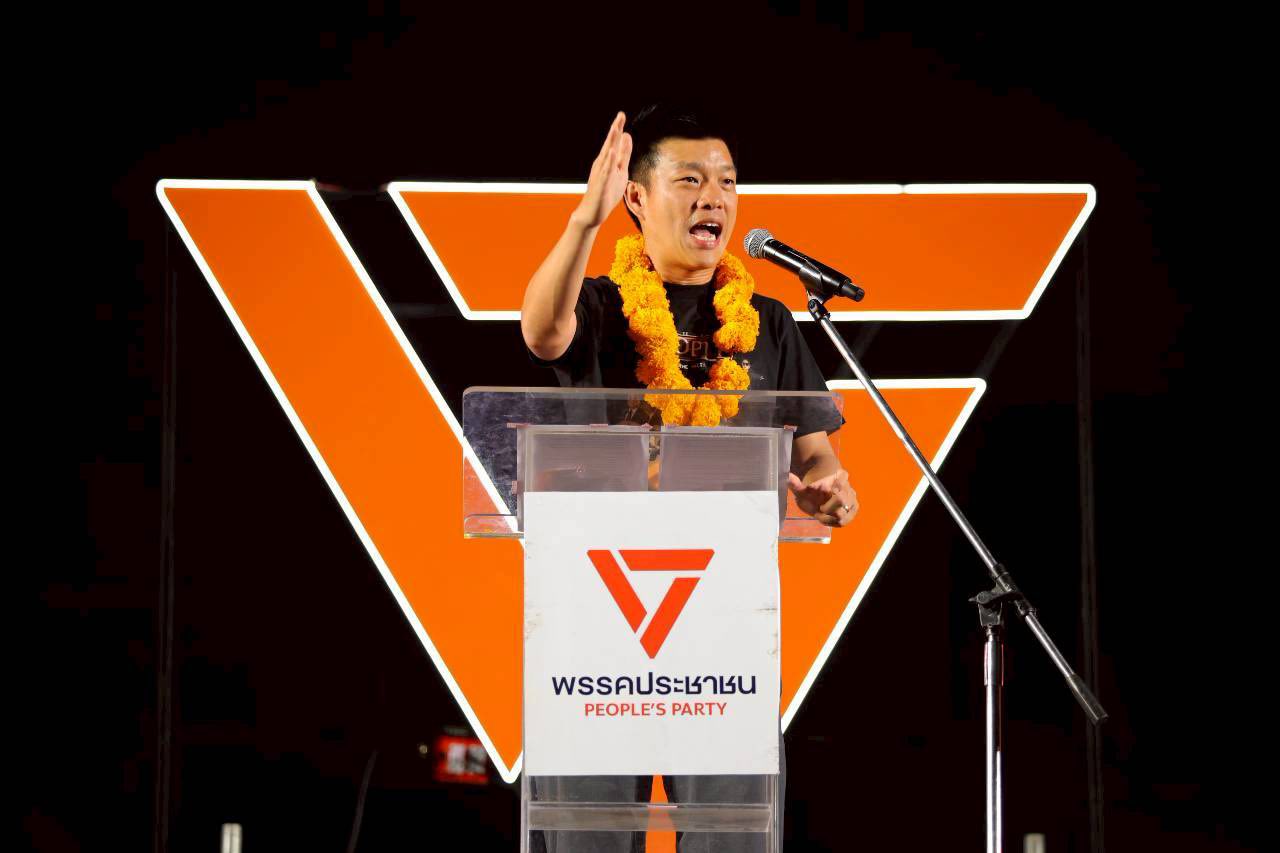
BGA Senior Adviser Thitinan Pongsudhirak wrote an update to clients on Thailand’s upcoming election.
As Thais go to the polls February 8, at issue will be whether Thailand will break out from its pattern of political instability and economic underperformance over the past two decades. The signs and signals suggest not, at least not for a while yet. As the campaign comes to a close, BGA anticipates the results to be in line with our earlier updates on poll prospects (see BGA’s updates from December 23 and November 12).
Thailand’s current political directions can be deduced from its past topsy-turvy trajectory. Only once in the past 26 years — January 2001 — did voter preferences carry the day, led by Thaksin Shinawatra’s juggernaut Thai Rak Thai party. Other elected governments were subverted and overthrown either by the military or judiciary, except that of Gen. Prayut Chan-o-cha in the March 2019 poll when, as chief of the 2014 coup, he and his party came in second but managed to govern for the full four-year parliamentary term.
The recent past in Thai politics has shown that there are forces beyond the electoral arena that ultimately determine outcomes in a 2.5-step process. Elections are left to voters but the results are sliced and shaped by the royalist establishment with subterfuge through what can be called “custodial” agencies, such as the Constitutional Court, Election Commission and National Anti-Corruption Commission. These agencies are supposed to be independent promoters and enforcers of transparency and accountability, but their verdicts appear to have served establishment preferences. When voter results were overwhelming, as were the Thaksin camp’s victories in 2005, 2007 and 2011, the winners were allowed to govern for a while before royalist street protests paved the way for military and judicial interventions.
These royalist-conservative forces now face a similar dilemma from the last poll in May 2023, when Move Forward as the party of younger demographics won the most seats. It took the powers that be several months to put up legal and constitutional obstacles to deny office to the election winner before disbanding the party altogether 15 months later. Its successor, People’s Party (PP) under Natthaphong Ruengpanyawut, is now poised to repeat the feat. The latest opinion polls have tipped PP to win again over the ruling Bhumjaithai Party (BJT) of caretaker Prime Minister Anutin Charnvirakul and Pheu Thai (PT), led by Thaksin’s nephew, Yodchanan Wongsawat. Early voting on February 1 saw a robust turnout, especially among young voters.
People’s Party
Had the election taken place a month ago, PP would have been at a disadvantage without this last-minute momentum. The Thai-Cambodian border clash in December had whipped up nationalist fervor to BJT’s benefit. PP was deemed too conciliatory and not sufficiently nationalistic or pro-military. PP was also blamed by its base for endorsing Anutin for the premiership in September. Other detractors derided PP for focusing excessively on charter change instead of livelihood issues. Natthaphong does not possess charisma and cosmopolitanism compared to Pita Limcharoenrat, Move Forward’s leader who is serving a 10-year ban from running for office. And PP was unable to run on deep structural reforms the way Move Forward did in 2023, including reform of the royal defamation law.
However, PP stuck to its message of fighting corruption and reforming the economy to restore stronger growth. Despite not having a war chest for votes, PP’s unwavering stance and Natthaphong’s unflappable messaging and tireless articulation enabled the party to fend off attacks and stand its ground. For younger and first-time voters who want change and reform, PP seems to be their one and only vehicle.
The litmus test will be whether PP can match the 151 out of 500 seats it won in 2023. Coming in below this threshold — even as a second or third winner — would signal dwindling support and fatigue among its young base. But surpassing this number would suggest that the electorate want a different kind of Thailand than that of the past two decades. Another crucial factor will be the margin of victory. If PP emerges on top with more than 30 seats over the next winner, it will have a strong claim to form a coalition government. If it manages to secure an unassailable triumph — like more than 200 seats — then denying government to PP would incur rising costs.
Bhumjaithai Party
To be sure, the odds are stacked against PP and in favor of BJT. While it came in third and garnered 71 members of Parliament in the 2023 poll, BJT has capitalized on incumbency advantages. The ruling party under Anutin has promoted loyalists to bureaucratic positions overseeing grassroots constituencies. BJT is known to have a big war chest for provincial money politics, characterized by vote-buying for political power and investment returns from graft. Budget allocations have favored its strongholds and constituencies in the north and populous northeast where competition is fierce. Defections from other smaller parties also have bolstered BJT’s strength.
This time, BJT is likely to end up with 100 seats or more, potentially more than doubling its share from 2023. While BJT is full of old-style politicians, Anutin has fronted his party with three technocrats: Commerce Minister Suphajee Suthumpun, Deputy Prime Minister and Finance Minister Ekniti Nitithanprapas and Foreign Minister Sihasak Phuangketkeow. With a proven business background, Suphajee is the star attraction in Anutin’s caretaker Cabinet. She comes across as earnest and savvy at the same time, handling media and communication well with a strong policy focus. Widely respected, Ekniti built his career in the finance ministry. Sihasak, who is also a prime ministerial candidate alongside Anutin, is a professional diplomat from the Foreign Ministry.
These technocrat faces are BJT’s main election marketing, but Anutin will ultimately rely on royalism with palace backing on one hand and nationalism with military support on the other to retain office. For instance, it would not be surprising if there is somehow a renewed Thai-Cambodian clash or some other incident that boosts royalism and nationalism going into the election weekend. With the custodial agencies on its side, BJT will form a stable government if it comes out on top. If it stays a close second to PP, it can still try to forge a coalition with the third winner.
Pheu Thai Party
That third winner appears to be Pheu Thai. This election is the first time Thaksin Shinawatra, who is serving a jail sentence on corruption, does not figure centrally on the political scene. But Yodchanan, who hails from a solid academic background in biomedicine and engineering, is doing the Shinawatra family’s bidding. When Thaksin began his one-year jail term last September, Pheu Thai looked like it might split up. Some of its members of Parliament defected to BJT, and others were looking to party hop. But other Shinawatra members stepped up and kept the party intact, including Thaksin’s former wife Potjaman Na Pombejra and sister Yaowapa Wongsawat, Yodchanan’s mother. A younger party stalwart, Julapun Amornvivat, also stepped in to lead the party together with Yodchanan.
Pheu Thai’s base from Thaksin’s peak power two decades ago has aged and dwindled but remains sizeable. The party has resorted to populist policies, such as giving out THB 1 million ($31,500) to nine individuals per day to make them millionaires and ostensibly to promote digitalization by nationwide registration. Having won all Thai elections, except 2023, Pheu Thai’s upcountry canvasser networks remain strong, and its war chest can offer the BJT stiff competition. From 141 seats in 2023, Pheu Thai will likely win fewer, probably around 100.
Altogether, the three main parties are likely to combine for around 400 out of 500 seats, leaving the rest for smaller parties, including the liberal-royalist Democrat Party and royalist-nationalist Klatham Party. The Democrat Party has been revived under former Prime Minister Abhisit Vejjajiva and may take away some of the younger voters from PP who want change excluding monarchy reform. Klatham will be a natural ally of BJT and perhaps PT but not PP.
The Upshot
Bearing in mind that elections on their own do not determine political directions, the first scenario is a coalition of BJT and PT, regardless of whether either emerges as top winner. In this case, if BJT is ahead of PT, Anutin will have a claim on the premiership. On the flipside, in a second scenario, if PT somehow edges out BJT, Yodchanan’s party cadres will try to hoist him to power as prime minister.
The third case would be a PP victory with a large winning margin. Its only main ally would be PT, but this happened before in 2023 when a Move Forward-PT coalition pact was stymied and split up by the custodial agencies. There is a very remote chance — say, 5 percent — that PP wins big enough to form a government with small parties without having to rely on PT.
In all likelihood, the BJT will probably come out on top with all of its backing and custodial assistance to lead the post-poll coalition government with PT and smaller parties. If so, its policy performance will likely be patchy and mixed, much as has been seen over the past four months.
If you have comments or questions, please contact BGA Senior Adviser Thitinan Pongsudhirak at thitinan@bowergroupasia.com or BGA Thailand Managing Director Teerasak “Art” Siripant at tsiripant@bowergroupasia.com.
Best regards,
BGA Thailand Team