















Lao Party Congress Elects New Leaders, Ratifies New Economic Development Plan
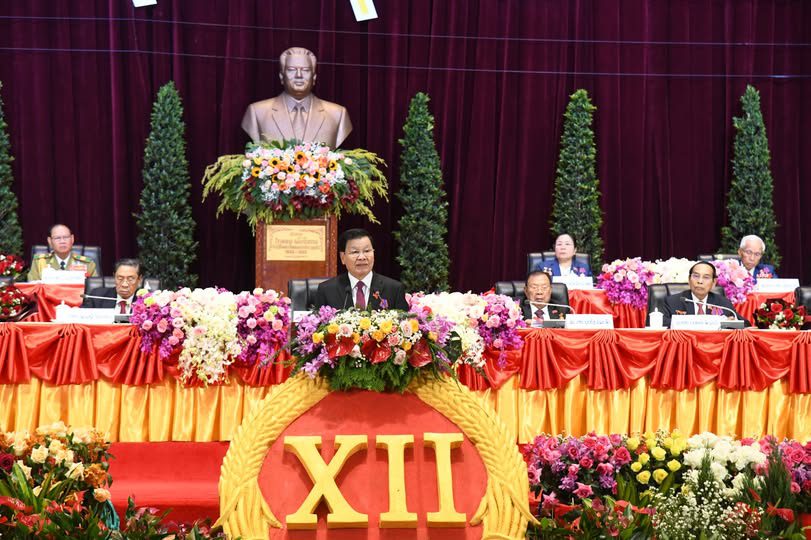
BowerGroupAsia Head of Research Murray Hiebert wrote a client update on the 12th National Congress of the Lao People’s Revolutionary Party.
Context
- The ruling Lao People’s Revolutionary Party held its 12th congress from January 6-8, selected its 73-member Central Committee and set the direction for the country’s economic development for the next five years. Thongloun Sisoulith, 80, was reelected general secretary, with Vilay Lakhamfong elected as a standing member of the Secretariat and Vansay Phongsavanh as head of the Central Inspection Committee.
- The congress also selected the 13-member Politburo, which included five new members. This marked a continued transition to a younger generation of technocrats, with Thongloun being the last of the older revolutionaries to remain. He is expected to step down at the next congress, if not before.
- The congress ratified the 10th five-year socioeconomic development plan, which emphasizes modernizing the state administration, promoting digital transformation and reducing Laos’ sizeable public debt. It also pushed back the deadline for graduating from least-developed country (LDC) status to 2030 from its earlier goal of 2020.
- A new political program was also adopted at the congress, laying out a plan for transitioning Laos to socialism and bringing it to upper-middle income status by 2055. The program has 11 pillars, covering the economy, digital transformation, climate change, human development, national defense, foreign policy and domestic affairs.
- Neighboring Vietnam and China both congratulated Laos for holding a successful congress and Thongloun on being reelected. Based on the comments from China, it seems Beijing, Laos’ biggest creditor by far, is not interested in seeing Laos fall into bankruptcy. China pledged to help “deepen the exchange of experiences in party governance and state management.”
Significance
- The five-year socioeconomic development plan has six core pillars aimed at bringing Laos out of LDC status by 2030:
- Developing a self-reliant economy.
- Boosting human resources.
- Improving living standards.
- Protecting natural resources and the environment.
- Enhancing regional and international connectivity.
- Reforming public governance.
- The plan aims to keep inflation below 5 percent, bring the debt-to-GDP down to 70 percent (some estimates suggest it was nearly 120 percent in 2025) and increase GDP growth to 6 percent annually. To achieve these goals, the plan calls for expanding the services sector as the main driver of growth with industry and agriculture growing to a lesser extent. It also calls for levying more taxes and fees, including land taxes, construction taxes and environmental taxes. Current projections suggest that revenue could reach LAK 554.4 trillion ($25.6 billion) over the next five years. The government also expects to increase investment, which is projected to reach LAK 636.2 trillion ($29.4 billion), with a focus on private sector growth, renewable energy diversification and development of key industries.
- Beyond economic targets, the five-year plan also lays out several social targets. Key among them are reducing the poverty rate to below 10 percent, enhancing the quality of education and healthcare services, increasing national forest coverage to 70 percent and cutting greenhouse gas emissions by 60 percent.
Implications
- The government is looking to create a friendlier business environment. The five-year plan calls for expanding public-private partnerships, especially for infrastructure development. It also outlines key steps to increase investor confidence:
- Building a rule-of-law state.
- Digitalizing state management.
- Delegating more authority to local administrations.
- Enhancing transparency in natural resource management.
- Shifting from a consumer-based economy to a production-oriented economy.
- Laos will elect 175 members of the new National Assembly February 22. Within 60 days of the election, the new legislature will meet to elect the prime minister and state president, approve the new cabinet and endorse the five-year national development plan.
We will continue to keep you updated on developments in Laos as they occur. If you have any questions or comments, please contact BGA Head of Research Murray Hiebert at mhiebert@bowergroupasia.com.
Best regards,
BowerGroupAsia

×