


















India-EU Free Trade Agreement Unlocks Unprecedented Market Access and Investment Opportunities
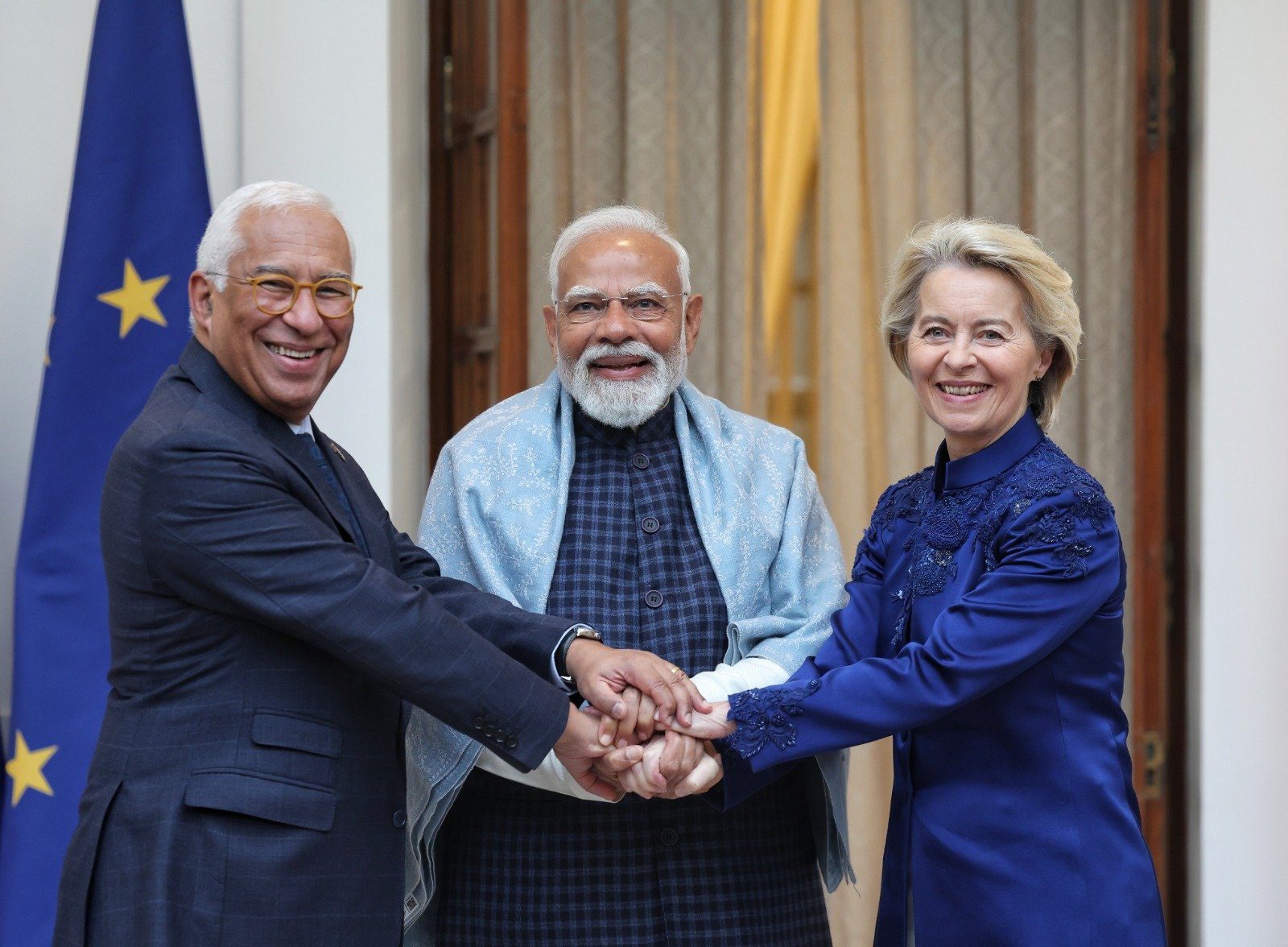
The BGA India team, led by Managing Director Anuj Gupta, wrote an update on India’s free trade agreement (FTA) with the European Union (EU).
Context
- The India-EU FTA negotiations concluded at the 16th India-EU Summit January 27, marking a historic and strategic breakthrough in India’s global trade engagement. Formal signing is expected later in 2026 after legal vetting and translation.
- Dubbed the “mother of all deals,” this pact brings together two of the world’s largest economies, comprising 25 percent of global GDP and one-third of global trade (see BGA Managing Director Anuj Gupta’s commentary on the deal in the latest “Why Should We Care About the Indo-Pacific?” podcast episode). It promises to reshape trade patterns and economic integration. The agreement, covering 21 chapters and 2 billion people, will enter into force after ratification by the European Parliament, expected by early 2027.
- The FTA grants India preferential access for more than 99 percent of its exports, boosting multiple labor-intensive sectors and expanding opportunities for growth and job creation. The EU gains tariff reductions on 96.6 percent of its goods exports. It will ensure greater access to India’s fast-growing market in automobiles, industrial goods, medical devices, food and beverages and high value services.
- Recognizing the complementary nature of EU and Indian economies, the FTA aims to diversify global supply chains by strengthening India’s position as an attractive alternative for European manufacturing while unlocking $24 trillion combined EU-India market opportunity.
- BGA recommends that EU companies proactively leverage upcoming opportunities in India — highlighted in Table 2 below — and consider sector-specific market entry and expansion strategies. Beyond lower duties and entry barriers, succeeding in India requires a comprehensive approach, including dealing with a multi-tiered policy and the regulatory and stakeholder landscape. Companies that move early will likely establish advantages over others.
Significance
- A key outcome of the FTA is unprecedented market access for Indian exports, with more than 99 percent of India’s exports by trade value receiving preferential entry into the EU market, unlocking substantial growth potential for Indian goods exporters. The deal is expected to catalyze $75 billion worth of exports, with $33 billion in exports from labor-intensive sectors such as textiles, apparel, leather, footwear, marine products, gems and jewelry, handicrafts and engineering goods gaining significantly from tariff reductions.
- The EU gains improved and predictable access to one of the world’s fastest-growing large economies, including tariff elimination or reduction on 96.6 percent of EU exports. This translates into annual duty savings of up to $6 billion for European companies across key sectors, particularly in automobiles, wines and spirits, high-value industrial goods, machinery, medical devices, chemicals and processed foods and in high-value areas such as financial services and maritime transport.
- The agreement places significant emphasis on services trade by securing expanded, commercially meaningful commitments across high-value sectors such as information technology (IT) and IT-enabled services, professional services, financial services, education, tourism and construction. Predictable access to 144 service subsectors in the EU for Indian providers and access to 102 subsectors offered by India for EU providers underpin mutual opportunities for cross-border provision of services, investment and collaboration over the long term.
- A future-ready mobility framework is embedded in the agreement, enabling streamlined business travel, intra-corporate transfers. The EU has offered commitments in 37 sectors and sub-sectors for contractual service suppliers and 17 sectors and sub-sectors for independent professionals, reinforcing people-to-people economic linkages and service delivery partnerships.
- The agreement addresses non-tariff barriers through strengthened regulatory cooperation, greater transparency and enhanced customs, sanitary and phytosanitary and technical barriers to trade frameworks, ensuring that tariff concessions translate into seamless, meaningful commercial access.
- The FTA also reinforces intellectual property protections in line with the Agreement on Trade-Related Aspects of Intellectual Property Rights (TRIPS); affirms support for the 2001 Doha Declaration, confirming that public health take precedence over patent rights; and recognizes digital knowledge assets like India’s Traditional Knowledge Digital Library. Cooperation is envisaged in cutting-edge domains, including artificial intelligence, clean technologies and semiconductors, enhancing the potential for technology transfer, innovation partnerships and integration into advanced manufacturing ecosystems.
- The agreement is designed to be inclusive and future-ready, integrating provisions for small and medium-sized enterprises, digital trade, sustainable development and multiple review mechanisms to adapt to changing global trade dynamics. It is expected to substantially scale up trade, enhance export competitiveness and integrate Indian businesses more deeply into European and global value chains. This will reinforce India’s role as a dynamic partner in global trade and investment.
Implications
- Beyond commercial gains, the FTA serves as strategic insurance in a world of fractured supply chains, rising protectionism and geopolitical uncertainty. It positions India and the EU as democratic counterweights to China’s state-led trade model while offering Brussels a tool to diversify economic dependencies and blunt the unpredictability of U.S. trade policies.
- For India, the agreement reduces overreliance on the United States and China, opening new avenues for exports, services and investments. For the EU, it secures a durable presence in one of the fastest-growing large economies while advancing Brussels’ push to “de-risk” critical supply chains, particularly in high-value manufacturing, technology and strategic sectors.
- Crucially, the FTA is paired with a Security and Defense Partnership, an uncommon step for the EU, signaling deeper maritime cooperation in the Indo-Pacific and potential collaboration in defense manufacturing. In a period of trade wars and great-power competition, the deal elevates the India-EU relationship from transactional trade to a strategic anchor of 21st-century economic resilience, autonomy and geopolitical balance.
- The FTA still hinges on EU ratification by all 27 member states and the EU Parliament, a process that’s shaped by political and sectoral sensitivities, particularly around agriculture, climate and labor standards. As witnessed in the EU-Mercosur deal, which was delayed after Parliament referred it to the European Court of Justice amid farm-sector pushback, similar debates could influence the FTA’s timeline even if provisional application moves ahead.
If you have questions or comments, please contact BGA India Managing Director Anuj Gupta at agupta@bowergroupasia.com.
Best regards,
BGA India Team

×