

















ASEAN Summitry in Manila: Geopolitical Divisions and Geoeconomics Resilience
BGA Senior Adviser Dr. Thitinan Pongsudhirak wrote a client update on the Association of Southeast Asian Nations (ASEAN) summit in Manila.
Context
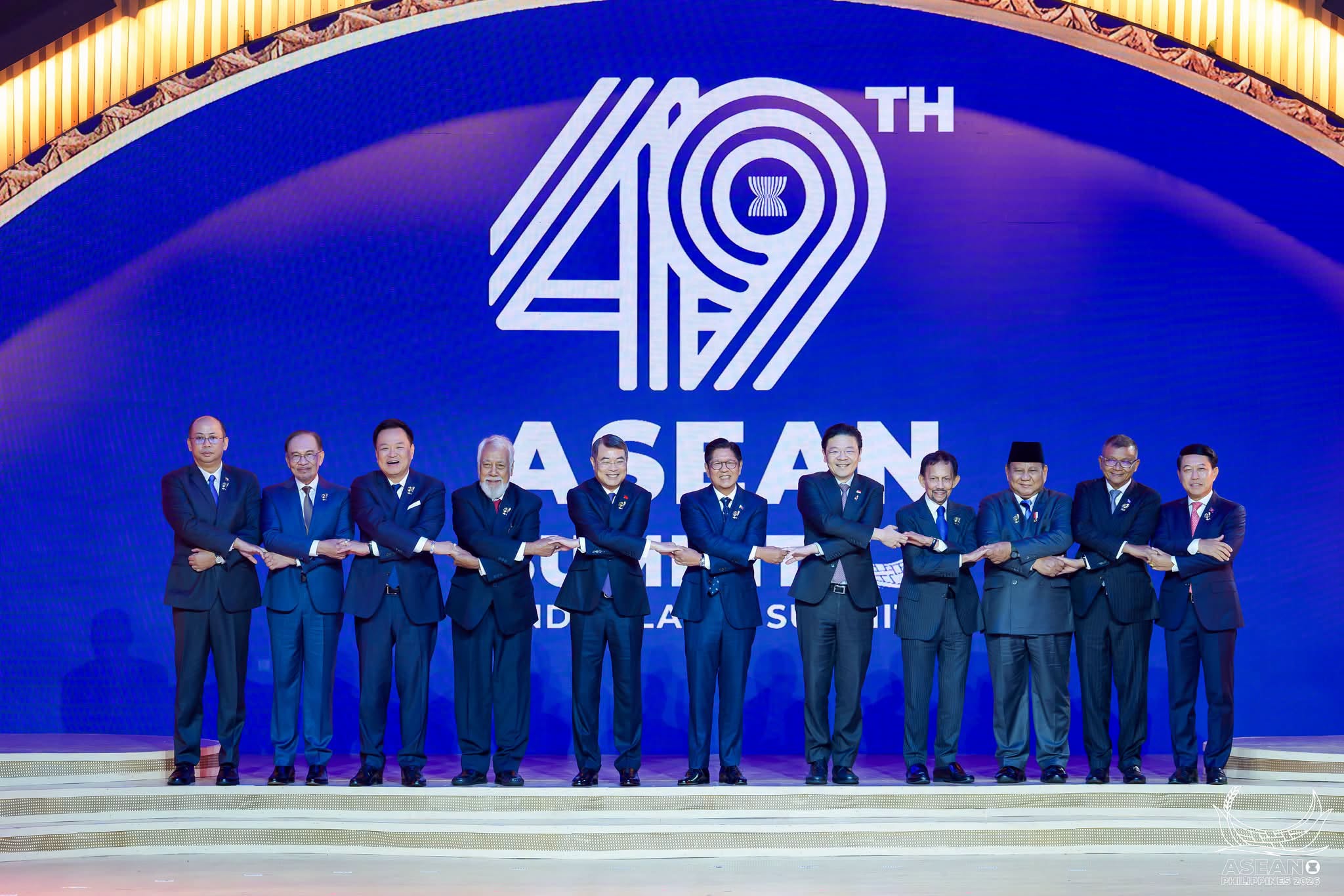
- When Southeast Asian leaders linked arms for their customary family photo in Manila November 15, the show of unity belied a regional organization more divided on security matters than ever. Over three days that ended with the 21st East Asia Summit and an ASEAN-U.S. Special Summit arranged around President Donald Trump’s late arrival, the Philippine chair presided over more than 100 outcome documents. Yet Myanmar, the Thai-Cambodian border and the South China Sea remained unresolved, while haze from Indonesia’s fires strained relations among members themselves. What the Manila meetings revealed is a grouping whose geopolitical effectiveness keeps eroding while its geoeconomic relevance is rising, as member states find common ground on energy, digital trade, supply chains and partnerships beyond the United States and China.
- The Iran war since February and the consequent disruption of oil flows through the Strait of Hormuz laid bare the region’s energy vulnerability, while U.S. tariffs and export controls and China’s leverage over critical inputs have turned trade and technology into instruments of coercion. On the eve of its 60th anniversary, ASEAN must show that its convening authority can still be turned into concerted action, lest Southeast Asia become an arena where outside powers deal with its members one at a time.
- Singapore’s Turn. Singapore takes over the ASEAN chair on January 1, 2027, ASEAN’s 60th anniversary year, inheriting an unfinished code of conduct, an unresolved Myanmar conundrum and economic commitments awaiting implementation. Its chairmanship offers an opening for overdue reforms, perhaps including one leaders’ summit a year with ministers held responsible for delivery. A secretary-general could be appointed on merit for shorter, performance-based terms, and the “ASEAN Minus X” or “ASEAN5+X” formulas extended to coalitions of the willing on maritime security, scam centers, haze and supply chain reconfigurations.
Significance
The more consequential outcomes lie in economic security and resilience, where member states’ interests converge and outside pressure has focused regional attention.
- Energy security. All 11 members have now signed the Enhanced Memorandum of Understanding on the ASEAN Power Grid, an idea that languished for two decades before this year’s oil shock gave it urgency. The Philippines signed letters of intent for emergency access to petroleum stored in Indonesia and Thailand.
- Digital economy. The signed Digital Economy Framework Agreement sets common rules on digital trade, cross-border data, payments and cybersecurity, and is expected to help double the region’s digital economy to $2 trillion by 2030. Implementation among members at very different levels of readiness will be uneven.
- Strategic trade and critical minerals. Leaders set up an expert group to coordinate controls on dual-use goods and called for a regional critical minerals strategy, recognizing that the region must remain an attractive production base without becoming a conduit for sanctions evasion or technology diversion.
- Trade diversification. ASEAN and Canada substantially concluded negotiations on the bloc’s first free trade agreement with a North American partner, with signing targeted for 2027.
- Wider forums. ASEAN Plus Three adopted statements on maritime logistics and on energy and food security, while the East Asia Summit issued a statement against online scams, whose test will be action and deliverables against networks entrenched in parts of mainland Southeast Asia.
Implications
For BGA clients, the outcomes from the Manila summit and related meetings offer openings alongside structural and persistent political risks.
- Compliance on rules of origin verification, technology standards and supply-chain traceability will weigh more heavily as ASEAN coordinates strategic trade controls.
- Energy and digital infrastructure offer prospects in transmission, storage, cloud services and cross-border data, subject to the pace of implementation.
- Myanmar may see some policy recalibration among ASEAN member states, but sanctions, conflict and reputational risks still hold.
- Plantation and agribusiness supply chains face closer scrutiny over the haze, as Singapore has already issued notices to 10 locally based companies linked to the fires.
- Thailand’s U.S. trade terms are not yet final, and sector-specific concessions warrant monitoring until the agreement is signed. Vietnam’s agreement with the United States also has yet to be finalized.
- The South China Sea remains a long-standing risk for maritime commerce, offshore energy and undersea infrastructure, including the possibility of an outright clash between China and the Philippines.
We will continue to track ASEAN-related developments closely and keep clients informed accordingly. If you have any comments or questions, please contact BGA Senior Adviser Dr. Thitinan Pongsudhirak.
Best regards,
BowerGroupAsia

×