


















Bangladesh’s New Government Signals Reform Intent Amid Structural Pressures
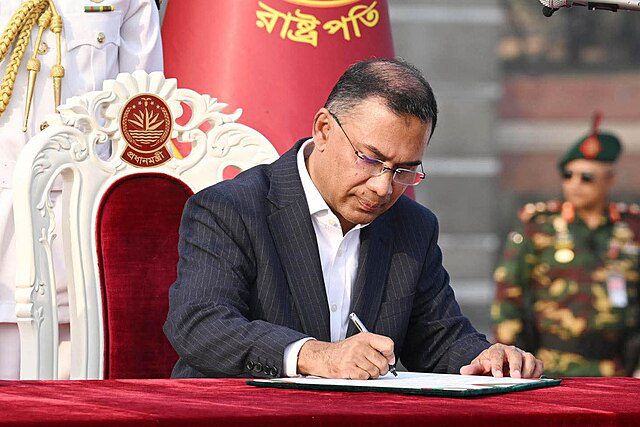
The BGA Bangladesh team, led by Senior Adviser Amb. M. Humayun Kabir, wrote an update for clients on the early policy priorities and challenges facing Prime Minister Tarique Rahman’s new government after taking office on February 17.
Context
- Prime Minister Rahman has formed a 49-member Cabinet and outlined a 180-day roadmap centered on financial sector reform and economic stabilization. The Cabinet includes 25 full ministers and 24 state ministers, blending experienced political figures with first-time ministers. Early priorities include stabilizing the law-and-order situation, cracking down on crime, restoring the economy through banking reforms, strengthening tax collection, streamlining the bureaucracy and encouraging domestic and foreign investment to stimulate growth and job creation.
- The administration has moved quickly to signal fiscal discipline and financial sector reform. Rahman banned members of Parliament from importing duty-free cars and receiving government land allocations. Finance and Planning Minister Amir Khasru Mahmud Chowdhury has also indicated plans to restore Bangladesh Bank’s independence, deregulate the financial market and accelerate reforms of the National Board of Revenue to improve revenue mobilization.
Significance
- The new government is seeking to establish credibility through visible restraint, institutional reform and improved governance after a period of political upheaval and economic strain. By curbing parliamentary perks, emphasizing modest use of state resources and prioritizing law-and-order and anti-graft measures, the new administration is signaling a shift toward fiscal restraint and governance reform.
- Bangladesh now faces simultaneous macroeconomic stabilization and structural reform challenges that will shape the government’s early performance. The administration must contain inflation hovering above 8 percent, manage a public debt burden of roughly Taka 21 trillion ($172 billion), negotiate the final tranche of the International Monetary Fund’s (IMF) 2023 support package under conditions of fiscal and monetary tightening
,and prepare the economy for graduation from least developed country status.
Implications
- Companies can expect increased focus on financial sector governance and tax administration. If implemented consistently, these measures could improve regulatory predictability, strengthen financial discipline and gradually enhance ease of doing business.
- Businesses should watch inflation management, IMF negotiations and regional diplomacy as near-term determinants of market stability and investor confidence. The government’s ability to stabilize essential prices, conclude IMF negotiations and manage external financing pressures, while stabilizing relations with India, China, Japan and the United States, will directly influence Bangladesh’s investment outlook over the next 12-18 months.
We will continue to keep you updated on developments in Bangladesh as they occur. If you have any comments or questions, please contact BGA Bangladesh Senior Adviser Amb. M. Humayun Kabir at hkabir@bowergroupasia.com.
Best regards,
BGA Bangladesh Team

×