


















China’s Economic Conference Signals Moderate Macroeconomic Support, Reforms in 2026
BGA China Adviser Eric Wang and Account Manager Sam Overholt wrote an update to clients on China’s Central Economic Work Conference.
Context
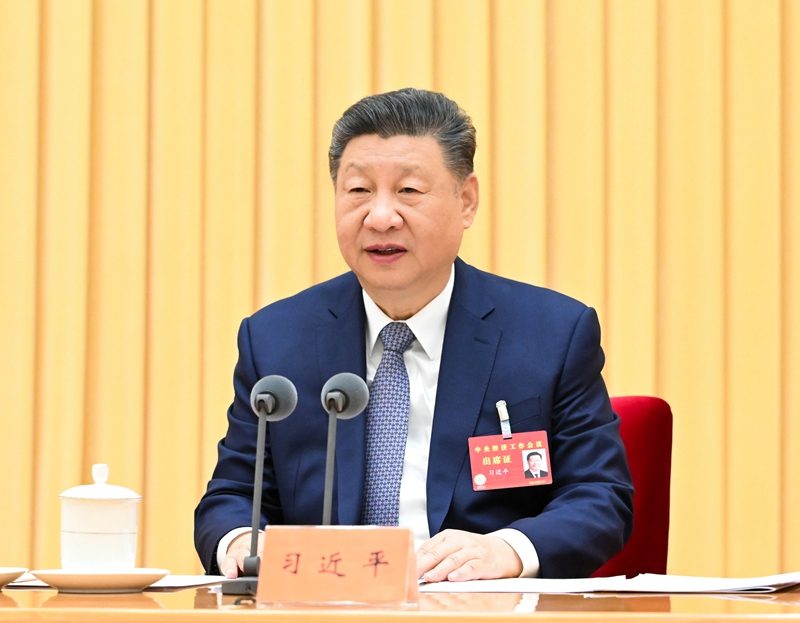
- China’s Central Economic Work Conference (CEWC) is the Communist Party’s annual top-level meeting on economic policy. It typically sets the tone for macro policy, reform priorities and risk management for the year ahead and helps frame the agenda that will be translated into budgets and work plans during the spring policy calendar. The CEWC, held from December 10-11, outlined priorities for 2026, the opening year of the 15th Five-Year Plan (2026-2030).
- In the official readout, leaders described a more challenging operating environment, citing a complex and severe external backdrop and persistent domestic difficulties. They emphasized a need to tap new demand, support innovation and manage risks, while keeping policy support and reform moving in parallel. The readout also laid out five guiding principles, including pairing macro policy with reform and innovation, combining market dynamism with effective governance and balancing investment in physical assets with investment in people.
- The readout identified eight priorities for 2026. The list starts with boosting consumption and stabilizing investment, then building new growth drivers through innovation and the “AI plus” initiative, and then pushes reform, opening, coordinated urban-rural and regional development. It continues with the green transition, stronger livelihoods and employment support and risk containment with a focus on real estate and local-government debt.
Significance
- Policy messaging stayed accommodative. The conference called for a more proactive fiscal stance with room for deficit spending and issuing bonds, alongside tighter discipline on how funds are used. It also endorsed a moderately loose monetary stance and linked growth support to a “reasonable” recovery in prices, highlighting tools such as reserve-requirement and interest rate adjustments.
- The emphasis on demand and prices reflects weak nominal growth. Official data show consumer inflation remained subdued and producer prices stayed in deflationary territory in November. Against that backdrop, the conference put domestic demand first and called for a consumption-focused action plan, steps to raise household incomes and remove unreasonable restrictions on consumption. It also pointed to reforms that could improve household asset-income channels, including capital-market measures, as a complement to wage and transfer policies.
- On its face, the readout reads like continuity in Beijing’s recent playbook of targeted support, risk control and industrial upgrading. At the same time, the agenda’s repeated stress on a unified national market and on curbing “involution-style” competition signals a push toward stronger market discipline and more durable private sector incentives. The conference also highlighted productivity-oriented measures, including alignment across education, technology and talent policy, stronger enterprise-led innovation, the “AI plus” initiative with improved governance, service-sector upgrading and reinforcement of key industrial chains.
Implications
- The first execution test is fiscal mechanics between the central government and localities. The conference’s push for “investment in people” assumes a visible expansion of public services that can reduce precautionary savings and support consumption. But service delivery sits largely with local governments, and the readout itself flagged local fiscal strains and the need to protect basic local functions. In 2026, the key question is whether higher-level financing and clearer program design allow localities to scale services or whether implementation defaults to familiar project-led channels and quasi-fiscal workarounds.
- The second hurdle is stabilizing property and local-government debt without restarting debt-led growth. The conference called for steady steps to stabilize housing, manage new supply and reduce inventory and support the acquisition of unsold commercial housing for use as affordable housing while advancing a “new” development model. The data show the size of the drag: real estate development investment fell 14.7 percent year over year in the first 10 months, new starts dropped 19.8 percent and sales value declined 9.6 percent.
- The status of private developers could be decisive. A widening wave of restructurings or liquidity events would raise the risk of delivery delays and further damage to household confidence. That, in turn, could push authorities toward broader inventory-acquisition programs, expanded policy-bank funding and stronger coordination on completion financing.
- A third challenge is policy transmission to the private sector. Easier macro settings do not automatically translate into stronger private investment if expected returns remain uncertain. From January through October, fixed-asset investment excluding rural households fell 1.7 percent from a year earlier, while private investment fell 4.5 percent.
- The reform package aims to address those conditions through unified market rules, steps to curb destructive competition, stronger legal and policy support for private firms, clearing arrears owed to enterprises, factor-market reforms, tax and fiscal adjustments and capital-market reform. Progress will be judged by changes in local behavior on procurement, subsidies, market access and payment discipline, not by the release of new documents alone.
We will continue to keep you updated on developments in China as they occur. If you have any comments or questions, please contact BGA Adviser Eric Wang at ewang@bowergroupasia.com or Account Manager Sam Overholt at soverholt@bowergroupasia.com.
Best regards,
BGA China Team

×