


















Japan’s Cabinet Reshuffle Reinforces Takaichi’s Political Base and Policy Continuity
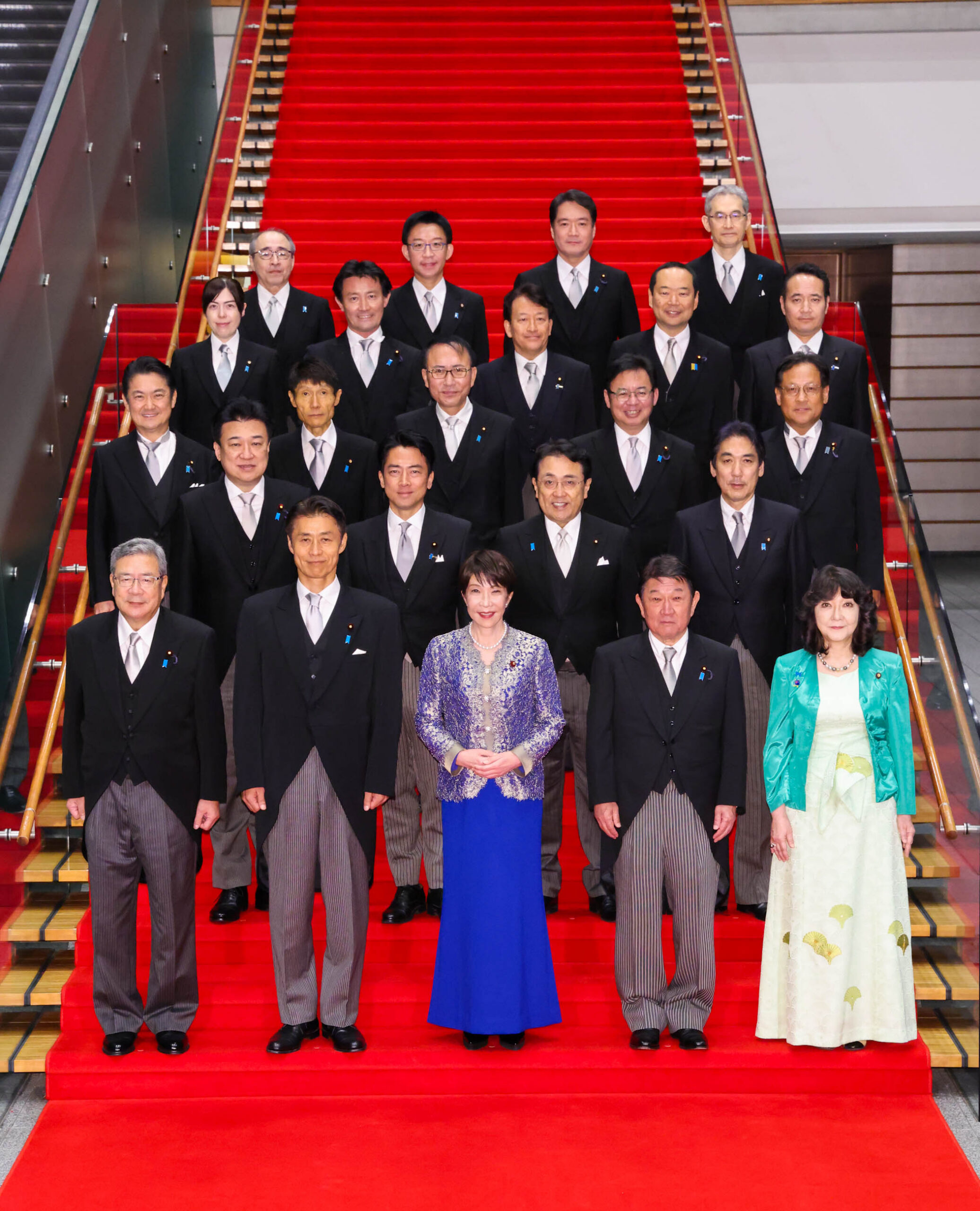
The BGA Japan team, led by Managing Director Kiyoaki Aburaki, prepared an update for clients on Japan’s recent Cabinet reshuffle.
Context
- Japanese Prime Minister Sanae Takaichi unveiled her second Cabinet September 17 following her first reshuffle since taking office in October 2025. This followed changes to the Liberal Democratic Party (LDP) leadership September 16. LDP executives serve one-year terms, and in recent years, Cabinet reshuffles have often coincided with the expiration of these terms. The timing of the latest personnel changes had therefore been widely anticipated.
- The Takaichi administration is pursuing a “responsible proactive fiscal policy” to secure large-scale public and private investment in strategic sectors including AI and semiconductors, robotics, quantum technologies, economic security, defense and dual-use technologies and energy and the green transformation. The retention of the administration’s core leadership provides continuity for these policies. For companies, it will therefore be increasingly important to follow the policymaking process around the government’s growth strategy, the fiscal year 2027 budget, tax reform and regulatory reform and to identify how their technologies and investments can align with government priorities. Particularly in sectors targeted for strategic investment, engaging with policymakers before policies and institutional frameworks are finalized will be important for identifying and shaping business opportunities.
Significance
- The key takeaway from the reshuffle is that Takaichi has reinforced her political base while preserving the core structure of her administration and continuity in its policy agenda. Takaichi did not rise through the LDP as the leader of a major faction and did not have an especially strong power base within the party. She built her ministerial credentials with the backing of former Prime Minister Shinzo Abe, while support from former Prime Minister Taro Aso and the Aso faction was an important contributing factor to her victory in the 2025 LDP presidential election.
- The latest personnel changes reinforce this political framework rather than alter it. Aso remains LDP vice president and Shunichi Suzuki remains secretary-general, while key Cabinet members have also been retained. At the same time, Ishin has joined the Cabinet for the first time, taking the coalition relationship to a new level. With Cabinet approval ratings remaining in the 60 percent range roughly one year after the administration took office, the reshuffle reflects a cautious strategy of maintaining a successful core team while broadening the administration’s political base.
Implications
- The LDP’s role in shaping policy will likely expand in strategic areas that cut across traditional ministerial boundaries. As the Takaichi administration accelerates its growth strategy and strategic investment agenda, LDP project teams and parliamentary leagues are increasingly helping establish policy priorities in areas such as AI, robotics, semiconductors and economic security that cannot easily be addressed within traditional ministerial silos.
- This politically driven approach can also help government ministries coordinate policies across jurisdictions and advance budgets and institutional frameworks that would be difficult to develop within existing structures. Physical AI is a prominent example. In this field, which combines AI with Japan’s traditional strengths in robotics and manufacturing, the LDP’s robotics parliamentary league, led by Daishiro Yamagiwa with Nishimura serving as acting chair, is helping drive the government’s strategy and the development of concrete policy measures.
We will continue to keep you updated on developments in Japan as they occur. If you have any comments or questions, please contact BGA Japan Managing Director Kiyoaki Aburaki at kaburaki@bowergroupasia.com.
Best regards,
BGA Japan Team

×