















India and Vietnam Deepen Strategic Alignment With New Deals and Security Pact
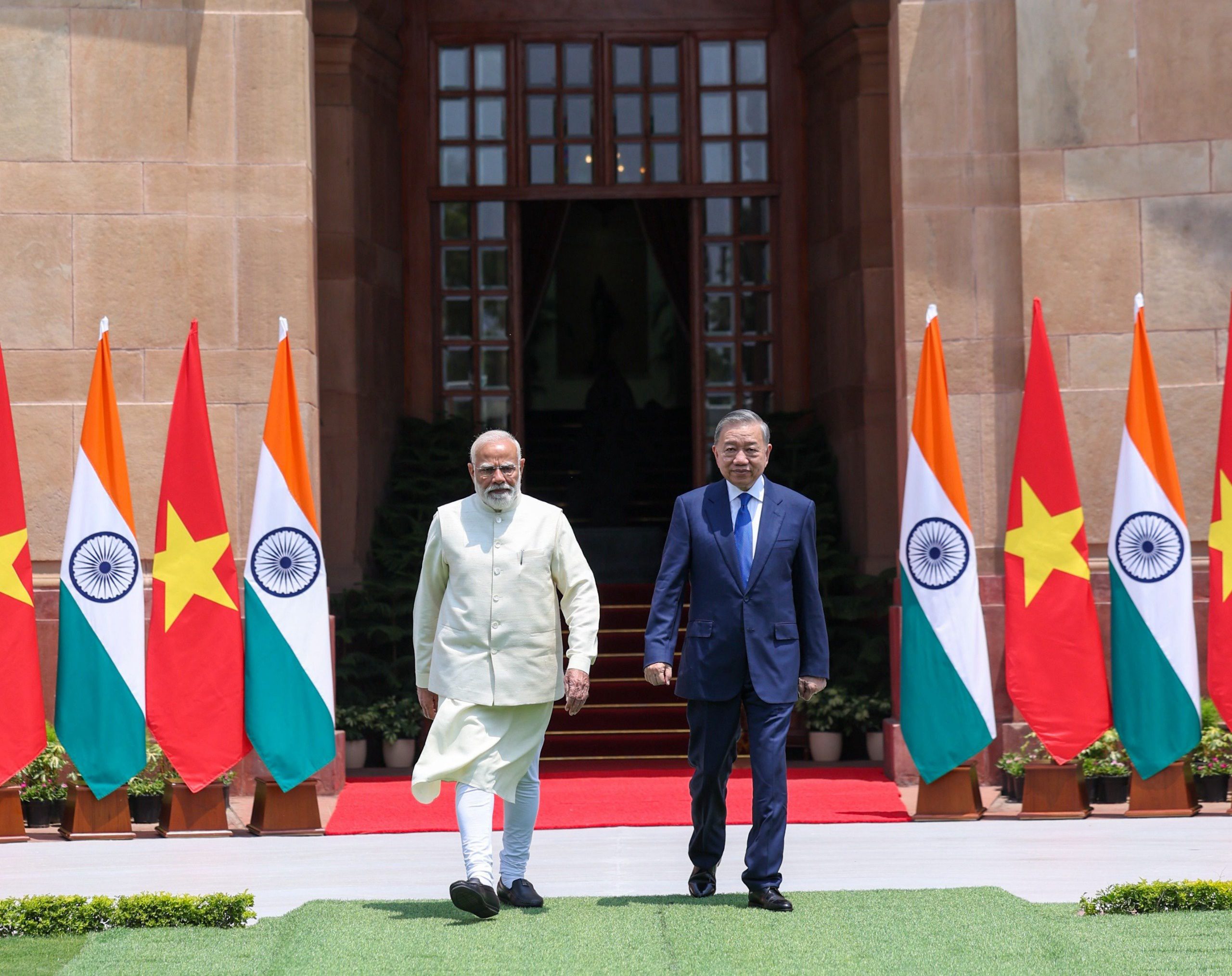
The BGA India team, led by Managing Director Anuj Gupta prepared an update for clients on Vietnamese President and Communist Party General Secretary To Lam’s state visit to India.
Context
- Vietnamese President and Communist Party General Secretary To Lam completed a three‑day state visit to India from May 5-7, elevating the bilateral relationship to an Enhanced Comprehensive Strategic Partnership. The visit included meetings with Prime Minister Narendra Mody, President Draupadi Murmi and National Security Advisor Ajit Doval. Eighteen formal outcomes were produced across defense, trade, energy, technology and health, with Modi accepting an invitation to visit Vietnam.
- The visit reflects intensifying political, economic and security coordination between India and Vietnam in the Indo‑Pacific. Agreements covered defense and maritime cooperation, trade and supply‑chain diversification, digital payments, critical minerals, nuclear energy, pharmaceuticals, technology and South China Sea stability. It was supported by strong business‑level engagement and a new bilateral trade target of $25 billion by 2030.
Significance
- The growing closeness between India and Vietnam is one of the most important strategic shifts in Asia in the last decade. Lam’s visit signals that the two countries are moving from decades of steady engagement to a more coordinated Indo-Pacific posture.New institutional mechanisms, including a 2+2 Strategic Diplomacy‑Defense Dialogue and coordinated positions on maritime stability and UNCLOS will help strengthen Hanoi’s strategic hedging while reinforcing New Delhi’s Act East policy and regional security presence.
- Economic and commercial cooperation has been elevated alongside geopolitics as a central pillar of the relationship. Bilateral trade reached $16.5 billion in 2025, growing 28 percent year on year in the first quarter of 2026 and $25 billion has been targeted by 2030, signifying continued growth. Commitments around trade liberalization, digital payments interoperability, critical minerals, energy and technology reflect growing economic complementarity and position the relationship as one of the most consequential strategic shifts in Asia over the past decade.
Implications
- For businesses, the diplomacy is unusually focused on tangible commercial outcomes. It is anchored by a $25 billion bilateral trade target by 2030 and supported by practical enablers such as central bank cooperation and cross-border QR code payment interoperability, alongside memorandums of understanding (MOUs) in critical minerals (rare earths), energy and technology. This creates clearer pathways for firms looking to diversify supply chains, build manufacturing linkages and scale cross-border consumer and business-to-business transactions.
- Companies can expect near‑term commercial openings across six sectors as diplomatic agreements translate into execution. Confirmed pathways include defense procurement, pharmaceuticals entering Vietnam’s public health‑care system from 2027, rare‑earths collaboration, expansion of oil and gas exploration, cross‑border digital payments and expanded agricultural market access. A higher bilateral trade target, expected ASEAN‑India tariff reductions, coordinated digital infrastructure and shared positions on maritime stability create a more predictable environment for firms operating across these sectors.
If you have questions or comments, please contact BGA India Managing Director Anuj Gupta at agupta@bowergroupasia.com.
Best regards,
BGA India Team

×