


















India’s Five-State Election Outcomes Strengthen Reform Momentum
The BGA India Team, led by Managing Director, Anuj Gupta, prepared an update for clients on the recent assembly elections that happened in five Indian states and what the results mean.
Context
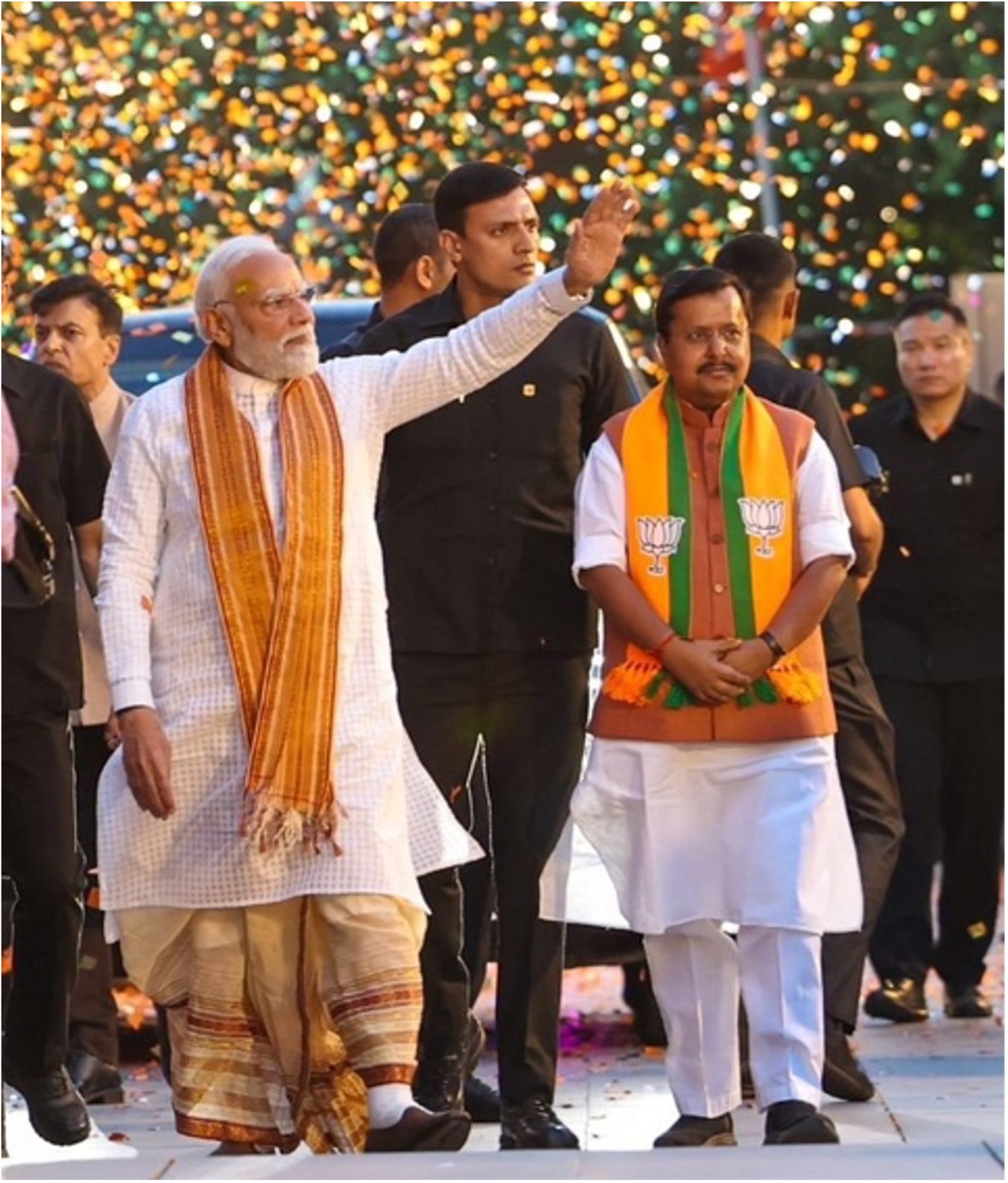
- Five Indian states – West Bengal, Tamil Nadu, Assam, Kerala and Puducherry – held assembly elections in recent weeks, with results having historic significance. For the first time since India’s Independence, the Bharatiya Janata Party (BJP) secured a decisive majority in West Bengal, overthrowing the Trinamool Congress-led government. In Tamil Nadu, actor-turned-politician Vijay’s Tamilaga Vettri Kazhagam (TVK) staged a dramatic upset, overtaking the incumbent Dravida Munnetra Kazhagam (DMK) and breaking the state’s decades-long DMK–All India Anna Dravida Munnetra Kazhagam duopoly.
- Across the remaining races, outcomes reinforced continuity in some states and change in others. The BJP maintained its stronghold in Assam, the Congress-led United Democratic Front (UDF) secured victory in Kerala, and the All-India N. R. Congress (AINRC) emerged as the leading party in Puducherry.
Significance
- The election results expand areas of alignment with New Delhi in eastern India while introducing a new political variable in the south. This transition is expected to support a more investor-friendly environment in aligned states, reversing years of lagging industrial growth and prompting multinational companies in logistics, manufacturing and consumer sectors to reassess market-entry strategies. The rebalanced center–state map reshapes near-term execution risk and long-term opportunity across India’s eastern and southern growth corridors.
- The mandate signals a meaningful shift in India’s economic geography. If current trends hold, stronger center-state alignment in West Bengal could accelerate approvals and de-risk incentive delivery, supporting infrastructure, logistics, ports and industrial park development. In Tamil Nadu, a first-time TVK administration may introduce short-term procedural risk including around incentive continuity and clearance timelines, but the state’s structural strengths, such as port access, supplier ecosystems and skilled labor, remain intact. Continuity in Assam supports ongoing connectivity and industrial initiatives, while a UDF-led Kerala is likely to recalibrate the investment narrative toward health care, higher education and information technology services.
Implications
- Investors can expect faster approvals, funding flows and infrastructure delivery in states aligned with the central government. With the BJP and its allies now governing in twenty states and two Union Territories, the investor “risk discount” has moderated significantly, replaced by a more unified political landscape conducive to pro‑business governance. The strengthened national reform pipeline reduces the likelihood of major policy reversals ahead of 2029, providing a stable planning horizon for foreign direct investment, labor reforms and production-linked incentive schemes.
- Consumer-facing multinationals are likely to see meaningful demand-side upside driven by welfare-linked spending. A change in leadership in West Bengal opens a large, historically under‑penetrated market for industrial and corporate investment, while companies should closely watch execution credibility in Tamil Nadu as the new government advances an ambitious $1.5 trillion economy target. Expanded direct benefit transfers to women and youth in West Bengal and Tamil Nadu are expected to fuel demand for fast-moving consumer goods, fintech services and consumer durables over the next 12–24 months.
We will continue to keep you updated on developments in India as they occur. If you have any comments or questions, please contact BGA India Managing Director Anuj Gupta at agupta@bowergroupasia.com.
Best regards,
BGA India Team

×