


















India’s 7.8% GDP Expansion Strengthens Growth Outlook Despite Global Headwinds
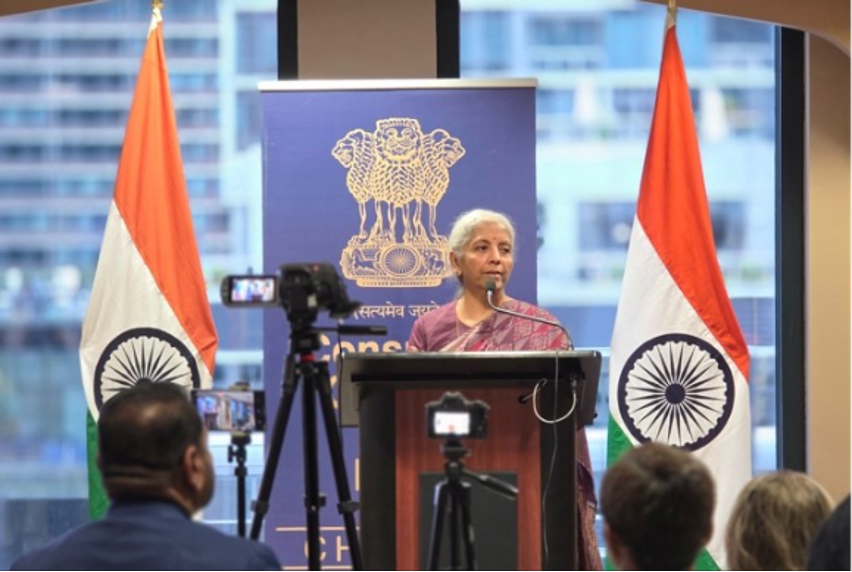
The BGA India team, led by Managing Director Anuj Gupta, wrote an update for clients on India’s economic momentum in fiscal year 2026-2027.
Context
- India’s economy has entered fiscal year 2026-2027 with stronger-than-expected momentum, recording 7.8 percent real GDP growth in the first quarter and exceeding the Reserve Bank of India’s estimate of 7 percent. This marks the highest first-quarter growth rate in the past four years. Growth was supported by broad-based expansion across investment, exports and services, with gross fixed capital formation rising 11.9 percent, exports growing 12 percent and gross value added increasing 8.2 percent. Momentum continued into July, with industrial production up 6.7 percent and cumulative April-July exports reaching $316.4 billion, a 13.2 percent increase year on year.
- The government has paired strong macroeconomic performance with a series of industrial and investment-focused policy interventions. Recent initiatives include the $13.4 billion SEMICON 2.0 program, a $7.4 billion mobile phone manufacturing scheme, $10 billion for offshore energy exploration and new trade and investment agreements with the United Kingdom and Israel. These measures are designed to strengthen domestic manufacturing, deepen supply chains and position India as a globally competitive production base.
Significance
- Investment, manufacturing and exports are becoming increasingly important drivers of India’s growth model. Manufacturing gross value added expanded 9.2 percent in the first quarter, while capital goods production rose 15.2 percent and sectors such as electrical equipment and electronics recorded growth of 27 percent and 12.4 percent respectively. This suggests India’s growth is broadening beyond consumption and is increasingly supported by industrial expansion, capital formation and export competitiveness.
- Government policy is accelerating the development of strategic industries while improving India’s attractiveness to foreign capital. Programs supporting semiconductors, electronics, energy security and MSME development are being complemented by trade agreements and reforms aimed at improving market access and investment certainty. Together, these efforts reinforce India’s ambition to become both a major domestic market and a critical node in global manufacturing and supply chains.
Implications
- Companies should increasingly view India as both a growth market and a regional production platform. Strong domestic demand, rising investment, expanding credit availability and targeted industrial incentives create opportunities across semiconductors, electronics, industrial equipment, technology, professional services and energy. Businesses pursuing localization, manufacturing expansion or supply chain diversification are likely to find a more supportive operating environment.
- Businesses should monitor policy execution, infrastructure capacity and external risks alongside the favorable macroeconomic outlook. While initiatives such as SEMICON 2.0, energy-security investments and trade reforms strengthen the investment case, implementation capacity, energy availability and global trade volatility remain important variables. The durability of India’s current growth trajectory will depend on whether these structural reforms translate into sustained productivity gains and manufacturing competitiveness.

×