















Digital Rules, External Diversification: ASEAN Summit’s Key Economic Takeaways
BGA Managing Director for Global Trade and Economics Nydia Ngiow wrote an update to clients on key trade and digital takeaways from the 2026 Association of Southeast Asian Nations (ASEAN) Summit.
Context
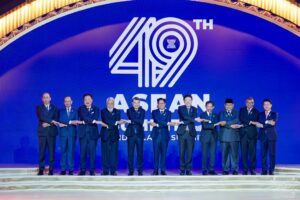
- The Philippines closed its 2026 ASEAN chair year by moving ASEAN’s economic agenda beyond the goods trade upgrades signed in Kuala Lumpur last year, shifting toward digital rules and external diversification. ASEAN member states signed the ASEAN Digital Economy Framework Agreement (DEFA) at the 28th ASEAN Economic Community Council meeting November 14 and announced the substantial conclusion of the ASEAN-Canada Free Trade Agreement. Ministers also formalized an enhanced ASEAN Power Grid memorandum of understanding, advanced feasibility work on its Green Economy Framework Agreement (GEFA) and confirmed that the upgraded ASEAN Trade in Goods Agreement (ATIGA) will enter into force by the end of 2026, ahead of the original June 2027 timeline.
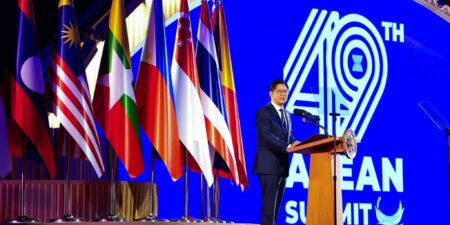
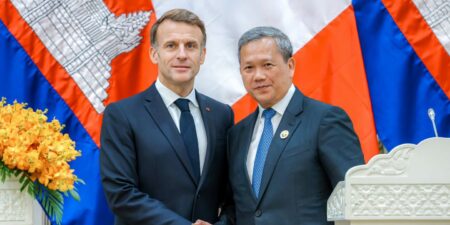
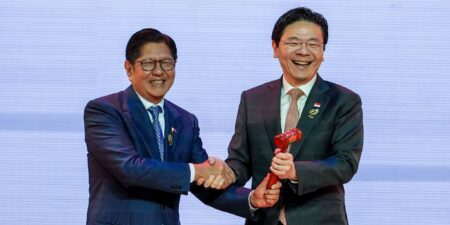
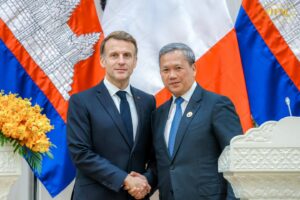
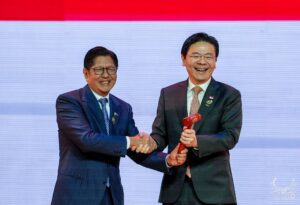
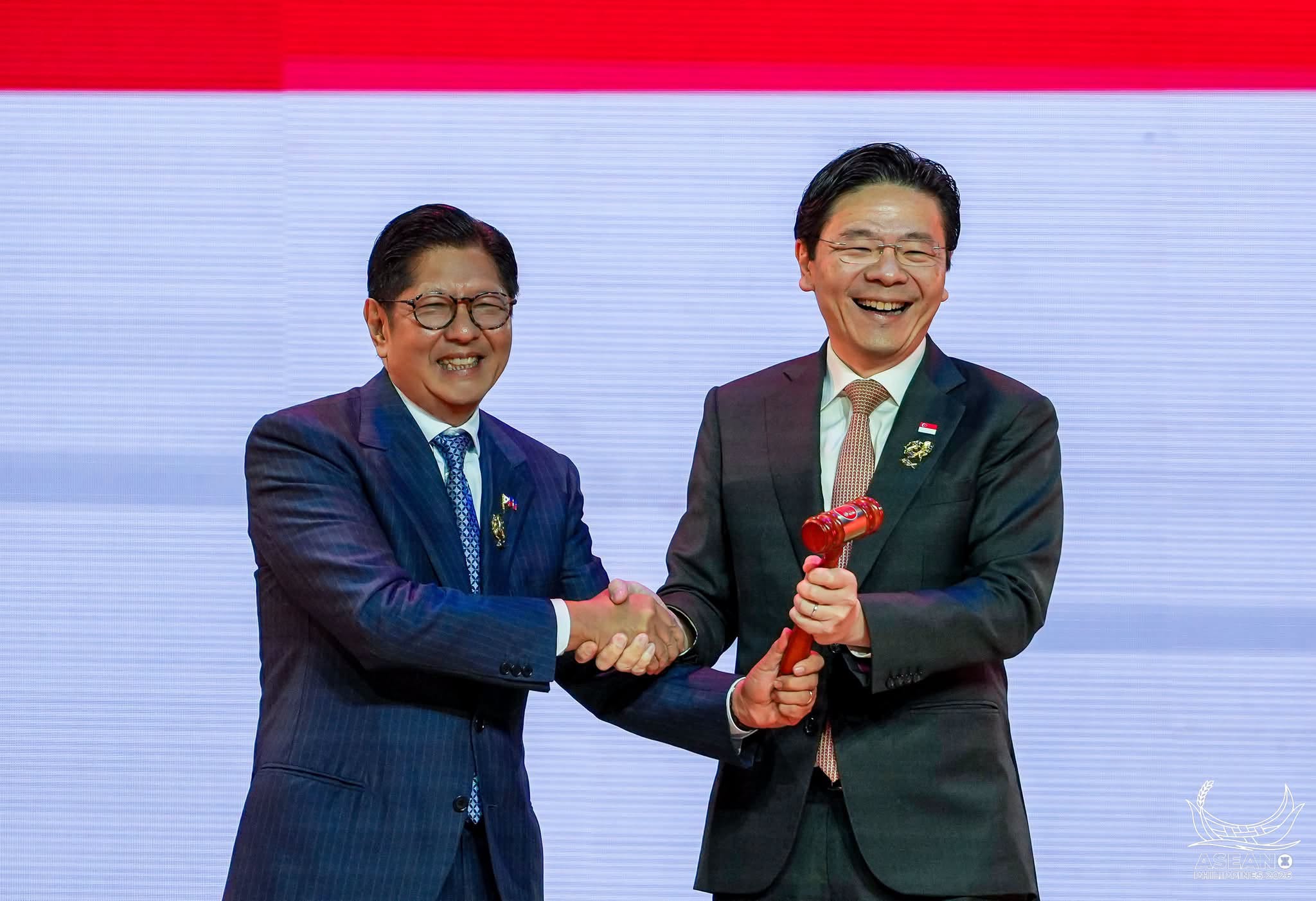
- Singapore took over the chair, with Prime Minister Lawrence Wong calling for further steps toward a single ASEAN market and stronger regional links in finance, digital technologies and energy as he unveiled the theme “Deeper Integration, Wider Partnerships.” The region continues to be viewed by its partners as a growth market as countries hedge against the U.S. tariffs, with Canada’s Prime Minister Mark Carney and Brazilian President Luiz Inacio Lula da Silva presenting expanded trade with ASEAN as a response to tariffs. French President Emmanuel Macron was also in the region for a state visit to Cambodia and the Francophonie Summit, followed by an official visit to Malaysia centered on rare earths and energy.
Significance
- The ASEAN DEFA is the region’s first stand-alone, legally binding digital economy agreement. It covers cross-border data flows (including financial data), source code protection, wider acceptance of electronic trade documentation, digital identities, e-payments, cybersecurity and AI. It will also include cooperation tracks on what ASEAN member states determine to be emerging technologies, such as AI, fintech, online scams and submarine cable repair.
- U.S. President Donald Trump arrived in Manila as the ASEAN summit closed, just after the Department of Commerce’s Bureau of Industry and Security announced an interim final rule requiring licenses for advanced AI chips shipped to four ASEAN member states (Indonesia, Malaysia, Singapore and Thailand) scheduled to take effect upon Federal Register publication (see BGA’s update “US Tightens Controls on Chinese Access to Overseas AI Computing Capability”).
- Trump signed a joint statement with Thailand announcing only the substantial conclusion of the bilateral agreement on reciprocal trade (ART) negotiations although reports later indicated that there were still issues preventing the signing of the agreement. Bangkok stressed the next day that the statement was not a final agreement and that existing tariffs remain in place.
- The Regional Comprehensive Economic Partnership remained top of mind, with leaders citing it as an anchor for regional resilience and supply chains at the various ASEAN+ summits (with Korea, Japan and ASEAN+3). Work has begun on the 2027 General Review, with the RCEP Joint Committee tasked to prepare a joint scoping paper. The review will take place in 2027.
- Energy and sustainability were also key focus areas against the backdrop of the ongoing Middle East crisis. The formalized ASEAN Power Grid memorandum builds on ASEAN’s earlier response in May to set up a regional fuel-sharing framework, a push to ratify the ASEAN Petroleum Security Agreement and a study on a regional oil stockpile. ASEAN energy ministers earlier noted that regional energy demand is expected to quadruple by 2060.
- The signing of the ASEAN-Canada FTA is targeted for 2027, which also marks the 50th anniversary of ASEAN-Canada dialogue relations. ASEAN will also upgrade the ASEAN-Korea FTA, review the ASEAN-India goods agreement and continue discussions with the Gulf Cooperation Council on an FTA.
- Singapore’s Prime Minister Wong and Brazilian President Lula also discussed the possible resumption of Mercosur-ASEAN talks. Lula said Brazil seeks full dialogue partner status with ASEAN and aims to double two-way trade, which reached US$38.4 billion in 2025.
Implications
- For companies operating in ASEAN, 2027 will be an important implementation year. Singapore has identified digital payments, digital ID, electronic trade documentation and interoperability as DEFA implementation priorities. BGA expects it to use its chair year to deepen financial and energy links and seek visible single-market outcomes for ASEAN’s 60th anniversary. Companies should also closely review the rules of origin and preferential tariff positions ahead of the upgraded ATIGA entry into force and signing of the ASEAN-Canada agreement.
- Adjacent to the ASEAN developments, the review of the Regional Comprehensive Economic Partnership (RCEP), slated for 2027, will also be closely watched to see how participants decide to upgrade and update its obligations to enhance utilization. Malaysia’s rare earths concession to France shows that its raw rare earth export ban can potentially be negotiated on a government-to-government, project-specific basis, an important signal for companies pursuing critical minerals supply outside of China.
- These latest developments indicate how the trade and export control tracks are converging as they relate to the United States. The earlier Malaysia and Indonesia ARTs, which have not yet entered into force, commit both governments to align with U.S. export controls, while the United States only commits to take that cooperation “into account.” The latest interim final rule shows that a signed ART alone does not guarantee any exemption, although it is arguable whether implementing these export control provisions in the ARTs will help waive the interim final rule or secure more favorable conditions.
We will continue to keep you updated on trade developments in the region. If you have any questions, please reach out to BGA Managing Director for Global Trade and Economics Nydia Ngiow, Head of Research Murray Hiebert, Senior Adviser Larry Greenwood or Senior Adviser James Carouso.
Best regards,
BGA Global Trade and Economics Team

×