
















China-US Agreement Sets Framework but Leaves Key Decisions to November
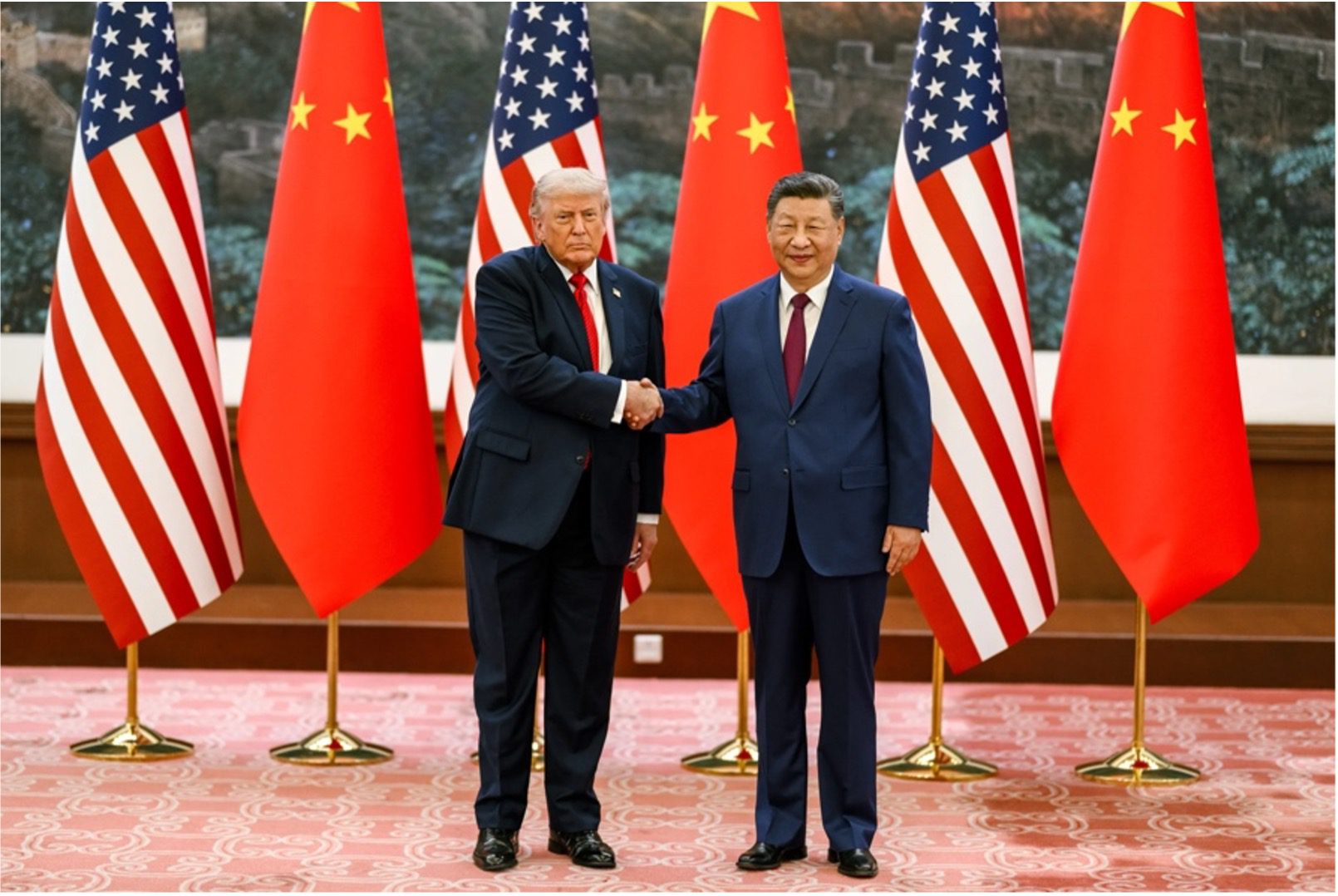
BGA China Adviser Eric Wang and Account Manager Sam Overholt wrote an update on the recent meeting between Presidents Xi Jinping and Donald Trump.
Context
- May 14-15 summit between Presidents Xi Jinping and Donald Trump in Beijing gave Chinese officials the framework they sought: a U.S.-endorsed designation of the relationship as “constructive strategic stability,” a September Xi state visit calendar anchor, multilateral validation through Group of 20 (G20) and Asia-Pacific Economic Cooperation (APEC) hosting support and the Taiwan red line placed on the official Chinese record without U.S. repudiation. On the other hand, the summit did not offer substantive resolution of any of the binary decisions that are due in the next six months. Singaporean Defense Minister Chan’s support for the Thai land bridge was likely a response to Indonesian Finance Minister Purbaya Yudhi Sadewa’s suggestion just a few days earlier that vessels passing through the Malacca Strait may also face a toll similar to what Iran is demanding with its chokehold over the Strait of Hormuz.
- The framework is one document with two interpretations. Beijing’s English readout describes the agreed designation as a “constructive China-U.S. relationship of strategic stability.” The May 17 White House Fact Sheet adds “on the basis of fairness and reciprocity,” Trump-administration vocabulary Beijing has not endorsed. The two readouts diverge sharply on the specifics that follow. Chinese Foreign Minister Wang Yi’s characterization is that the two sides are continuing to implement earlier consultations and that working teams are still negotiating the details. Each side has put on its own record what it wants its domestic audience to see and has declined to ratify the other side’s claims.
Significance
- For Beijing, the summit is framework-favorable, substance-fragile and toolkit-preserved but constrained. The framing dividend is real. Trump did not give the Taiwan de-commitment Beijing was probing for, and the presence of Secretary of Defense Pete Hegeth in the delegation reinforced military channels established in Kuala Lumpur in October and November 2025. This channel sits on weaker footing than the handshake suggests given the Chinese Central Military Commission’s reduction to two members, the new theater commanders lack U.S. dialogue history and Chinese Adm. Dong Jun’s has a structurally insecure tenure. What Beijing wants in exchange is policy continuity from both sides, no use of leverage to escalate and no walk-backs on prior commitments.
- The signal from Beijing on Taiwan was clear and was the central red line in the summit. Xi delivered the sharpest possible language: “The most important issue in China-U.S. relations,” “Taiwan independence and cross-Strait peace are as irreconcilable as fire and water” and “clashes and even conflicts, put the entire relationship in great jeopardy.” Trump’s transactional style sits closer to the older U.S. strategic ambiguity than to the previous administration’s public commitments to defend the island, which is what Beijing has been pushing back against. But tacit acceptance of Chinese red lines is not the same as substantive concession. No specific Taiwan-related deliverable came out of the summit.
Implications
- In Beijing’s own reading, the summit injected “valuable certainty and stability” into a volatile international landscape, with trade specifics to be clarified gradually as media exaggeration is corrected and working-level consensus is built. If working teams produce substance by July, the framework will be held through the September visit. If they do not, the asymmetric readouts become a U.S.-side claim of bad faith, the November rare earth decision defaults to automatic reinstatement and the Busan expiration becomes a much harder problem.
The Path to November
| Window | Event or Trigger | Test of the Framework |
| Jun-Aug | COFCO (state-owned agriculture trade platform) monthly purchases; Boeing second and third quarter order book; rare earth element shipments (yttrium, scandium, neodymium, indium) | Whether Beijing delivers what the White House fact sheet asserted on China’s behalf |
| Jun-Aug | U.S. Trade Representative’s Section 301 July tariff determinations | Whether Washington escalates inside the framework Beijing authored |
| Jun-Aug | Additional Office of Foreign Assets Control teapot refinery designations | First operational test of “no walk-backs” |
| Jun-Jul | June and July Politburo collective study sessions; Association of Southeast Asian Nations foreign ministers meeting in late July | Beijing’s discursive positioning; Wang Yi’s external validation work |
| Jun-Aug | U.S. Indo-Pacific Command–Eastern Theater Command working-level contact | Whether Hegseth’s “more meetings coming soon” produces cadence |
| Sep 24 | Xi state visit to Washington | Framework verification event; pageantry advantage flips to US soil |
| Oct-Nov | Fifth Plenum of 20th Central Committee of the Chinese Communist Party | First Party review of whether the framework is delivering for China |
| Nov 10 | Suspension of Oct 2025 critical mineral controls expires | The most consequential binary; three options each carry costs |
| Nov 18-19 | APEC summit (Beijing host) | China’s largest diplomatic showcase of the year; multilateral stress test |
| Nov 27 | Busan tariff truce expires | Companion binary; framework holds or collapses into tariff war redux |
| Dec 14-15 | G20 summit (Miami, Trump Doral, U.S. host); Central Economic Work Conference in same window | Post-cliff event under Trump’s chairmanship; Central Economic Work Conference sets whether “constructive strategic stability” survives into 2027 |
We will continue to keep you updated on developments in China as they occur. If you have any comments or questions, please contact BGA Adviser Eric Wang at ewang@bowergroupasia.com or Account Manager Sam Overholt at soverholt@bowergroupasia.com.
Best regards,
BGA China Team

×