


















Global Trade in 2026: A System Under Construction

WHAT YOU NEED TO KNOW
- The U.S. Section 301 tariffs should be regarded as the new floor and not a temporary measure. Unlike its reciprocal tariffs, these are procedurally robust and court-tested, with tariffs that persist beyond administrations. The window for both countries and companies to engage is narrowing significantly.
- Digital trade frameworks are fragmenting in real time. The lapse of the World Trade Organization (WTO) e-commerce moratorium, the U.S. non-participation in the E-Commerce Agreement (ECA) and the upcoming Association of Southeast Asian Nations (ASEAN) Digital Economic Framework Agreement (DEFA) show how the digital trade regulatory landscape is splintering into overlapping plurilateral and regional frameworks.
- Timelines for international trade will be compressed and much tighter than they appear. Section 232 tariffs for pharmaceuticals, semiconductors and critical minerals could be announced as early as July. These are no longer distant regulatory risks but imminent operational decisions.
ON THE HORIZON
- The United States-Mexico-Canada Agreement (USMCA) review will reshape North American supply chains regardless of the outcome. Given Canada’s explicit trade diversification pivot, Mexico’s fragile deescalation strategy with Washington and the U.S. administration’s preference for bilateral leverage, a straightforward renewal is unlikely. Companies with integrated North American supply chains, particularly in automotive, agriculture and manufacturing sectors, should develop contingency plans for potential annual reviews and the possibility of the agreement fragmenting into bilateral arrangements.
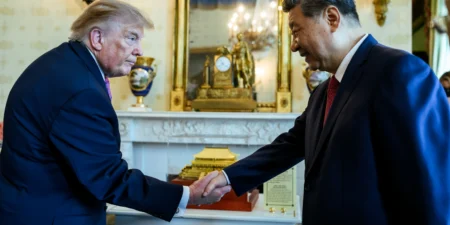
- Attention will focus on whether U.S. President Donald Trump and Chinese President Xi Jinping will renew their truce covering Chinese goods, rare-earth export controls and agricultural purchases that are expiring in November. Even though the leaders’ summit, confirmed for May 14-15, will determine the likelihood of an extension, companies need to prepare for significant supply chain disruptions.
- Thereafter, the Asia Pacific Economic Cooperation (APEC) leaders’ summit in China and the Group of 20 (G20) leaders’ summit in Miami will signal the direction of major power alignment on trade governance that will define the operating environment after 2026.
Sector Overview and Forecast
Tariff Uncertainty Likely To Remain The Norm
Section 232 Investigations and Semiconductors
The post-International Emergency Economic Powers Act (IEEPA) tariff landscape is in active transition. Following the Supreme Court’s ruling in February, which invalidated all IEEPA-based tariffs, the Trump administration quickly assembled a replacement architecture centered on three statutory pillars: Section 122 of the 1974 Trade Act (10 percent tariff expiring July 24), Section 232 of the 1962 Trade Expansion Act (sector-specific with national security burden, with no rate caps) and Section 301 of the 1974 Trade Act (country- and practice-specific with no rate caps).
The Section 122 tariff applies globally to most imports, although goods already subject to Section 232 tariffs such as steel, aluminum, copper and autos are excluded. With Congress highly unlikely to approve extension of these tariffs, the U.S. Trade Representative (USTR) has already accelerated Section 301 investigations covering 16 economies for excess manufacturing capacity and 60 economies for forced labor practices. This is timed to produce findings that result in tariffs at or before the Section 122 tariffs expire. Legal challenges are unlikely to provide relief in 2026.
Even though the U.S. Court of International Trade ruled May 7 that the use of Section 122 was unlawful, the court only immediately blocked the U.S. administration from enforcing the tariffs against the two companies that sued and Washington state, making clear that it was not issuing a “universal injunction.” Claims from more than 20 other states were dismissed on jurisdictional grounds, with the court ruling that they were not direct importers. This ruling will likely be appealed by the administration, and that process may prevent other companies from taking further action. Even if the decision is upheld, refunds to the plaintiffs will likely take time, given the procedural complexity involving the issuance of the IEEPA tariff refunds.
Companies should plan for tariffs resulting from the Section 301 investigations on excess manufacturing capacity or forced labor as the upcoming baseline, rather than the existing 10 percent. Led by USTR, this is an established and court-tested process. Findings can produce country-specific and product-specific tariffs that persist beyond administrations. This is illustrated by the recent four-year review of China’s Section 301 tariffs published in May, launched in Trump’s first term, maintained by the Joseph Biden administration through Trump’s second administration. The administration intends to use the Section 301 findings as the basis to replicate the country-level differentiated tariffs that IEEPA’s reciprocal tariff framework had provided, while resting on firmer legal footing.
- China: Existing Section 301 tariffs date to 2018 and cover approximately $370 billion in imports. New excess capacity findings could impact strategic sectors including electric vehicles, batteries, solar, steel derivatives and shipbuilding. The existing U.S.-China tariff truce agreed in October 2025 may create some near-term ceilings on new China-specific 301 additions before it is set to expire in November 2026, with companies welcoming potential extensions resulting from the May Trump-Xi summit where potential extensions or sector-specific carve-outs are possible. Awareness of ensuing supply chain diversifications as companies shift to a China+1 strategy is increasing. This is likely why USTR launched the excess manufacturing capacity investigations specifically on 16 markets alongside the 60-economy forced labor investigation, which are better positioned as the catch-all replacement for the IEEPA-based reciprocal tariffs.
- Vietnam: Although bilateral negotiations continue, the country faces the highest prospective exposure, especially after it was designated a “priority foreign country” in USTR’s 2026 Special 301 Report published April 30 on the adequacy and effectiveness of U.S. trading partners’ protection and enforcement of intellectual property rights. USTR will decide within the next 30 days whether to initiate an investigation. If so, this would be the third Section 301 investigation launched against Vietnam this year, which only serves to further pressure the country into giving up additional concessions in the ongoing bilateral negotiations.
USTR’s 2026 National Tariff Estimate Report, published March 31, identified digital trade barriers across Australia, Brazil, Canada, the European Union, India, Indonesia, Japan, Korea, the United Kingdom and Vietnam. This included digital services taxes, localization mandates and asymmetric platform regulation. Given American non-participation in the ECA and Trump’s instructions to USTR to determine whether to renew investigations on digital services taxes in early 2025, companies should still expect Washington to pursue these issues more aggressively through Section 301 investigations on digital services once the replacement to Section 122 tariffs are in place.
Section 232 tariffs are legally grounded and unaffected by the Supreme Court ruling, although the administration is required to establish that the targeted sectors pose a national security threat. Key dates companies should note for the rest of the year include the following:
- Pharmaceuticals – July and September 2026: 100 percent tariffs on patented pharmaceuticals and active pharmaceutical ingredients will take effect for large companies in July and for all others in September. Generic pharmaceuticals and biosimilars are currently excluded but not ruled out altogether. With pharmaceutical companies already paving the way by directly negotiating with the Trump administration to exempt themselves from tariffs based on national security considerations, the latest announcement took note of this to incorporate provisions that allow companies to negotiate pricing agreements and onshoring plans.
- Semiconductors – Phase 2 pending in July: The Commerce Department will report to the president by July 1 on whether a Phase 2, which could see broader tariffs with an offset for U.S.-investing companies, should be considered. With a 25 percent tariff currently in place for a narrow set of semiconductors, Phase 2 could be a tool the United States leverages to pressure more countries and companies to adopt a more U.S.-aligned technology framework.
- Critical Minerals – 180-day review concluding around July 2026: Trump directed the Commerce Department in January to continue country negotiations and report back in 180 days. Given China’s dominant position in critical minerals and rare earths processing, whether Section 232 tariffs on critical minerals are imposed hinges on the Trump-Xi summit and the durability of the October 2025 truce on rare earths provisions through November 2026.
Companies should note that there are still several outstanding 232 investigations, including on commercial aircraft, unmanned aircraft systems, polysilicon, wind turbines, robotics, industrial machinery, medical equipment and personal protective equipment. Engagement on these sectors, including efforts to determine onshoring arrangements, will require lead time, which is growing shorter. However, the administration has shown a willingness to delay already-announced increases, as seen with kitchen cabinets and vanities, or tweak them as necessary, as with aluminum, copper and steel, which have seen a few revisions. This is where targeted company engagement can have the most impact.
The Way Forward: Plurilateral Frameworks and Bilateral Agreements
WTO’s Failure is Plurilateral Frameworks’ Gain, but Digital Trade Will Suffer From Fragmentation
The consensus rule wound up being the straw that broke the WTO’s back. Its ministerial conference in March concluded without agreement on its most consequential agenda items, with the long-standing moratorium prohibiting customs duties on electronic transmissions lapsing March 31 for the first time since its inception in 1998.
The moratorium is unlikely to be revived at the multilateral level in the near term. Discussions to extend it failed again at the WTO General Council meetings from May 6-7, even after Turkey agreed to the extension of the moratorium, joining the other 164 members. Brazil and the United States remained at odds with Brazil pushing for a shorter two-year moratorium while the United States offered a compromise of four years after pushing for a permanent one earlier. Without any ministerial-level pressure at the General Council meetings to push for an agreement, the continued impasse should have been expected after leaders left Cameroon. U.S. Ambassador to the WTO Joseph Barloon said the U.S. compromise offer to extend the moratorium to December 31, 2030, expired at the close of the General Council meetings, making it clear that a plurilateral approach was the only way forward for the multilateral organization to remain relevant.
The only substantive multilateral bright spot was the endorsement of the ECA by 66 WTO members representing approximately 70 percent of global trade. The ECA establishes rules for cross-border e-commerce, including non-discriminatory treatment of digital transactions, e-invoicing and e-signatures. It also included a moratorium on customs duties on electronic transmissions among signatories. Critically, China is among the 66 signatories, but the United States is notably absent, having withdrawn its support in 2023. The practical significance of U.S. non-participation is somewhat moderated, because prior to Washington withdrawal from the Joint Statement Initiative on e-commerce, on which the ECA is based, most U.S. positions were aligned, and the administration included digital moratorium language in its bilateral Agreement on Reciprocal Trade (ART).
ASEAN announced the substantial conclusion of its DEFA in November 2025, but getting the agreement through the final stages of the negotiations has been difficult. Officials finally announced at the end of May the successful resolution of all outstanding issues, ensuring that the agreement remains on track for signing in November. With issues like cross-border data flows being the most difficult to work through, companies with significant ASEAN digital operations should continue engaging relevant member states to help them get comfortable with data governance approaches that accommodate security needs without requiring geographic localization.
Bilateral Agreements on Reciprocal Trade
Following Trump’s April 2, 2025, tariff announcements, the United States embarked on a series of negotiations with economies hoping to secure a lower tariff rate than what was originally announced. Malaysia, in its role as ASEAN chair in 2025, was the first to sign a bilateral ART, followed quickly by Cambodia, Bangladesh, Taiwan and Indonesia.
However, while the United States saw these as executive orders that Trump could sign and immediately implement without congressional approval, because they did not result in new U.S. market access, the signatories made significant concessions that required domestic approval processes. Almost all of them received significant domestic backlash — including concerns about the violation of national sovereignty — over the concessions given to the United States. In addition, because these trading partners embarked on negotiations only because of the IEEPA-based tariffs, the Supreme Court ruling ended up causing significant confusion over the legal status of these agreements and whether countries should even proceed with domestic ratification. USTR Jamieson Greer’s insistence that the United States expected its partners to hold up their end of the deals did not resolve the ambiguity. Against the backdrop of constant confusion and volatility, it is still unclear whether being a first-mover in signing one of these agreements is beneficial.
Other Key Frameworks To Track
In addition to the upcoming expiry of the Section 122 tariffs in July, the United States, Mexico and Canada are required to complete a review of their trilateral agreement that month. If any of the parties decline to move forward, the USMCA enters a cycle of annual reviews and expires in 2036. Given the U.S. administration’s preference for bilateral agreements and Canadian Prime Minister Mark Carney’s aggressive pursuit of Indo-Pacific trade diversification strategy, the July decision point is unlikely to produce a clean consensual renewal. How this review pans out will impact North American supply chains regardless of the outcome and will also impact these markets’ approaches to the Indo-Pacific.
Canada is pushing forward on its free trade agreement (FTA) negotiations with ASEAN, which were revived and intensified in November 2025. Even with the ongoing Middle East conflict, the Gulf Cooperation Council (GCC) is still pressing ahead with discussions for the ASEAN-GCC FTA in hopes that this can reassure companies that the region is still very much in business-as-usual mode, signaling how the rest of the world prioritizes regional trade integration even despite geopolitical headwinds. Both agreements will likely be concluded under Singapore’s ASEAN chairmanship in 2027.
ASEAN countries will also be gearing up for the first Regional Comprehensive Economic Partnership (RCEP) review in 2027 since it entered into force in 2022. While it represents the trade agreement with the largest number of parties, it has been criticized for low utilization and underwhelming trade impacts. It will face pressure to modernize, particularly on digital trade as the United States and China leverage technology and export controls against each other and ASEAN seeks to navigate between them. Although the United States is not a part of the RCEP, this is unlikely to prevent it from leveraging bilateral agreements and relationships to ensure a favorable outcome.
Although there were only a small subset of African signatories to the ECA, this suggests that the African Continental Free Trade Area may soon be making progress on its digital trade agenda. Without a coherent framework, African economies may risk regulatory fragmentation on intra-African digital trade and may risk being the next battleground for major powers as they fight for technology supremacy. With DEFA more likely to be at an advanced implementation stage and with Singapore chairing ASEAN in 2027, companies with operations on both continents should consider sharing best practices from DEFA so corporate stakeholders are better positioned to shape the digital trade standards that address the needs of a diverse group of developing and least-developed nations.
Implications of Trump-Xi Summit on International Forums
The Trump-Xi Beijing summit in May was not just a bilateral diplomatic event but the first major inflection point in a calendar of engagements that will shape the trade environment through year-end. Having been postponed once due to the Middle East conflict and with so much hinging on its outcomes to determine how the rest of the world aligns, the meeting must be understood in the context of two major international forums.
China’s APEC vs. the US-led G20 in 2026
China’s APEC chairmanship in 2026 is set to culminate with the leaders’ summit scheduled in Shenzhen from November 18-19. Substantive trade deliverables at APEC remain unlikely, and the ongoing U.S.-China tensions only reinforce the expectations for a limited outcome. Instead, deliverables will likely center on capacity-building and high-level principles, which is a continuation of the pattern observed in recent APEC forums. A positive summit in Shenzhen could potentially facilitate joint language for supply chain resilience or critical minerals. However, given Trump’s preference for bilateral outcomes, APEC’s primary value will be to serve as a platform for bilateral meetings on the margins.
In parallel, the United States chairing the G20 in 2026 with the leaders’ summit in Miami in December gives the administration control over the G20 agenda to advance its framing of “fair trade” and showcase bilateral agreements as the preferred mode of trade governance.
These two summits provide structure that China hopes to leverage to lock in U.S. engagement and constrain volatility through 2026 and the remainder of Trump’s term. The substance of the summit, including whether there are sector-specific agreements on rare earths, liquid natural gas and agriculture, will determine the window for which companies can continue sourcing from China. On the contrary, the deterioration of the bilateral relationship, whether it is triggered by the Middle East conflict or technology export controls, could result in the rapid collapse of the China-sourcing window. Should the summit’s outcomes be unfavorable, Shenzhen and Miami provide backstop opportunities to course correct, but companies should not rely on these forums too heavily given the limited mandate on bilateral trade outcomes.
In addition, China’s implementation of tariff-free treatment to 53 African countries — with effect from May — is a significant unilateral trade measure that deepens China’s economic footprint in Africa, especially given the uncertainty about whether the U.S. Africa Growth and Opportunity Act (AGOA) gets renewed each time it expires, with precedent no longer useful or informative in determining the odds of renewal. The policy covers all tariff lines for both the 33 African least-developed countries (LDCs) already receiving this treatment since December 2024, and 20 additional non-LDCs including Kenya and Nigeria. With the future of the AGOA remaining perpetually uncertain, it is all the more important for companies operating in African markets, particularly in manufacturing, consumer goods and agri-processing, to factor in the competitive implications of a deeper Chinese presence for their market strategies across the continent.
Operating in a System Under Construction
The global trade system is not merely in flux but is being rebuilt from competing blueprints. The collapse of the IEEPA framework, the lapse of the WTO e-commerce moratorium, the stalled USMCA review and the fragile U.S.-China truce should not be viewed as isolated events; they are interconnected symptoms of a broader structural shift from a rules-based multilateral order to a patchwork of bilateral and plurilateral arrangements whose durability remains unproven. Companies should treat the current period not as a temporary disruption before a return to normalcy but as the new operating environment going forward, at least through the end of Trump’s term.
The second half of 2026 is particularly compressed for international trade. The expiry of Section 122 tariffs, the Section 301 findings, a potential Phase 2 of Section 232 semiconductor tariffs and the USMCA review are all happening in July. Meanwhile, pharmaceutical tariffs take effect in phases through September, the U.S.-China truce on rare earths expires in November alongside leaders’ meetings in China and the United States in a matter of weeks. Decisions made on corporate supply chains, government engagement strategies and investment planning over the next few months will need to be discussed in a matter of weeks, rather than months or years, but their impact will potentially last through this administration and beyond.
We will continue to keep you updated on global trade and economic developments as they occur. If you have comments or questions, please contact BGA Managing Director for Global Trade and Economics (GTE) Nydia Ngiow.
Best regards,
BGA Global Trade and Economics Team