

















India and Japan Deepen Economic Security Partnership at 16th Annual Summit
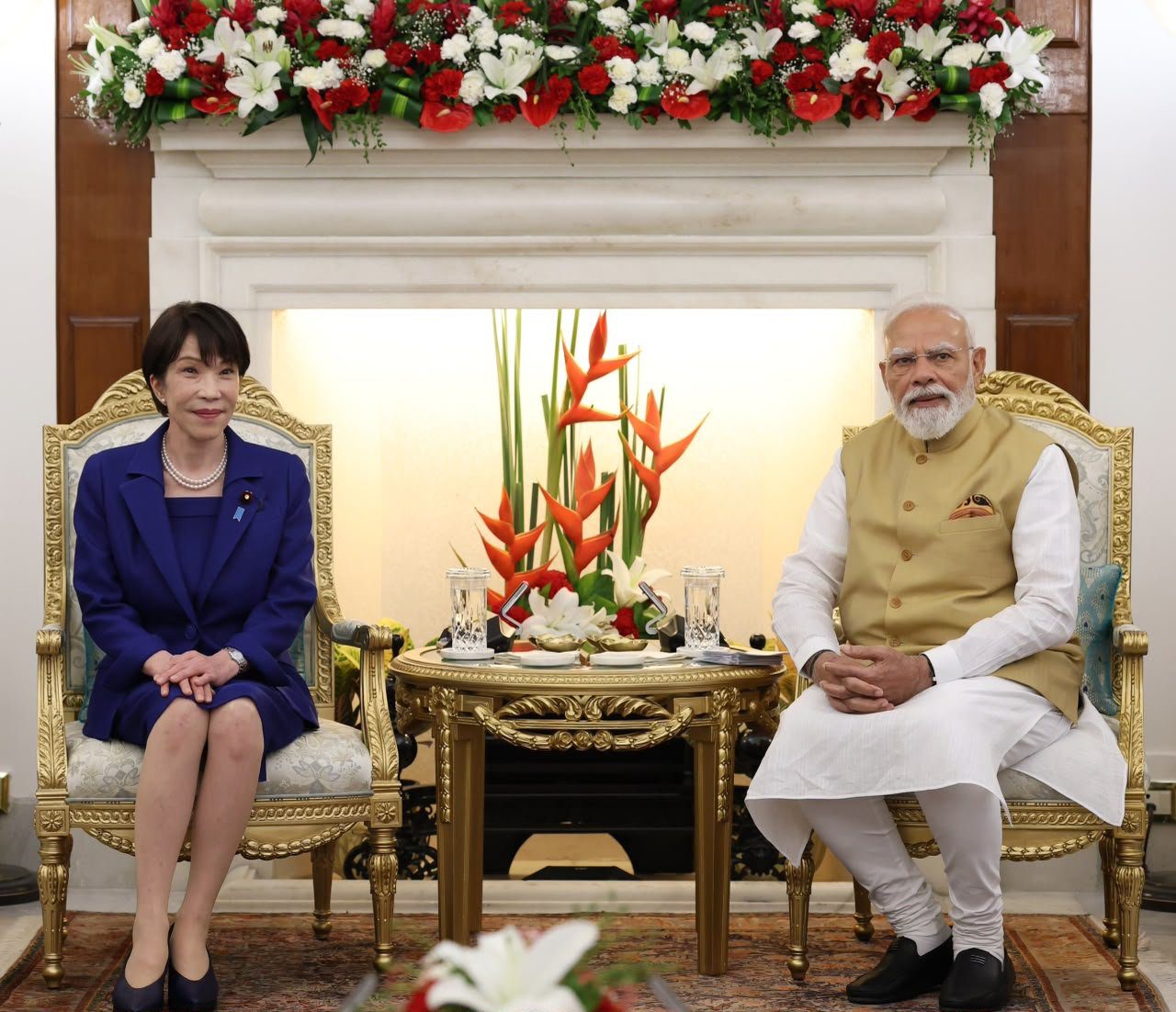
BGA India Managing Director Anuj Gupta prepared an update for clients on recently concluded India-Japan annual summit in New Delhi.
Context
- Indian Prime Minister Narendra Modi and Japanese Prime Minister Sanae Takaichi concluded the 16th India-Japan annual summit in New Delhi July 3. It comprised an expansive agenda centered on resilient supply chains, advanced technology, defense cooperation and investment. Both countries demonstrated growing alignment on Indo-Pacific economic resilience.
- The summit marks a significant evolution of the bilateral relationship from a traditional economic partnership toward a comprehensive strategic partnership focused on jointly addressing geopolitical risks and strengthening industrial resilience. Beyond bilateral initiatives, India and Japan strengthened coordination across the Quadrilateral Security Dialogue (between Australia, India, Japan and the United States), the Association of Southeast Asian Nations, critical mineral partnerships, energy security, maritime connectivity and multilateral development initiatives. The summit underscores that economic security and industrial resilience are increasingly viewed as strategic priorities alongside traditional defense cooperation.
Significance
- The summit reaffirmed Japan’s long-term commitment to India as its preferred strategic and manufacturing partner in the Indo-Pacific. Alongside renewed investment commitments and plans to modernize the India-Japan Comprehensive Economic Partnership Agreement (CEPA), both governments announced new initiatives to strengthen industrial cooperation, accelerate Japanese investment, deepen technology partnerships and expand collaboration across infrastructure, defense manufacturing, startups and regional value chains. The two countries also seek to accelerate next-generation information and communications technology and Bharat 6G alignment.
- Reflecting growing convergence on economic and national security priorities, the two countries adopted three new strategic outcomes: the India-Japan Joint Declaration on Economic Security Cooperation, a joint statement on artificial intelligence (AI) cooperation and a joint statement on energy resilience. Together, these establish an institutional framework for deeper collaboration across semiconductors, critical minerals, trusted digital infrastructure, clean energy, pharmaceuticals and emerging technologies, while reinforcing supply chain diversification away from excessive dependence on any single market.
Implications
- Investors and firms operating across advanced manufacturing, digital technologies, energy and logistics, the summit reinforces India’s position as a central pillar of Japan’s Indo-Pacific economic strategy. The emphasis on trusted technology ecosystems, industrial resilience, regulatory cooperation and supply chain security signals increasing government support for companies seeking to expand manufacturing and technology partnerships in India. Both governments reaffirmed their commitment to achieving the $62 billion investment target while expanding the fast-track investment mechanism under the India-Japan Industrial Competitiveness Partnership.
- Businesses should expect renewed impetus as infrastructure partnership between the two countries is entering its next phase. Japanese small and medium sized enterprises (SMEs), tier-II manufacturing ecosystems and startups can expect a boost. The inauguration of the India-Japan SME Forum and renewed support for startup collaboration signal a broader effort to deepen Japanese corporate engagement beyond large multinational firms. Both governments also committed to expanding partnerships with India’s Tier-II and Tier-III manufacturing ecosystem, creating new opportunities for supplier development and industrial partnerships.
If you have questions or comments, please contact BGA India Managing Director Anuj Gupta at agupta@bowergroupasia.com or BGA Japan Managing Director Kiyoaki Aburaki at kaburaki@bowergroupasia.com.
Best regards,
BGA India

×