




















Indonesian Stock Market Plunge Sparks Regulator Shake-Up
The BGA Indonesia team, led by Managing Director Doug Ramage, wrote an update to clients on Indonesia’s stock market plunge.
Context
- Five top financial regulators in Indonesia abruptly resigned late January 30 following an ultimatum from Morgan Stanley Capital International (MSCI) about poor market governance and the ensuing stock market meltdown. Financial Services Authority (OJK) Chairman Mahendra Siregar quit along with three senior OJK officials, including Deputy Chair Mirza Adityaswara and capital markets chief Inarno Djajadi. Indonesia Stock Exchange (IDX) President Director Iman Rachman also stepped down. BGA sources say they were directly asked to resign by President Prabowo Subianto’s top political confidant, House of Representatives Vice Speaker Sufmi Dasco Ahmad, to restore investor confidence.
- The global index provider flagged serious transparency and governance issues in Indonesia’s equities market, freezing index rebalancing and warning that the country could be demoted from “emerging market” to “frontier market” status by May 2026 if reforms lag. Concerns center on opaque ownership structures, limited free floats and collusive trading, long-standing features of the IDX that undermine proper price formation. The threat of a downgrade, the severity of which surprised investors and regulators alike, could trigger capital outflows in the tens of billions of dollars and a near-irreparable loss of confidence.
- Stocks went into a tailspin, with the Jakarta Composite Index (JCI) plunging over 16 percent in two days — the worst rout since COVID-19 — wiping some $80 billion in market value and forcing trading halts. $370 million in foreign capital exited on January 28 alone. While the JCI rebounded slightly after measures were announced on January 30, another drop followed as markets opened on February 2. Nomura joined Goldman Sachs and UBS this week in cutting its Indonesia equity outlook. As long as an MSCI reclassification looms, which may take months to resolve, markets are likely to remain volatile.
Significance
- The sell-off reflects deeper unease over Indonesia’s investment climate, fueled by mounting perceptions of policy incoherence. The near-breach of the fiscal 3 percent deficit cap in 2025 and the appointment of the president’s nephew, Thomas Djiwandono, as a central bank deputy governor have raised questions. Financial analysts also point to mining and plantation asset seizures by a military-led task force and political pressure on the Djarum Group, owner of blue-chip favorite Bank Central Asia, as signs of uncertainty. These are just some of the top flashpoints that have left investors struggling to discern policy direction.
- The administration’s response has been atypically swift and coordinated, reflecting how deeply the episode rattled market-savvy officials within the president’s inner circle. Over the last few days, Coordinating Minister Airlangga Hartarto, Finance Minister Purbaya Yudha Sadewa, sovereign wealth fund Danantara chief Rosan Roeslani and interim OJK and IDX heads announced changes to shore up confidence and address MSCI’s concerns. This includes doubling the minimum public float to 15 percent, allowing pension and insurance funds to raise equity exposure to 20 percent of portfolios (from 8 percent) and fast-tracking the long-delayed conversion of the member-owned IDX into a conventional company, possibly with a Danantara stake. Danantara investment chief Pandu Sjahrir has also claimed that the sovereign fund has begun buying stocks to support stability — a statement that remains unconfirmed.
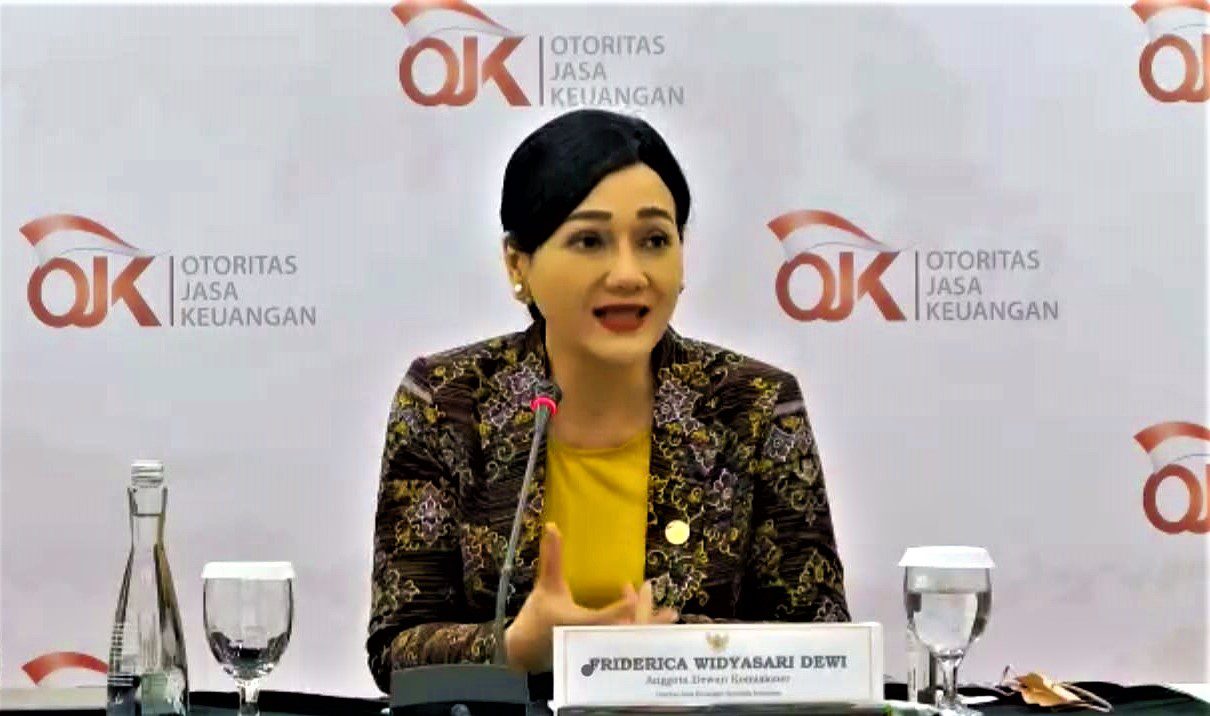
- OJK appointed Friderica as interim chief commissioner and Hasan Fawzi as acting head of capital markets supervision, while the IDX named Jeffrey Hendrik as caretaker president director. All three had been holding senior roles within their respective institutions. Domestic and international market players have told BGA that they are cautiously comfortable (though not ecstatic), citing their credible capital market and regulatory careers. Whether they remain in these roles will largely depend on their ability to address MSCI’s concerns, stabilize investor sentiment after the plunge, and work closely with the government, especially the Finance Ministry and Danantara. “More than any policy, what matters now is that they deliver on the promised changes,” said one senior trader to BGA.
Implications
- It took MSCI’s downgrade threat and the market rout to force a reckoning with major structural weaknesses. MSCI and global investors have flagged governance issues in Indonesia’s capital markets for years, but reforms were consistently deferred due to resistance from vested interests. The 7.5 percent free-float requirement was among the lowest globally, enabling controlling shareholders to list with minimal public exposure and retain tight control. Opaque nominee arrangements shielded ultimate beneficiaries, and low floats often made price manipulation easier. The IDX itself, a member-owned exchange, had little incentive to tighten rules that might deter listings or upset powerful family groups. The system served those in control, and successive regulators kicked the can down the road.
- This episode is a case study of the administration operating at its best under pressure, but this level of coordination and force is unlikely to extend beyond an immediate crisis response, such as broader deregulation. The government has acted quickly, coherently and with an unusual degree of follow-through, reflecting the combined influence of the more market-savvy members of Prabowo’s inner circle. Airlangga Hartarto, though diminished politically compared to his Jokowi-era role as party chair, remains an effective reformist when given space. Finance Minister Purbaya Yudha Sadewa, in contrast to his predecessor, has shown attentiveness to tactical investor concerns. Danantara chiefs Rosan Roeslani and Pandu Sjahrir have reinforced the perception that the sovereign fund is both a government instrument and a market participant.
- This is anything but a business-as-usual change at OJK, and the current mandate is narrowly focused on responding to MSCI, stabilizing sentiment and executing reforms. Engagement beyond these priorities is unlikely to gain traction in the coming months. Acting Chair Friderica Widyasari Dewi has announced an eight-point agenda aimed squarely at these objectives. These include addressing MSCI’s concerns around free-floats and beneficial ownership disclosures, as well as broader confidence-building measures such as converting the IDX into a conventional company, strengthening enforcement and encouraging greater institutional investor participation. A meeting between MSCI, OJK, IDX and Danantara was held February 2 and described by participants as “productive,” but removing the reclassification threat will require months of sustained delivery.
- The shake-up is also reshaping who runs Indonesia’s financial regulators. The ouster of OJK’s leadership, following the confirmation of Thomas Djiwandono as deputy governor at Bank Indonesia, gives the administration an opening to install allies across all key institutions: the central bank, OJK, IDX, the Finance Ministry and the Deposit Insurance Corporation. In the short term, this has enabled unusually decisive policy coordination. Over the longer term, however, it raises familiar questions about institutional independence and executive influence. The same administration pledging to restore investor confidence is also expected to tighten its grip on the sector, particularly by appointing allies into vacant positions at OJK.
We will continue to keep you updated on developments in Indonesia as they occur. If you have any comments or questions, please contact BGA Indonesia Managing Director Douglas Ramage at dramage@bowergroupasia.com.
Best regards,
BGA Indonesia Team

×