
















Myanmar’s Economy Faces Grim Outlook Under New Government
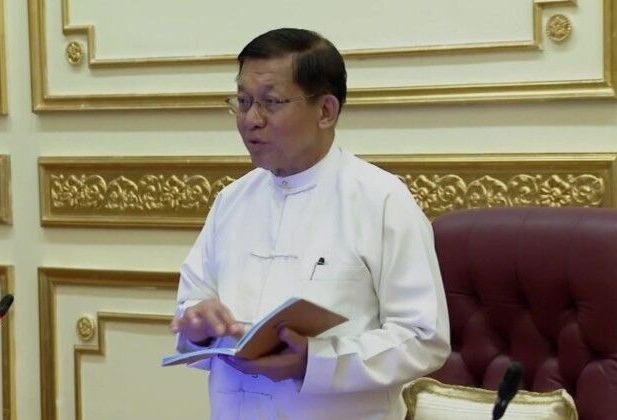
BGA Senior Adviser Amb. Scot Marciel wrote an update to clients on Myanmar’s continued economic malaise under the new government of President Min Aung Hlaing.
Context
- Hopes that Myanmar’s troubled economy would improve under a new government have dimmed in light of three recent developments: the “election” of Gen. Min Aung Hlaing as president, his appointment of a Cabinet dominated by military men and the severe energy and economic shocks resulting from the Iran conflict. The economy has been reeling since the February 2021 coup, which ushered in a period of nationwide conflict, accelerated brain drain and economic mismanagement by the military.
- Min Aung Hlaing’s ascension to the presidency and the military’s domination of the new Cabinet suggest that this pattern will likely continue. In addition, the economy – already suffering from power outages, fuel shortages, rampant inflation and a lack of investment -is being hit hard by the Iran conflict. The government is rationing fuel, while transportation and fertilizer price increases are causing widespread pain, particularly in the critical agriculture sector. Much will depend on how long the Iran conflict and resulting energy crisis last and on whether Min Aung Hlaing turns to more capable technocrats to manage the economy. For the moment, however, the outlook is poor. Businesses will have to continue to deal with high inflation, a lack of skilled workers, problematic import restrictions and foreign exchange regulations and unpredictable power and fuel supplies.
Significance
- The numbers tell the story. According to the Asian Development Bank (ADB), GDP has declined by a cumulative 16 percent since 2020, with growth falling 2.2 percent in fiscal year 2025 alone. Inflation has been consistently high, reaching 29 percent in 2024 and 25 percent in 2025. The ADB estimated the fiscal deficit last year at 4 percent, much of which reportedly was financed by printing money. The poor economic performance has resulted from widespread conflict, which has discouraged investment and tourism, a growing brain drain
- While the new government is just getting started, Gen. Min Aung Hlaing’s continued hold on power — now as president rather than commander-in-chief — bodes poorly for economic reform. He is uncompromising and has consistently made political power (and personal financial gain), rather than sound policy, his top priority. He has not demonstrated any reform energy on any front, including the economy. No doubt with his approval, the military has also continued its brutal bombing campaign against the resistance and civilian population, undermining prospects for progress toward peace. The new Cabinet is not encouraging either. Military men dominate, including as ministers of transportation, planning, investment and foreign economic relations. Others, such as Finance Minister Kan Zaw and Energy Minister Ko Ko Lwin, are holdovers from the junta Cabinet. A number of Cabinet ministers already are under international sanction. It is possible that economic technocrats will end up playing a larger role in this government than they did under the junta, but there is no evidence at this point that this will be the case.
Implications
- The Iran conflict and resulting energy shock have hit Myanmar hard, confronting the new government with its first major challenge. Even before this crisis, Myanmar was facing significant power and fuel shortages. In the past few weeks, the country has been struck by supply shortages and sharp price increases for fuel, fertilizer and — indirectly — transportation. China, Myanmar’s major supplier of fertilizer, has curtailed exports by 50 percent. Farmers reportedly are cutting back on both fertilizer and the use of mechanized equipment, indicating a likely plunge in production and an increase in cost of rice and other essential commodities. The government has reintroduced power-shedding, adding uncertainty for industry and consumers. It also initiated a poorly designed fuel-rationing program that has resulted in lengthy queues and higher transportation costs.
- The short-term outlook is deeply problematic, though much will depend on what happens in the Middle East and global energy markets. China’s continued support for the government, along with indications that Thailand is moving in the same direction, are political positives for the government, but it is not clear that they will translate into greater investment.
- Businesses can expect significant power and fuel shortages to continue, along with rising prices for key commodities and a likely decline in consumer demand in Yangon, the country’s economic center. If the energy crisis continues for any length of time, one cannot rule out more draconian government measures, such as rationing fuel and power and restricting imports.
We will continue to keep you updated on developments in Myanmar. If you have comments or questions, please contact BGA Senior Adviser Amb. Scot Marciel at smarciel@bowergroupasia.com.
Best regards,
BowerGroupAsia

×