


















Regional Update: Japan, Vietnam, Myanmar, Thailand-Cambodia
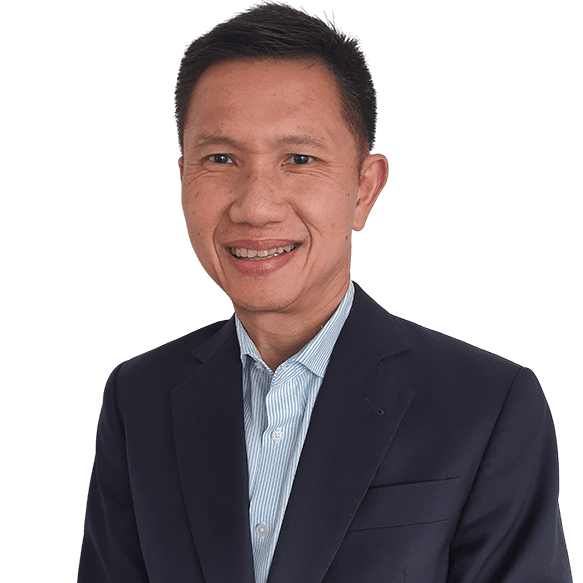
BGA Senior Adviser Dr. Thitinan Pongsudhirak wrote a client update on regional developments in Southeast Asia.
To add value beyond the ever-expanding and fast-moving artificial intelligence-generated written realm, this analysis is drawn from the author’s Bangkok-based personal observations and recent field visits to Hanoi and Tokyo. Authentically generated, it is designed as an analytical update on regional dynamics rather than a focus on a particular country or sector of an economy in the region.
Doubling down on its Association of Southeast Asian Nations (ASEAN) projects and commitments, Japan continues to put more emphasis on geoeconomics and technological innovation for geopolitical capital and deterrence in an effort to make it “costly for external aggression,” according to one conversation. A key project that warrants attention is ASEAN’s interest to jointly stockpile crude oil and petroleum reserves with Japan. The Jakarta-based Economic Research Institute for ASEAN and East Asia was given a mandate in May by the ASEAN summit in Cebu to come up with a study and an actionable plan. If it makes progress in the near term while the Strait of Hormuz crisis is still fresh, this ASEAN-Japan petroleum stockpiling could reinforce Japan’s economic and energy role in Southeast Asia.
Among Southeast Asian economies, Vietnam has been the most impressive. Its economy is firing on all cylinders since I was last there a year ago. English proficiency is more widespread. Younger demographics appear energetic, enthusiastic, with an evident hunger for growth and development. In the think-tank space, Hanoi organized the third edition of ASEAN Future Forum that included in-person attendance by the government heads of Cambodia, Laos, Thailand and Timor-Leste, not to mention a United States deputy secretary of state and a United Nations undersecretary, while leaders of other Asian countries joined online.
Vietnam has a long-term plan to expand its economy aggressively to reach upper middle-income status by 2030 and high-income developed economy by 2045. If its economic growth continues at 7-10 percent per year, in just three years, Vietnam’s economic size will surpass that of Thailand, which has been growing under 3 percent a year. At the ASEAN forum in Hanoi, Vietnamese leaders from Prime Minister Le Minh Hung to President To Lam joined the proceedings and related activities with visible confidence that their economy and society are on the right track despite external challenges that all countries face.
Moving forward, Vietnam and Singapore now lead ASEAN the way Indonesia and Thailand used to. Under President Prabowo Subianto, Indonesia appears to have lost its way. Its economy is in serious doldrums under the threat of state-led centralization and potentially incipient nationalization. Thailand, on the other hand, has been politically unstable for two decades, punctuated by street protests, military coups and judicial interventions, depressing growth trajectory under three percent per year for the foreseeable term. Vietnam has the size and a plan to lead the Southeast Asian bloc, whereas Singapore as a small island-state punches above its weight and provides a principled stewardship on regional issues, such as Myanmar’s illegitimate military dominance.
Less sanguine is the Thai-Cambodian border conflict. As Thailand has revoked a bilateral memorandum of understanding from 2001, Cambodia has taken this as justification for taking the overlapping claims area dispute to a compulsory conciliation body under the U.N. Convention on the Law of the Sea (UNCLOS). The Thai revocation of the 2021 memorandum partly stems from nationalist sentiments at home which the Bhumjaithai Party-led coalition government under Prime Minister Anutin Charnvirakul campaigned on for his recent poll victory.
That the Thai-Cambodian conflict has come under UNCLOS provisions and drawn-out legal process over the next two years will be a thorn in ASEAN’s side. Border tensions between the two sides are still raw and renewed clashes cannot be ruled out despite a fragile peace accord and ceasefire agreement. However, as Cambodia chairs the Francophonie summit in November, Phnom Penh may not want instability and violence to spoil attendance, while Thailand’s relative political stability after the February 8 election might make the Anutin government feel secure enough to lower nationalist temperatures in the country.
Myanmar has been another major sticking point for ASEAN. After the faux elections last December and January, Myanmar’s military-backed government appears to have post-poll momentum, boosted by general-cum-civilian Min Aung Hlaing’s recent five-day visit with Prime Minister Narendra Modi in Delhi. Less than two weeks later, Min Aung Hlaing received a big stamp of legitimacy when he visited President Xi Jinping in Beijing. To regain ground in the continuing civil war, Myanmar’s resistance coalition will need to give external supporters, such as the European Union, Japan and about half of ASEAN member states something to work with if they are to hold out on recognizing Min Aung Hlaing post-election government.
The resistance coalition needs a dramatic turnaround, perhaps a drone campaign to retake some ground and shift perceptions. Battlefield dynamics will determine political directions in Myanmar. In this mix, the National Unity Government leadership appears in need of a complete overhaul, although there is a lack of a consensus on who could lead with the stature and visibility of Aung San Suu Kyi, who was arrested after the February 2021 coup and reportedly released to house arrest after the polls. One candidate would be Arakan Army’s Maj. Gen. Twan Mrat Naing. He has battlefield achievements and is recognized in the resistance but does not have national appeal, not to mention controversies involving the Arakan Army’s treatment of the Rohingya.
Against the backdrop of China’s backing for Myanmar, there is also the issue of Min Zin, the founder and executive director of the Institute for Strategy and Policy, a regional think-tank focused on Myanmar and based in Chiang Mai. An American citizen, he was detained June 3 after arriving at Kunming airport for a conference. Thereafter, he was due to go to Hanoi to speak on a Mekong roundtable June 8. China’s Foreign Ministry has confirmed his “criminal detention on suspicion of espionage and endangering China’s national security.”
Min Zin is well known and respected among regional think tanks, and his abrupt detention does not reflect well on Chinese officialdom. However, Chinese officials may be sending a signal to the regional think-tank circuit that Myanmar dissidents and anti-(Myanmar) regime proponents in the neighborhood outside Myanmar now have to exercise more caution and impose more self-censorship. China’s detention of Min Zin further underscores Beijing’s support for Min Aung Hlaing as well as the broader China-Myanmar relationship and all that goes with it from a deep sea port in the south and gas pipeline crisscrossing the country to rare-earth mines in northern Kachin state.
Overall, Min Aung Hlaing is now likely to build more and seize momentum on three fronts. First, he wants to regain Myanmar’s head-of-government seat at the ASEAN-centered summits later this year and to reclaim Myanmar’s seat at the United Nations, now occupied by National League for Democracy-led government’s appointee Ambassador Kyaw Moe Tun. In the medium term, he will want to retake Myanmar’s rotational turn as ASEAN chair, perhaps after Timor-Leste’s in 2029, following Singapore’s in 2027 and Thailand’s in 2028.
We will continue to keep you up to date on the dynamics and drivers of what’s happening in Southeast Asia and ASEAN from the ground up. If you have comments or questions, please contact BGA Senior Adviser Dr. Thitinan Pongsudhirak at thitinan@bowergroupasia.com
Best regards,
BowerGroupAsia