


















ASEAN’s Economic Agenda Presses Ahead With Deeper Integration in a Fragmenting Global Economy
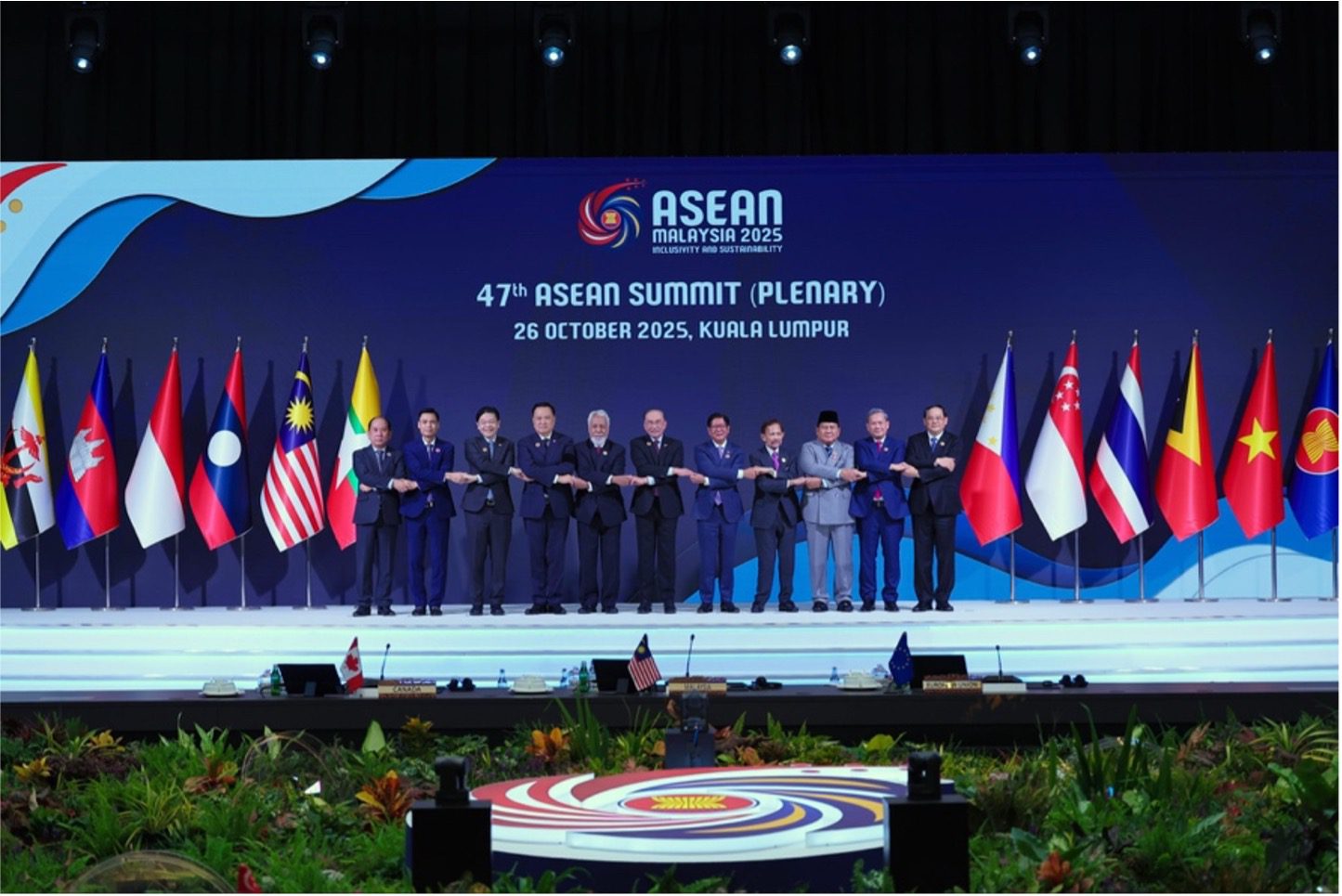
BGA Managing Director for Global Trade and Economics Nydia Ngiow and Head of Research Murray Hiebert wrote an update to clients on the 47th ASEAN Summit and the grouping’s economic agenda.
Against the backdrop of fluctuating global trade tensions, Malaysia’s tenure as the rotating chair of the Association of Southeast Asian Nations (ASEAN) carried significant expectations in the lead-up to the leaders’ summit from October 26-28. ASEAN took concrete steps under Malaysia’s chairmanship to strengthen strategic policy coordination in response to growing geopolitical uncertainties and challenges. This included promoting economic resilience and advancing initiatives and agreements to ensure ASEAN remains stable, competitive and adaptable in today’s rapidly evolving global environment. There was a clear collective resolve among the region’s leaders to accelerate economic integration. ASEAN remains commitment to market openness, regulatory harmonization and digital readiness, making the bloc increasingly competitive and attractive to investors amid global uncertainty.
The weekend saw an unprecedented number of global leaders participating, with U.S. President Donald Trump commanding the spotlight as he signed trade agreements with Malaysia and Cambodia, alongside frameworks with Vietnam and Thailand (see BGA’s updates here, here, here and here). Trump’s presence could be viewed as an effort to reassert U.S. influence in a region where China has deepened its footprint through trade, investment and infrastructure. Still, ASEAN remains a key forum and platform in the region capable of convening the leaders of the United States, China, Japan and the European Union — an increasingly rare and valuable role in this period of intensifying geopolitical rivalry.
While the traditional playbook may no longer apply when it comes to engaging the United States, ASEAN and its partners are clearly doubling down on institutional engagements and collaboration. The proliferation of new partnerships and plurilateral agreements demonstrates the region’s ability to adapt and act quickly when required. As the region adjusts to a new strategic environment, ASEAN has an opportunity to take the lead in shaping new practices and models of economic and digital cooperation that translate dialogue into tangible action. Companies can expect expanded market access, increased trade facilitation and reduced friction as well as accelerated digital and green economy integration in the year ahead.
We will continue to provide updates on international trade developments. If you have any questions, please reach out to BGA Managing Director for Global Trade and Economics Nydia Ngiow or Head of Research Murray Hiebert.
Best regards,
BGA Global Trade and Economics Team