

















IMF-World Bank Meeting Takeaways
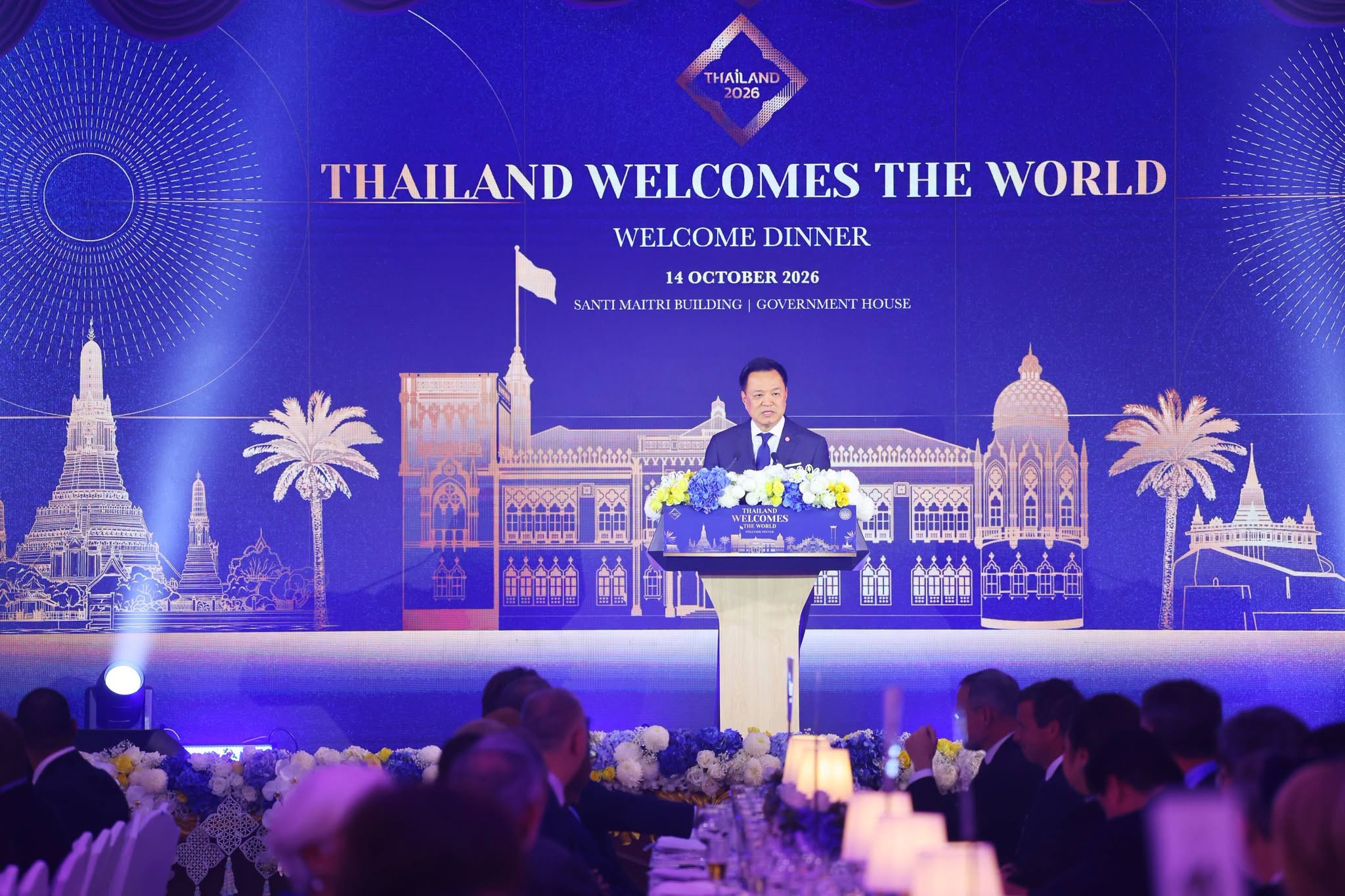
BGA Senior Adviser Dr. Thitinan Pongsudhirak wrote a client update on the International Monetary Fund (IMF)-World Bank Meeting in Thailand.
Context
- The IMF and World Bank’s joint weeklong conference in Bangkok last week offered both sobering caution and reassurance. The reassurance is that the world economy has held up better than many had feared. Global economic growth remains resilient, hovering around 3 percent. But as IMF Managing Director Kristalina Georgieva noted, “this resilience is reaching its limits.” My main takeaway is that global growth is living off the resilience it built up in previous years without adding more to it.
- Global growth is living off the resilience it built up in previous years without adding more to it. Growth is holding, but its base and depth are narrowing while the policy space to respond to the next shock is running low. Although firms have sought to diversify suppliers and hedge risks in recent years, system-level resilience has been eroding. Fiscal maneuverability was spent on the pandemic and energy subsidies, monetary policy room is constrained by the threat of inflation and energy buffers have been drawn down by the Iran war. All this has taken place while the multilateral system has languished.
- Thailand has been on both sides of the IMF’s table. Six years after hosting the 1991 meetings, it was at the epicenter of the 1997-1998 Asian financial crisis and had to accept a $17.2 billion IMF-led rescue package. Today’s problem is a slow erosion rather than a crisis. Foreign direct investment applications rose 47 percent to about $44 billion in the first half of the year. Yet the IMF projects Thai growth at just 2.1 percent in both 2026 and 2027. The Bank of Thailand estimates that trend growth has fallen from more than 7 percent before 1997 to about 2.4 percent since the pandemic. Public debt stands at 68 percent of GDP against a legal ceiling of 70 percent, household debt is around 85 percent of GDP and small and medium enterprise lending has contracted for 16 consecutive quarters.
- The finance ministers and central bank governors in Bangkok could not agree on a joint statement for the second meeting in a row. The United States, which holds the Group of 20 presidency, did not send its treasury secretary and invited Russia back over European objections, a telling snapshot of a superpower no longer willing to underwrite the system it built. The upshot is that in the next crisis, firms cannot count on governments and international institutions to cushion the blow as they did in 2008 and 2020. It is a self-help world for firms as much as states.
Significance
- The core risk is a mismatch in timing. AI investment is front-loaded, whereas its productivity gains come much later. If markets run out of patience before the payoffs arrive, the correction could be sharp. This is why the corridors and coffee corners of the Bangkok meetings were humming about the so-called “AI bubble.” The risk is greatest in Asia, where AI-related exports and equity markets are concentrated. Korea’s Kospi fell as much as 7.6 percent in a single session during the meetings, a harbinger of how quickly sentiment can turn. The jobs risk is slower but no less serious; Georgieva likened it to “a slow-moving tsunami, but a tsunami nonetheless.” The practical consensus in Bangkok gravitated toward “small AI,” task-specific applications in manufacturing, agriculture, health and small businesses, where the real payoff for most economies lies.
- Thai policymakers spent the week talking about tackling “structural” challenges to boost trend growth to 3 percent. But the signs of Thailand’s economic stagnation have hardened over two decades of political instability from the 2006 and 2014 coups. The famous “Teflon Thailand,” when the economy carried on regardless of coups and street protests, is no more. The government will lean on foreign investment to offset weak domestic demand while scrambling for revenue.
Implications
- The Bangkok meetings point to four practical steps. First, plan for less public safety nets by strengthening liquidity, hedging and contingency financing. Second, prepare for combined, interlocking shocks rather than single ones, such as a delay in the Strait of Hormuz reopening while oil stays above $90 with higher long-term bond yields and an AI-led market correction. Third, anticipate a potential AI correction and look for real AI demand from the capital-spending cycle rather than data-center buildouts.
- Finally, in Thailand, investors should look at actionable fundamentals rather than rhetorical promises, while keeping their footprint diversified in wider Southeast Asia. The resilience we keep talking about is being used up faster than it is being replenished. Smart firms will need to provide more of it themselves.
We will continue to keep clients up to date and atop the cut and thrust of geoeconomic shifts as they unfold. If you have comments or questions, please contact BGA Senior Adviser Thitinan Pongsudhirak at thitinan@bowergroupasia.com or BGA Thailand Managing Director Teerasak “Art” Siripant at tsiripant@bowergroupasia.com.
Best regards,
BGA Thailand Team

×