















US Democratic Party Sweeps Congress: Implications for the Indo-Pacific
BGA Head of Research Murray Hiebert wrote a client update on the U.S. midterm election results and their implications for the Indo-Pacific.
Context
- U.S. voters sharply rebuked President Donald Trump and toppled many of his Republican allies in Congress November 3. The Democrats won solid majorities in both the Senate and the House of Representatives, exceeding expectations (see BGA’s preelection update). The election seems to have been more of a referendum on Trump, whose approval rating stood at 38 percent, than a strong endorsement of the Democratic Party.
- Voters’ top frustrations focused on the cost of living and rising prices. In many exit polls, corruption within the administration was virtually tied with the cost of living as a significant factor motivating voters’ choices. Roughly two out of three voters said they opposed the war in Iran and wanted it ended to bring down oil prices. About two-thirds said Trump’s tariffs had hurt the U.S. economy. Many opposed new data centers.
Significance
- Numerous analysts expect Trump to focus more on international issues as congressional opposition limits his ability to advance domestic priorities, particularly those involving budget considerations. Congress’s budgetary authority is its strongest tool in dealing with the administration. Congressional measures could be attached to funding bills or included in a debt limit extension, which requires support from Democrats.
- To date, Trump has demonstrated substantial disregard for congressional powers and will likely continue to limit engagement with the legislature. His recent public statements, however, indicate some willingness to negotiate. Before the elections, Trump told Fox News that he would be “Mr. Veto” if Democrats won. After the election results became clear, he said he would be willing to work with Congress on some issues.
- Congress cannot do much on tariffs, at least not directly. Since the Supreme Court rolled back Trump’s “emergency” tariffs, the administration introduced Section 122 tariffs, which have now expired. The administration then started to use Section 301 tariffs on forced labor in July on 60 trading partners. Congress could pass rollback legislation, but Trump could veto it, and Congress does not have the votes to override him. Analysts say Congress’s best leverage probably lies in holding hearings, attaching riders to appropriation legislation, pressing for tariff exemptions and perhaps cooperating with Republicans from farm districts or those heavily dependent on imports. Democrats may also be cautious on tariffs because many are popular with their core constituents, like labor unions and working-class workers.
Implications
- It remains to be seen what happens now on Section 301 overcapacity investigations into 11 economies in the Indo-Pacific, including China, India, Indonesia, Japan, Korea, Malaysia, Taiwan, Thailand, Singapore and Vietnam. The administration began investigations in July, but no findings have been announced.
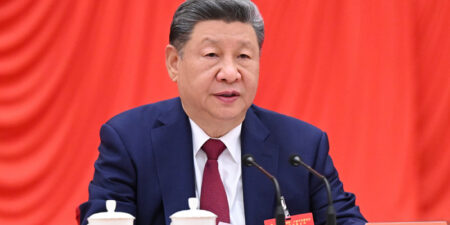
- Analysts suggest the administration has two options: First, it could defer new tariffs in light of the electoral backlash against Republicans and Trump’s upcoming meeting with Chinese President Xi Jinping. New tariffs could undermine the China-U.S. trade truce and increase inflation. Second, it could use Section 301 as leverage. Section 301 is one of Trump’s last remaining tariff vehicles, and Congress cannot block its use, so the president may seek to retain that leverage.
- Trump’s upcoming travel calendar puts China high on his agenda almost immediately. He will travel to the Asia-Pacific Economic Cooperation summit in Shenzhen, China, in mid-November. Trump and Xi will meet, and at the top of their agenda will be whether to extend the trade truce they negotiated in May. Some analysts believe Trump will be more cautious about upending the truce in the wake of elections. Some believe that Beijing will interpret Trump’s weaker position as an opportunity to push for a reduction of tariffs against China. The two leaders will meet again at the Group of 20 summit in Miami in December.
- Data centers were on the ballot and opposed in many communities across the country. At the state level, Democrats upset Republicans in several key governors’ races. In Texas and Georgia, which account for one-third of AI spending in the United States according to Bloomberg, both newly elected Democratic governors campaigned hard for immediate data center moratoriums. These moratoriums could dampen demand for manufacturing in the Indo-Pacific.
- When the new Congress convenes in January, the Democrats will likely introduce tougher AI legislation with stronger safety standards and mandatory testing and approval for the most powerful AI models. Trump would likely veto a Democratic-led legislative effort unless he pivots significantly from his current position. However, senior AI executives will be subpoenaed to testify on AI safety, which will impact how governments in the Indo-Pacific perceive these firms.
We will continue to keep you updated on developments in the Indo-Pacific. If you have questions or comments, please contact BGA Head of Research Murray Hiebert.
For questions or additional information, please contact the relevant BGA expert below:
- Trade, tariffs and supply chains: Nydia Ngiow
- AI and data centers: William Heidlage
Best regards,
BowerGroupAsia

×