














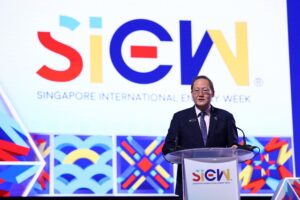

SIEW 2026: Singapore Outlines Energy Playbook as Regional Energy Ties are Tested
The BGA Singapore team, led by Managing Director Nydia Ngiow, wrote a client update on Singapore International Energy Week (SIEW).
Context:
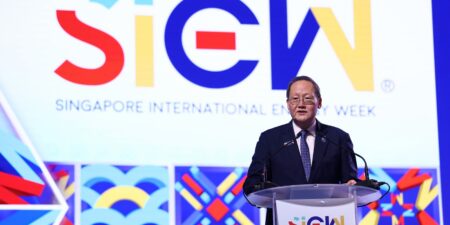
- This year’s SIEW, held October 26-31, was themed around connection, and its biggest announcements were about partners as much as power plants. They came at a tense time, with the Strait of Hormuz closure continuing to disrupt global energy flows and recent Houthi attacks on Saudi infrastructure potentially exacerbating the situation. In addition, Indonesia began cutting its pipeline gas exports to Singapore October 24 amid a dispute over Singapore facing its worst episode of smog due to Indonesian palm oil fires since 2015. At the same time, demand for electricity is rising fast. Singapore’s Energy Market Authority (EMA) expects peak demand to grow from 8.6 gigawatts (GW) to between 9.9 GW and 13 GW by 2031, mainly from semiconductors, data centers and electric transport, with the AI build-out a major driver.
- Singapore looks to address these pressures through a sequenced strategy, anchored by a five-year energy infrastructure plan announced at SIEW. The expansion of its power system to meet demand is paired with more gas supply options, storage, solar and imports, with nuclear and geothermal kept for a later decision, while keeping costs in check.
Significance:
- Confidence as part of resilience. Singapore protects its energy supply through diversifying its LNG sourcing, keeping reserves as well as requiring power plants to be able to run on gas or diesel. This enabled the country to not see any fuel shortages or outages despite higher prices this year. The national gas buyer, GasCo, launched a request for proposals in August to secure gas after 2028, which it expects to award by 2027. Reliability will be a key factor in how GasCo selects its suppliers. Partnerships are also central to this, with Singapore renewing an LNG and low-carbon cooperation memorandum of understanding (MOU) with QatarEnergy. It also signed a joint energy taskforce MOU with Abu Dhabi National Oil Company and announced an intent to store Saudi crude at Jurong Rock Caverns beginning in the second half of 2027. GasCo also signed an MOU with PTT, Thailand’s state-owned petroleum and natural gas company, on LNG supply.
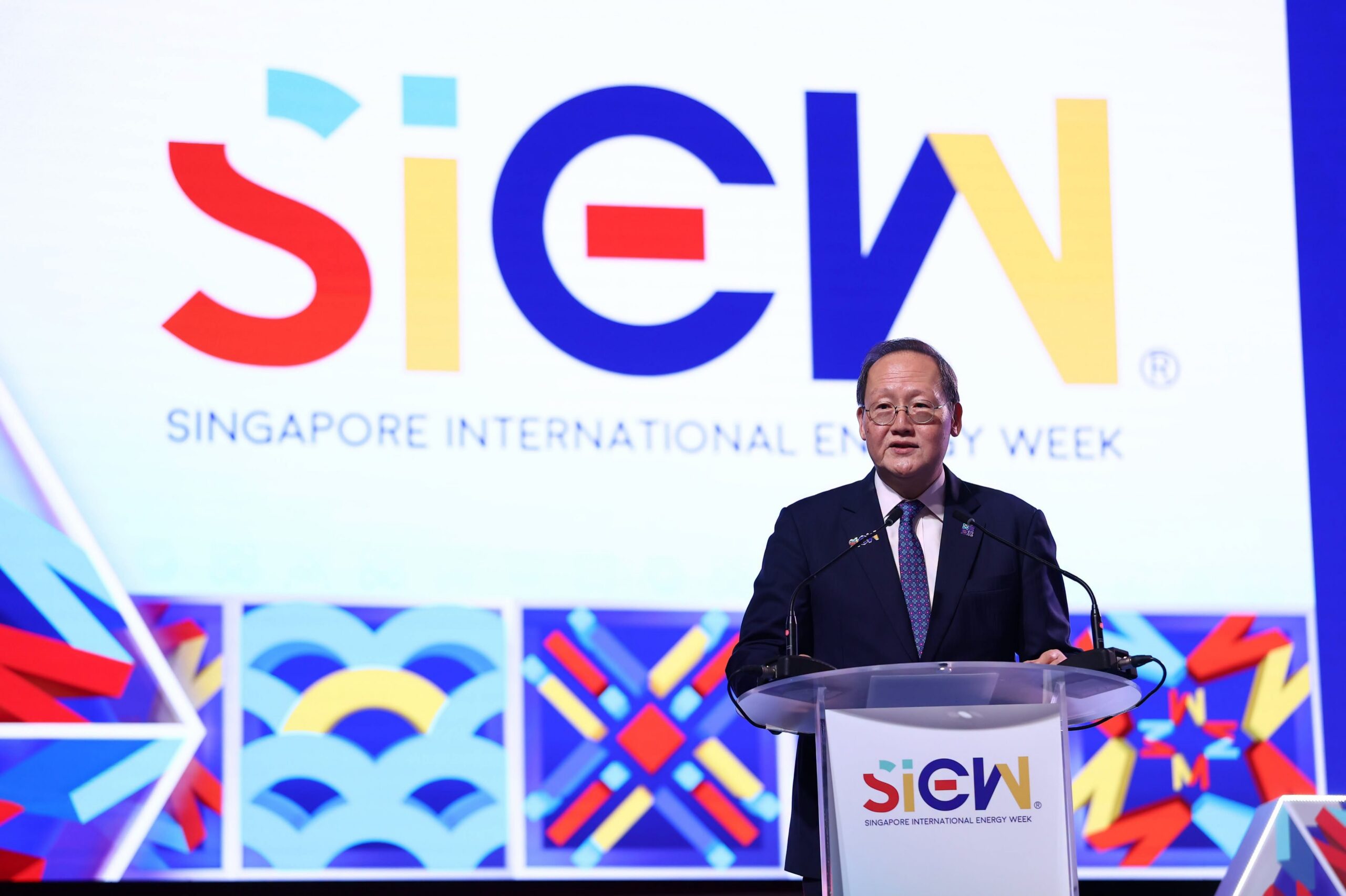
- Competitiveness. Minister for Energy and Industry Dr. Tan See Leng highlighted how “the fastest megawatt will be the winning megawatt” and that the sooner new power is available, the sooner new investment will come in.
- Carbon transition will be sequenced, not rushed. Tan aims to pursue every viable low-carbon pathway, favoring indigenous sources that also add resilience to lay the foundation for a 2050 energy mix. He was candid that this will be hard for a small, land-constrained island. He also announced that the SGD 800 million ($626 million) Decarbonization Grand Challenge under RIE2030 gained a new SGD 75 million ($58.7 million) Power Decarbonization Funding initiative, following quickly from the industry-focused initiative announced the week before.
- Connectivity and partnership remain integral. EMA gave conditional approval for up to 1.3 GW of low-carbon imports via Malaysia from Vietnamese offshore wind and Malaysian solar. This adds to the 900 MW approved in August, with a second power cable to Malaysia of up to 2 GW targeted by 2030, commencing with seabed surveys beginning this month. EMA and Malaysia’s Energy Commission established a joint working group covering cross-border trading, renewable energy certificates (RECs) and interconnection targeted to better support companies in their sustainability reporting.
- Cost. Tan was explicit in stating that decarbonization will not be pursued at all costs, even as he noted that achieving these goals will not be cheap and will require trade-offs and significant investments.
Implications:
- Companies should note that even as Singapore looks to improve its resilience, gas supply is less certain than it seems. Gas generates 95 percent of the country’s electricity, and half of it currently arrives as LNG, with the rest piped in from neighboring countries. Singapore is expected to lean more on LNG, which should provide more options. Still, given that prices follow global markets, electricity costs could see a wider swing.
- Singapore’s grid could also determine how fast a new data center or factory can open in the coming years, and companies should take into consideration the new substations’ locations. Importantly, import projects will need to be priced competitively against other decarbonization pathways, which could also affect RECs. Nevertheless, opportunities can be found in storage consultation and nuclear capability programs.
We will continue to monitor developments in this space, especially with Singapore’s 2027 ASEAN chair year. If you have any questions or comments, please direct them to Managing Director Nydia Ngiow at nngiow@bowergroupasia.com.
Best regards,
BGA Singapore Team

×