















Pacific Islands Forum Drives Regional Cooperation on Climate and Development
BowerGroupAsia Head of Research Murray Hiebert and BGA Analyst Daniella Neri wrote an update to clients on recent scrutiny of Australia’s “big four” banks.
Context
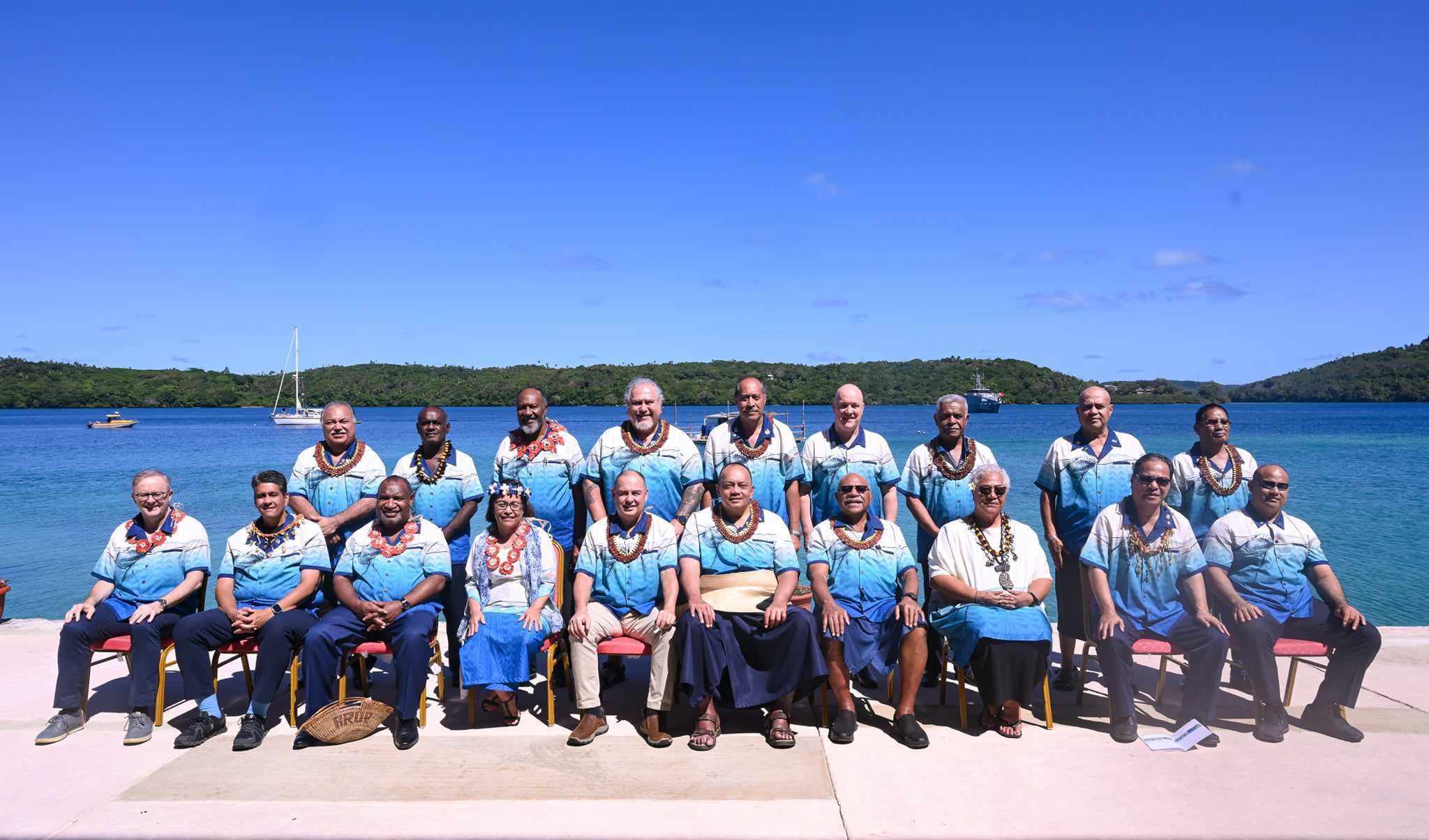
- The 53rd Pacific Islands Forum (PIF) took place from August 26-30, with leaders from across the Pacific and beyond meeting in Tonga to discuss key issues facing the region. While climate change and development topped the agenda for Pacific leaders, a strong geopolitical undercurrent marked the forum. The southwest Pacific is of particular importance to Australia as geostrategic competition between China and the West intensifies.
- A key outcome of the forum was the agreement to establish an Australian-funded regional policing plan. The Pacific Policing Initiative essentially seeks to confirm Australia as the region’s foremost security partner, a notable strategic advancement for Canberra.
Significance
- Climate change, particularly climate financing, was a central focus of the forum. PIF leaders seek international funding for a new Pacific Resilience Facility, a Pacific-led and “people-centered” climate and disaster fund. The fund will be based in Tonga.
- The Pacific Police Initiative will establish a multinational police force of around 200 personnel that can be deployed to respond to major events or crises across the region. A training and coordination hub will be established in Brisbane, Australia, and four “police centers of excellence” will be set up across the Pacific, including in Papua New Guinea. Australia will provide AUD 400 million (US$255 million) over five years to establish the centers.
Implications
- Although Pacific Islands countries backed the initiative (particularly as it could help states manage growing domestic crime issues, such as transnational drug trafficking), they also stressed the need for individual national consultations on how they would implement it. Pacific states have been adamant on maintaining their sovereignty in the face of great power rivalry and do not want to take sides. In a clear warning to Australia, which seeks to sideline China from the security space, Vanuatu’s prime minister said the deal must be “framed to fit our purposes and not developed to suit the geostrategic interests and geostrategic denial security postures of our big partners.” For its part, Australia maintains that the policing initiative will be Pacific-led, states will have the ability to form additional security agreements with external partners and no state will be obligated to join it.
- The forum meetings resulted in an agreement with France that will allow a PIF fact-finding mission to New Caledonia. The mission will recommend how to resolve the unrest in the territory.
We will continue to keep you updated on developments in the Pacific as they occur. If you have any questions or comments, please contact BGA Head of Research Murray Hiebert at mhiebert@bowergroupasia.com or BGA Analyst Daniella Neri at dneri@bowergroupasia.com.
Best regards,
BowerGroupAsia

×