
















EU-China Trade Talks Yield a 16-Point Deal, But No Export Curbs
BGA China Adviser Eric Wang and Director Sam Overholt wrote a client update on the second round of EU-China trade and investment consultations.
Context
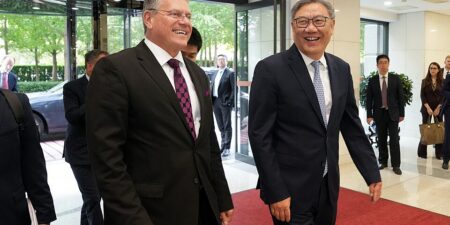
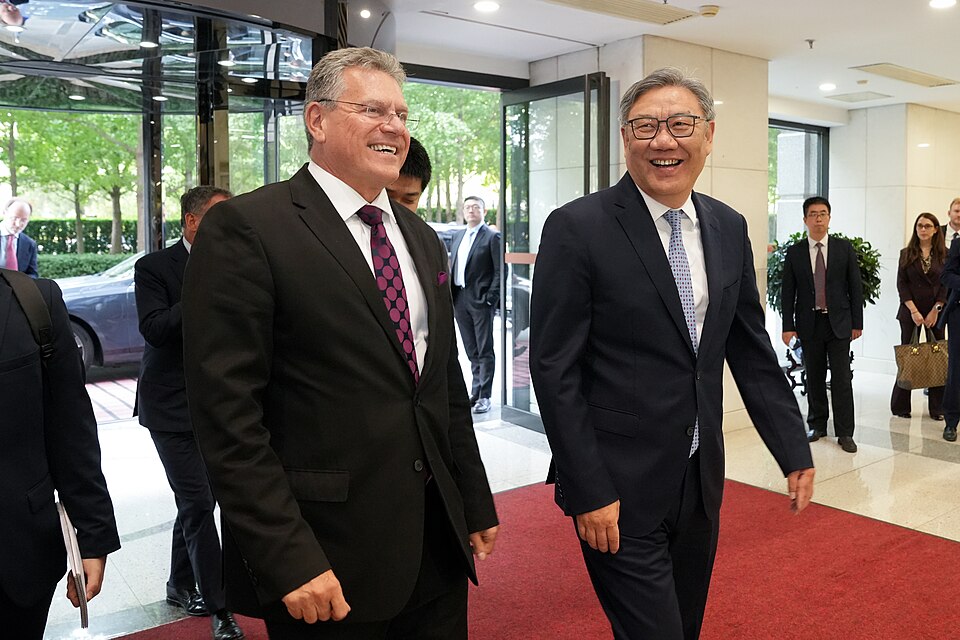
- European Union (EU) Trade Commissioner Maros Šefčovič and Chinese Commerce Minister Wang Wentao met in Beijing October 8–9 for the second round of the EU-China trade and investment consultations, which cover the trade balance, export controls, intellectual property and World Trade Organization (WTO) reform. The two sides on October 9 released a joint statement with a 16-point list of agreed outcomes.
- The EU’s goods deficit with China reached €359.8 billion in 2025 ($402 billion). EU leaders meet October 15–16 to decide next steps. EU Commission President Ursala von der Leyen has said the EU will use all available tools if dialogue fails. The highest-risk period runs from the recent meetings until November 10, when China’s suspension of its rare-earth export controls ends. The joint statement does not say whether that suspension will be extended for Europe, as it was for the United States.
Significance
- The statement builds on the June 29 joint statement but stops short of what Brussels asked for. The two sides reached an “understanding” on hybrid vehicle trade, described as consistent with WTO rules, without publishing its terms, and will continue company-level price undertakings in the EV countervailing case at the WTO. China will keep fast-tracking export licenses for rare earths and permanent magnets to the EU through a “green channel,” and the EU will help clear priority licenses for dual-use exports to China. Smaller steps cover export-control listings, medical devices, animal health, cosmetics, pharmaceuticals and intellectual property. Tariff cuts remain under discussion. There were no export quotas, no voluntary restraint and no purchase commitments beyond medical devices agreed to. Ministers will hold a video call in January 2027 and meet again in March 2027.
- The EU is exposed whichever way U.S. policy moves. Higher U.S. tariffs on China would divert more goods to Europe. Lower tariffs would leave the underlying surplus capacity in place. U.S. tariffs on EU goods would put European exporters under pressure from both sides. Multilateral support remains limited. Group of Twenty (G20) trade ministers reached consensus only on food weaponization. Fourteen economies then joined a separate US-led statement on overcapacity. On October 9, China’s Ministry of Commerce rejected the use of “overcapacity” as a pretext for protectionism and said it would make a “necessary response” to measures that harm Chinese interests. The EU shares Washington’s diagnosis but is itself subject to U.S. scrutiny. Any measure it justifies on overcapacity grounds would now fall within the scope of that warning.
- Pressure for trade defense will keep building, because the October 9 outcome does not cap Chinese exports. Europe is also more exposed to retaliation than a year ago, and member states are exposed to different degrees, which will test EU unity. Cheap Chinese goods are helping hold industrial goods inflation at 1.1 percent, so broad tariffs would raise costs and targeted measures are the more likely course. With China holding rates while the ECB tightens, the imbalance is unlikely to narrow on its own. Two factors could limit escalation: inflation at 3.8 percent favors targeted measures over broad tariffs, and the joint monitoring mechanism and the 16-point work program gives both sides a channel to manage frictions.
Implications
- Overcapacity is the most likely flashpoint (high likelihood, high impact). Unless the hybrid understanding proves substantial, EU leaders are likely to back trade-defense measures on EVs, hybrids, chemicals and machine tools, and China has warned it will respond to any measures framed as overcapacity remedies. Tit-for-tat trade-remedy cases, already under way with China’s October 3 chemical probe, are likely to widen (high likelihood, medium impact) and a Section 301-style EU tool would escalate further (medium likelihood, high impact).
- Rare earths carry the greatest damage potential (medium likelihood, high impact). Faster licensing eases day-to-day supply, but the joint statement is silent on the November 10 suspension, and with the euro area industry flat, a supply shock would land on an economy with little cushion. EU limits on Chinese takeovers could revive a Nexperia-style standoff like that between the Netherlands and China over chip supply (medium likelihood, high impact), but it is more likely in 2027 than this quarter. Agri-food gains could stall under Chinese probes, and EU backing for the U.S.-led overcapacity statement may be read in Beijing as alignment with Washington (medium likelihood, medium likelihood).
We will continue to keep you updated on developments in China as they occur. If you have any comments or questions, please contact BGA Adviser Eric Wang at ewang@bowergroupasia.com or Director Sam Overholt at soverholt@bowergroupasia.com
Best regards,
BGA China Team

×